▲ 218 points
back
147 comments
Thinking back to my own middle/high school experiences, group work just gives the poor students a free pass to slack off, because they know the good students in their group will pick up the slack.
I usually worked alone if the option was available, because if I worked in a group I'd almost always end up having to do / re-do everyone else's sub-par work anyway. It was the same workload either way, but working in a group would essentially be giving others "counterfeit" grades (based on my effort, not theirs), the existence of which necessarily devalues my "genuine" grade.
Group work can work, but it needs a different setting. I studied at an university where half of the time was group work and it worked because:
The students had 100% authority over how groups are formed, i.e. number of groups and who are in which group. The teachers had nothing to say in this.
The result is that:
1) it quickly became common knowledge who the slackers were (and who were the opposite).
2) nobody wanted to have the slackers in their group, so they were kind of ostracized and had to make their own group. They often ended up with the bad marks they deserve.
3) everybody learned that you had to do your homework/groupwork if you wanted to be part of a good group. It became a lot more difficult to get away with lame excuses for not having done what you promised. People really worked hard.
3b) If a group member didn't do their work, the other members could exclude the person from the group, and that person then had to make a project on their own, which is really really difficult. Again, the teachers had nothing to say in this, they could not veto an exclusion.
4) you ended up with a notion that your reputation had important consequences, just like in real life. Introverted people who did great work were popular group members.
5) Bonus: you learned to value different skills in people. Instead of wanting to be around people exactly like yourself, you learned that people who are (and think) different are very valuable for good projects.
This is the reason (at least, I think this is the reason) why I bombed my first serious job interview, with United Launch Alliance.
Things were going great until they asked me if I preferred working alone or in teams. From memory (it's been a long while) this is how the conversation went:
Interviewer: "Do you like working in teams?"
"If the people I'm working with are smart and motivated, I'm fine working in teams. Otherwise I'd like to mostly work alone."
Interviewer: "You mean you don't like working with other people?"
"No, that's not what I said. What I mean is that my experiences in working with teams have been mostly negative because other people don't pull their weight. The few times I have been in a good team I've really enjoyed it."
Interviewer: "Okay, moving on..."
And a rejection email was waiting in my inbox before I even got off the plane that night.
I learned after that to just say, "I love working in teams, especially when I'm working with people more experienced and knowledgeable than me. I'm also a great self-starter and I'm self-motivated, so I'm also comfortable working solo if you need me to do that." Which is much the same sentiment, but phrased in a way that people seem to take better.
This seems like such a universal experience, and looking back on it, teachers obviously know it's going on.
I wonder how much their plans to train kids for the "real world" are shaped by working in such unusual environments themselves.
I've never had a job where my performance is judged based on how a random group of teenagers I've been assigned to does on a project, but teachers certainly have.
Of course, another way to look at this is that the assignment is not really about the work product but about developing co-working skills, as well as giving weaker students an opportunity to learn from their peers rather than an adult, which is often more effective. At least, it could be....but in the hands of a less-thoughtful teacher, it could easily turn into trickle-down education as you describe.
A colleague of mine described a method for assigning groups that I'd never considered, but that she says worked surprisingly well.
On the first day of class, she gave out a survey, and one question was "How many hours do you expect to spend working on this class each week?" She assigned students to groups who gave similar answers. The self-described hard workers were delighted to be together, and the folks who were hoping to coast pretty quickly realized that nobody else in their group was going to just take over and do it all, so they reluctantly buckled down, too.
I went through phases in school, partially driven I believe by the fact I was suffering from dyslexia but didn't know it (given I made it to graduation with good enough grades from a very decent uni, I wasn't diagnosed until 25. Sadly late diagnoses is a bit more common then you think) However as some people may appreciate, particularly during exam times, I became extremely introverted. Friends noticed a difference in my attitude and some felt I had issues with them so stopped talking to me. This is was not the case from my side and I tried to explain. Teachers thought I was "slacking" in class as I wouldn't participate as much given we were asked to do quite a bit of reading and it meant that in group work, whilst I was vocal, my work was slow. From these experiences I learnt something. The way I look at the world and interpret situations and experiences when I went through months and sometimes a good year of being like this was extremely different to when I was confident and out going. Fair enough mine personality drift was triggered by my dyslexia, different people can have different triggers. The outcome is similar.
Introverts are extremely affective influencers in chaotic scenarios, they are known, particularly in Asia due to their more low key and effective nurturing techniques to be powerful leaders. They have been on the receiving end of criticism more than most people and have learnt in hindsight what could have made them tick and let's be honest, in this day and age of everyone being encouraged to speak their mind, people stand out from the crowd if they have a knack for building up others and are committed to listening instead of talking. This idea is a strength of an introvert. However, these strengths take a while to come into play as to be able to recognise them as strengths within yourself requires confidence and that takes a ridiculous amount of time to attain yourself for someone who is introverted. One is only really taught to appreciate and how to harness the strengths of different personalities at business school or the working environment through various negotiation/project management or graduate workshops. The school system lacks high quality teachers who can bring these strengths out of their introverted students at younger age. Fact is, there is no doubt a negative correlation between the more students who are built up and those who become depressed or bullied. Group work could be even more better with their input and a lot of the time so would group dynamic. Sharing my two pennies worth...
Well, it sounds like it prepares you for adult life where this is a norm.
On the other hand, I'm not saying you're like this, but a lot of kids who are brilliant are incapable of working in groups, and that's pretty much what you have to do in real life.
Also, growing up, I would not allow that in my group there could be a slacker... report him / her, be a snitch, I didn't care, actually, what I did was help them so they can become better and do the homework.
But I didn't grow up in America where the smart kids just do the dumb kids homework because they're afraid of getting bullied, in fact, I learned about the concept up until I moved in here.
I think the focus of group works in education is not to get real work done but to learn about teamwork and leadership. In real live you can't choose your team and in my experience the motivation and knowledge of the participants may vary significantly.
good management is when everybody motivated is assigned a productive work and really stubborn cases cut loose. the latter beeing very difficult from my experience...
Until the nerds learn that they don't need to ace in every assignment to get a passing grade. I confess having being delighted of get a failing grade on purpose, with the full knowledge that I but not my peers was able to take the hit.
Later I have met others who came to the same basic conclusion, though they were much more constructive and assertive when dealing with the situation.
On the one hand I agree but on the other hand I think group work is an important skill to learn. This will be almost always necessary in a work environment.
I think a good compromise is to require each team member to be responsible for an identified part of the group work so that the teacher can adequately grade each individual.
this competitive view of education is another unfortunate consequence of what i identify as a broken educational system
i think its worth while to ask who who incites this competition with grades?
what are your concerns with 'counterfeit' versus 'genuine' grades?
i am more upset that another generation can get through school with, hard won, perfect grades and still be unaware of what a transformer is and how it works
I hated group work for the opposite reason: there was always some ass who thought their work and ideas were superior and they didn't let anyone else provide any input. They'd often just re-do the work I did because I didn't do it the way they demanded I do it. I eventually just stopped even bothering cause it seemed like they weren't so much interested in the quality as in having complete control over everything.
I'd say that most paradigms of grade school style learning overlook introverts by default. There's usually some sort of grade-based participation bonus for speaking out and answering the teacher's questions as soon as they're posed. There's almost always group project components as well, in which introverts won't be able to shine as much.
IMHO it's part of a larger system of not valuing introverts as a society. Being talkative gets people noticed, and being quiet gets people forgotten, and, as a result, neglected. I don't have any real solution to propose, just an observation that in most cases, introverts are worse off for their social disposition. Ambiverts are probably the best positioned for success, provided that they are able to play up their extraversion when around extroverts and play it down when around introverts.
Speaking in front of people and working in groups are extremely valuable skills, even for introverts. This is like saying that people who don't enjoy physical activity should skip P.E. class -- in both cases there is both a developmental and health component at play.
I am extremely introverted, but have no problem speaking to groups of people or even working in groups. I've always felt that my voice has been heard and respected because when I do talk people know that I have definitely thought it through. However, there are always those people who expect you to act exactly as they do.
The actual problem seems to be that kids aren't really taught to hold respect for one another. Because of that once you exhibit any kind of quirky behavior you become the target of joking/teasing and other forms of alienation that may only amplify your initial weirdness.
I wonder if there will be a time when introverts are being viewed as a discriminated group. It's not OK to make disparaging remarks about people of certain races, sexual orientation and other groups but it seems to be OK to make negative remarks about introverted or shy people.
When I hear about women having it difficult to make their way in tech professions I always remember how hard it was to be a shy teenager.
> IMHO it's part of a larger system of not valuing introverts as a society.
Of course, that's turnabout being fair play: society rejects introverts because introverts reject society (or, less absolutely, society finds less value in introverts because introverts prefer to engage less with it). Like you, I don't see any way to change it: it's like trying to get two positive charges to attract.
Sounds like you and I would agree that children might grow up naturally introverted, but also that, because they are introverted, as a life skill they need to practice handling social settings especially with extroverts.
I think that's what a healthy curriculum for introverted kids growing up looks like. I don't think we'll ever get around the social dominance of extroverts who naturally play this "game" well, the game exists and introverts need to know how to avoid handicapping themselves.
My own parents were prescient enough to recognize this pattern in me - I'm naturally introverted, so they pushed me to learn how to flip a switch when I had to. Over time the amount of energy I had to spend to flip that switch has reduced to something I can sustain for a long time - fake it 'til you make it I guess. Within this reality, I'm quite grateful that my parents taught me this lesson before college, when arguably introversion might limit your long term personal and career prospects the most.
As a strong introvert I remember sitting in class, age 8 or so, and wishing with all my heart that I could have a big thick stone enclosure around my desk, extending halfway up to the ceiling. I was working on multiplication tables at the time and was feeling extremely overstimulated to the point where I couldn't focus (and to clarify, I didn't know I was overstimulated, or even that I couldn't focus, at the time).
Since then I've learned more about introversion, and I now look back and recognize the brief moments when the school system tried to reach into my introvert life and make things easier. Unfortunately, by the time they filtered from administration down to me, these attempts (e.g. typology testing for career and school advice, or special workshops) were either so watered down as to be completely useless or so boring-sounding and voluntary that no student in their right mind would attend them without prodding.
Funny, that's how I feel in open-plan offices...
> Unfortunately, by the time they filtered from administration down to me, these attempts (e.g. typology testing for career and school advice, or special workshops) were either so watered down as to be completely useless or so boring-sounding and voluntary that no student in their right mind would attend them without prodding.
This is what I think of every time I hear people proposing changes to education. Nothing is going to work, because nothing can work, because nothing is going to look the same from ideation to implementation.
When I was studying to be an educator I was often branded a heretic for challenging the new modes of teaching as being hypocritical and potentially unfounded. I never became an educator after student teaching. This article really puts into words my issues with group learning, project based learning, and all the other buzzwords flying around schools of education. I remember being a student in school and relishing the moments where I could be by myself and focus on whatever needed doing. Now students are lucky to have a moment of peace as they're prodded into unnatural learning environments meant to mimic a "real world" that frankly doesn't exist.
I've often been told about the benefits of "group work" and "collaborative working" and thus "open plan offices" but I feel like that much energy can reduce the depth of knowledge and thought. You're replacing depth with breadth. The operating theory is that by offering a multitude of view points, you make up for the single thinker. And in areas of human dilemma, this can work. For example, consider marketing or other human-centric activities.
But when the problem gets difficult, the essential superficial nature of this style of problem solving becomes apparent. This is where a single member then leaves the group, sequesters their self in solitude then emerges with the answer later.
Open plan offices are all about one thing: maximizing headcount per sq/ft. All designs focus on putting more people into the same amount of space. Assigning dedicating space to one person is not as efficient as making the space first come first server.
IMHO organizations that embrace open plan offices need to 100% embrace work from home/telecommuting. Because after all, if you don's need to have a face to face, why do you need to be sitting in an open plan office space? Boggles the mind really.
My feeling is that school was an introvert heaven as compared to adult professional life.
This can be true or not depending on job.
But the point is valid: what the linked article is pointing out is the motion toward a more extrovert-oriented educational philosophy. The truth is that classical education has always been designed for the introvert: students were required to sit quietly at their desks, wait to be questioned, do work in silence, etc...
And the truth is that some students (the extroverts) do comparatively poorly in this environment. So we're retooling to better serve them, potentially at the expense of the ones who were already well-served.
I don't know that this is an easy problem, but it's certainly more complicated than "introverts are discriminated against in school".
Yeah, I get this feeling too, for the most part.
One thing I've noticed about working in a professional setting is that social performance and actual job performance are incorrectly intertwined in people's minds. There's some sort of carryover of positive emotions from strong social interactions when people consider their coworkers work quality, leading to mediocre but savvy workers getting rave reviews.
In school, you're evaluated on your actual work. Homework and tests. In professional life you're sort of evaluated on your work, but there's a bunch of other stupid bullshit that has much more of an effect. So, I agree.
Top-down prescription of how children and teachers ought to run a school will always neglect particular groups and individuals. There is no one system or theory that meets the needs of everyone. One would think that the solution would be to decentralize the organization of schools and take a bottom-up approach, and not merely at the level of teachers, but at the level of students. Students deserve autonomy and a voice in their learning environment. Teachers deserve autonomy in designing curricula.
I failed at several higher education schools in France PRECISELY because of group projects.
All my scores were fine or high, except for those stupid team project which counted for a huge score coefficient.
Failed so many job interviews because I don't have a degree or because I'm less social.
The worst is when some director argued with me that human are a social species.
Just like Susan Cain wrote about it, it really seems that there is a Salesman culture. It almost seems that we considers introverts to be handicapped.
Sorry to hear. But surely you have to agree that your introversion has handicapped you significantly in life?
From your own story, it sounds like it stopped you from being able to complete a degree program and has cost you job opportunities. It sounds like something worth working on fixing or at least working around.
I was a super shy kid and am still way on the introverted side of the spectrum. But I've learned to work on teams and to lead them. It's a skill, like any other. Much like you couldn't blame the paratroopers for rejecting you for refusing to jump out of planes, you can't really blame a school or employer for rejecting you if you refuse to learn to overcome your aversion to working with groups.
The issue really comes down to society still thinking introversion is a bad thing. You are often perceived to be shy and quiet or antisocial.
Most introverts are neither of these, yet the labels persist and introversion like being left-handed was in the past is currently seen as something to be fixed.
A more private and individualist education is the only reason I succeeded in life.
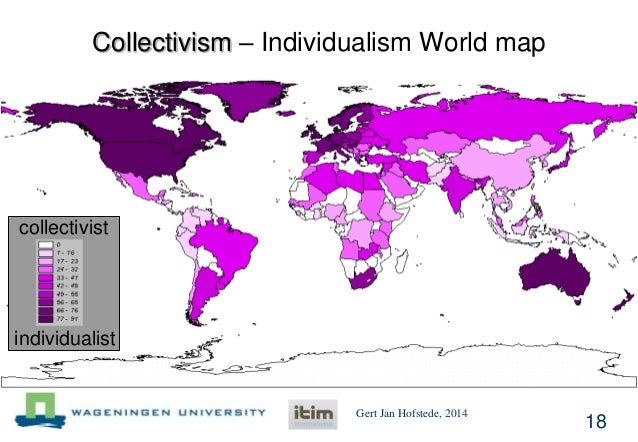
Before I came to the U.S, I went to South American private schools and it was a living nightmare. You breath collectivism and herd mentality is the only answer.
Because I'd refuse to work with groups, my grades were terrible and teachers often recommended my parents to seek 'special education'.
When I got in the U.S, I tested out of as many classes as possible and graduated HS at 15. If I had a talented child, I'd follow this map:
http://image.slidesharecdn.com/gertjan-penelope-telemachos-a...
> "I used to think their ubiquitous earbuds were feeding their need for stimulation; now I wonder if they’re sometimes blocking out the noise."
Most of the time my earbuds are in, I'm either listening to white noise or I'm not listening to anything at all... I put them in with the intention of listening to music, but never actually get as far as remembering to put the music on - and it's exactly for that, blocking out noise. Frequently, even if I have music playing, I'm not even listening to the music, I'm just drowning out distraction so I can concentrate.
This is nitpicking but, the A-level (the basement) at Regenstein library at the University of Chicago is not exactly a quiet reading area, it is typically loudest floor in the whole building.
Typically the loudest floor is the ground [first] floor...
In some cases they aren't overlooked, they get suspended for being involved in a physical altercation (bully beat them up) just like any other student.
Introversion/extroversion is a false dichotomy. There is no such thing, and no evidence fundamental personality types exist. Carl Jung's theories are unfalsifiable, untestable, and pseudoscientific.
Promulgating this quackery is damaging to people who are labeled as such and go on to identify with it.
I wrote a critique of group work based on my own experiences with it in school and in university, echoing many of the same grievances against voiced in this discussion:
http://likewise.am/2015/07/01/on-communication-skills-and-pe...
I took particular issue with the alleged wisdom of putting students of very heterogenous levels together so that the better ones can serve as a "role model".
However, my conclusion was that the best medicine is a return to more structured and - in some respects - authoritarian teaching methods centred around the lecture, not a different kind of diffuse self-motivated learning model.
What I mostly remember of school is that it grossly overlooked my great need to be elsewhere, doing something else with my time. I was greatly "extroverted": oriented toward that great exterior sprawling on the other side of the classroom's window panes.
I'm surprised nobody mentioned people diagnosed in the autistic spectrum, because so many are attracted to engineering and computer science - I guess there are many of us lurking around here...
So, is "introvert" a real thing? I feel like it's just a big group of character traits that are all gathered under an umbrella term.
Being in a classroom full of noisy students raised my anxiety in elementary school. I wish I could ease myself in with groups instead of just being thrown in one with the most obnoxious kids. I'm in my twenties now and still dislike working in groups. I'm far more productive and mentally stress free when working in solidarity.
When schools overlook introverts, they grow up and write songs like this: https://www.youtube.com/watch?v=YR5ApYxkU-U (Pink Floyd)
Minor correction: The A-level at the University of Chicago is already a floor where students are allowed to speak freely.
A more private DOES
This is also why I'm so against the typical public school systems we've built in the US. Its a top-down beaurocratic system that does nothing but transfer wealth from the taxpayer to the teachers and their unions. Outcomes are piss poor in big cities and endless strikes for benefits and pay aren't wonderful things. Chicago is reeling from a pension crisis right now mostly due to corrupt deals with a corrupt teacher's union. A teacher's union with an average teacher's salary of $72,000 a year - for 9 months work in a very affordable city! How affordable? Our average household income is $43,000.
We need more charter schools and alternative learning either funded by the state with existing tax dollars or attached to property tax breaks for parents using them instead of the standard public school. We've been fighting for more charter schools but they come slowly because of all the pro-union politics that many liberals, unfortunately, consider unquestionable. You'd think liberals would be on the side of alternate education, especially since there's so much research on different types of children responding better to these methods.
As an introvert and somewhat of a non-standard learner, I got lucky that my parents were able to afford private school for me. I know a lot of other introverts didn't get so lucky and suffered badly in public school. Some of them are doing very poorly in life and I fully believe if they had different educations opportunities they'd be much better off. A top-down system that works only with extroverted neurotypicals is a huge disservice to children and the taxpayer.