▲ 149 points
back
34 comments
The problem really lies with the fact that within the more than 100,000 published studies on Alzheimer's disease you are bound to find a random association between this disease and many other things. This is especially true for observational studies in people, and also true for low-powered studies in experimental animals.
Experimental science, however, demands that one establishes a cause and effect relationship. There is no known cure of Alzheimer's disease, so one cannot refer to experimental medicine for an answer, with the exception of inherited dominant genetic mutations that impact only a small number of people. Unfortunately, of these mutations, those affecting the APP gene do not cause neuronal loss in mice; so the mouse models are inherently problematic.
This editorial calls for a clinical trial for antimicrobials in this disease. While I doubt that Alzheimer's is caused by infectious agents, there really is no harm in trying (except perhaps to the pockets of the trial's sponsors). In fact a trial of the antibiotic minocycline was completed in 2014 [1], however the results do not appear to have been reported.
Yes. I think few non-medical researchers realize how limited the value of a particular correlation generally proves to be. The more you work with biomedical data, the more you appreciate the limited value of big R values when no plausible mechanism of action accompanies it. Given enough metrics, it's common to find one with perfect correspondence to a disease's biomarkers or symptoms. Lab biologists and chemists have long ago lost interest in exploring all the miraculous sure-fire yet inexplicable signals found by data scientists. The solution in this case is for the paper's authors to spend THEIR OWN grant money underwriting the clinical trials to explore their 'discovery'.
>"how limited the value of a particular correlation generally proves to be"
I would go further. In my medical research work I saw dozens, probably hundreds of "statistically significant" correlations between different variables in a rather small dataset. I found them just by taking different subsets or summarizing the same data in a few different ways.
I didn't find any interesting and so published nothing about them, but I am sure others could build entire careers out of coming up with narratives to explain those correlations.
I have to think that people who have trouble finding correlations are either clueless about exploring the data (eg have only ever looked at dynamite plots of their results) or are measuring something so swamped by instrumental noise it is meaningless.
Obligatory XKCD reference: https://www.xkcd.com/882/
There is a known cure for early Alzheimer's.
https://www.aging-us.com/article/9R5JsRe8k4Jq7uTXj/text
Bredesen DE. Reversal of cognitive decline in Alzheimer's disease. Aging (Albany NY). 2016 Jun;8(6):1250-8. doi: 10.18632/aging.100981.
Bredesen DE. Reversal of cognitive decline: A novel therapeutic program. Aging (Albany NY). 2014; 6:707-17. doi: 10.18632/aging.100690.
>Here we report the results from quantitative MRI and neuropsychological testing in ten patients with cognitive decline, nine ApoE4+ (five homozygous and four heterozygous) and one ApoE4-, who were treated with the MEND protocol for 5-24 months.
The number of patients studied is too few, i.e. is grossly underpowered statistically, and the results do not allow any general conclusion to be drawn.
Fascinating, thanks for the links. These findings might be preliminary, as this criticism of the claims lays out the case that it might be premature to make such assertions this early.
https://www.sciencebasedmedicine.org/mend-protocol-for-alzhe...
The commercialization of the MEND protocol might have run into some partnership issues between the original researcher and the first company he worked with dispensing the treatment:
http://www.prnewswire.com/news-releases/dr-dale-bredesen-ann...
Here is a more layman-friendly description of the MEND protocol.
The reviews of this work conclude that it is dubious, example: https://www.sciencebasedmedicine.org/mend-protocol-for-alzhe...
Why do you doubt that it is (or can be) caused by infectious agents, aside from the fact that in science doubt should be the default position. Is there evidence against it?
My intuition is that it is more likely caused by an infection than that it is just a malfunction caused by random chance
I doubt it because if it were caused by an infection, one would expect infections to cause Alzheimer's disease-like conditions more generally.
If it is caused by a specific infection, then one would expect such a specific infection to cause the disease in young as well as older people.
Neither of these scenarios are known to occur.
If you extend beyond these simple scenarios, then you have to assume that there is another (unknown) factor that induces Alzheimer's disease, and therefore that the theory of infectious disease causing this condition is not sufficient.
Suppose it is a reaction to a viral infection you get when you are young which reactivates when you get older. It could even be that the initial infection is asymptomatic in many or most people and that only a small percentage of those infected ever get the later reaction. It could be one specific virus or it could be that several virus can do it. It could be dependent on some other factor such as how the virus integrates into the host genome or later immunosuppression.
From the wording of the article, it's pretty clear that the researchers that the authors are aware of the degree of circumspection that such findings typically raise -- and that this isn't just a matter of a single associational study; but rather, a retrospective finding over many studies. Which the researchers feel should forces to consider the fact that we may be close to a tipping point, with regard to the proposed etiology at hand.
Hence statements like "We can't keep ignoring the evidence", "landmark editorial", etc.
While I doubt that Alzheimer's is caused by infectious agents, there really is no harm in trying (except perhaps to the pockets of the trial's sponsors).
Or to taxpayers when some pharmaceutical company finds a specious statistical correlation between Alzheimer's and an infectious agent that one of their products happens to treat.
A cynical view, yes. Borne out of my reading of Bad Pharma and coming across at least one startup whose business model was to do this with genetic tests.
Often negative results are never published. Great post.
There is a cure for the mouse model of Alzheimers:
http://www.fusfoundation.org/news/1535-new-pre-clinical-rese...
You probably have herpes but that's okay: https://www.washingtonpost.com/news/speaking-of-science/wp/2...
My wife studies Alzheimer's and I hope she will respond here, but I'm afraid she gets too angry by sensationalist stories based on editorials rather than mainline research.
Of course there is inflammation involved. From what I understand talking with her, there is not much mechanistic work done with human tissue; most of it is with mouse models that can only get parts of the disease.
Interesting to check out: the inflammasome: https://en.m.wikipedia.org/wiki/Inflammasome.
You almost certainly have CMV, and that definitely contributes to the progression towards dementias via chronic inflammation and other immune dysregulation. There are many papers on CMV and immune aging if you care to go digging.
Alzheimer's is as inflammation-driven as, say, heart disease. Which is to say that inflammation is a meaningful contributing factor along with all the other meaningful contributing factors. This is primarily these conditions are linked with obesity, because visceral fat is a major source of inflammation.
E.g.:
http://www.southampton.ac.uk/news/2016/01/blocking-brain-inf...
http://www.manchester.ac.uk/discover/news/treatment-option-f...
Plus it's hard to take the researcher seriously when it looks like they created their own university.
"Professor Resia Pretorius of the University of Pretoria"
> Pretoria: Capital of South Africa
founding a city to start your own University sixty years later to publish a paper another hundred years later, that's what I call the long-con.
LOL
From the abstract towards the bottom of the page:
> We refer to the many studies, mainly on humans, implicating specific microbes in the elderly brain, notably herpes simplex virus type 1 (HSV1), Chlamydia pneumoniae, and several types of spirochaete, in the etiology of AD.
slightly off topic but i remember a study from 2010 where it was found beetroots could help with older adults brain health
the sample size was not huge (14 i think) and it was cited nitrates are the beneficial agent. It would be interesting to see if there is any association between the suggested offending microbial activity and nitrates in vitro before moving on to some sort of in vivo model
https://www.sciencedaily.com/releases/2010/11/101102130957.h...
Your reference to nitrates reminded me of this other topic that was on hacker news today about migraines being caused by microbes in the mouth interacting with foods containing nitrates....https://news.ycombinator.com/item?id=12747773
It's interesting that viral/bacterial/fungal infections may be attributed to Alzheimer's - although undemocratically so, I still suspect prions as a culprit. Below is a link to a lecture by Professor James Ironside, University of Edinburgh, on the subject of prions. Whether such suspicions are valid or not, prions are very easy to be fascinated by, and it's a great lecture, IMO:
This is from March. Any critiques published?
I read, with great hope, every Alzheimer's breakthrough but in the last year alone the key has been found out to be:
1. Exercise for oxygen
2. Gum disease
3. Standing up and feeling a head rush
4. blood sugar and diabetes
If we can believe each of these 4 is the key insight within 12 months, I have to wonder at the state of our knowledge about the disease.
I've read that we aren't even 100% sure that the beta-amaloyde (spelling?) plaque, which is so associated with the disease, might not even be a cause but just a side effect (or even a protecting agent in defense of the disease).
If you don't understand that correlation doesn't imply causation, you should be sent back to your first year of high school and forced to try it all again.
What, if not correlation, does imply causation?
I'm sorry, is that an incredibly lazy way of arguing that correlation does imply causation, but you feel like reversing it and dumping the burden of proof onto me?
No.
Correlation suggests causation, but does not prove it.
It suggests correlation; get a big enough dataset and you'll find correlations all over the place. They don't imply a causal relationship, at all.
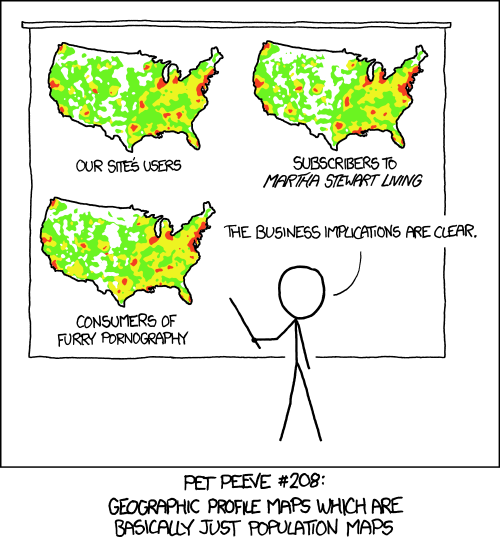
Indeed, correlations are not sufficient to establish cause. However... things that do cause a specific effect also tend to correlate. So correlations are a basis for hypotheses that can be experimentally tested.
To wit, the hypothesis presented in the post linked to by OP can be tested by treating people with Alzheimer's disease with antimicrobial agents.
Unfortunately, in what concern people (disease and dying) experiments on humans (aka clinical trials) are expensive, with uncertain returns. So the experiments that could test hypotheses concerning Alzheimer's disease in real actual people are rarely performed to the level statistically needed.
Instead we get a plethora of studies in mice with "suggestive"implications for what might occur in humans. Along with random studies that are not worth more than anecdotes (see those I commented on above).