back

by emptybits·7y ago·view on hn ↗
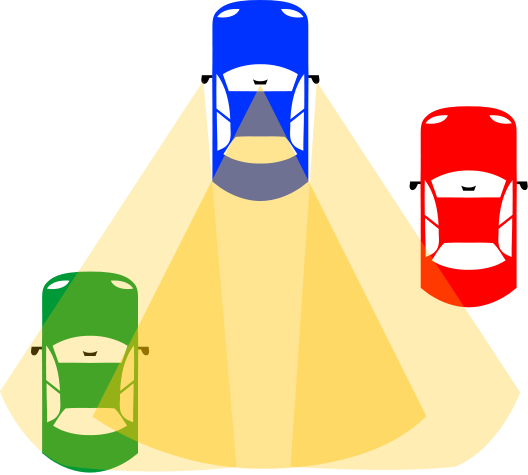
The Dutch Reach is a reach to ask for, IMO. I write this as a cyclist living in Vancouver (one city named in the article) who has been doored and nearly doored. IME, shoulder checks while actually driving seem to be a dying art form. So asking for a while-parked check like the Dutch Reach ... seems optimistic. But no harm in trying. The illustration is great. I applaud all efforts to make this technique more known.

Fellow cyclists, you already know this, but please watch sideview mirrors of parked vehicles and all other signs of people and passengers and assume the worst.

Infrastructure should, IMO, allow an extra foot or two in lane designs especially when they are adjacent to different users (i.e. motorist, cyclist, pedestrian). This allows for swervy cyclists, swervy motorists, bad parkers, and people "not from here" a safety buffer. The latter group is one you're just not going to ever reach with urban education like the article, yet they are a significant vehicular presence in a many popular cities, whether they're driving their own vehicles, an unfamiliar rental, or getting out of a taxi cab.

I'll give an example. All infrastructure design decisions have pros and cons. Here's a style of bike lane on the "passenger" side that catches motorists off guard (when they park too far to the right, near the lane) and passengers off guard because neither expect to find a cyclist on their right.

https://www.google.ca/maps/@49.2790648,-123.1195244,3a,75y,2...

How about some opening-door-tech that alerts you quickly and loudly when an object approaches your door as you begin to swing it open? Good for passing traffic, bicycles, etc.

BTW, I appreciate that cycling news shows up on HN from time to time. It's truly a civilized activity and IMO has an important role in the future of cities. Keep pedalling. :-)
4 comments
As a cyclist - just don't ride in reach of car doors. If that means taking the lane and blocking cars, do so.

At any speed trying to figure out whether or not someone is in it in time to slow down is impossible. Even if you slow down to a crawl as you pass someone sitting in the car you are still relying on them not opening it into your side. If you are right beside the cars you have no space whatsoever to swerve, because swerving towards faster traffic is suicidal.

As an occasional driver (I take the transit more), yes please take up the whole lane; is safer for both sides. If I find you too slow I can overtake you when safe (either in a different lane or in the opposing lane when safe). Essentially, treat you like a slow moving farm vehicle.

However, please do not lane split even when it's legal to do so. I can't see out the far side of the vehicle, so you're basically somewhere I have less control over. Further, if you take a whole lane _then_ lane split at the red light, it will anger me and I will end up driving more aggressively, which is rather terrible for safety. If I can tolerate you being slow in front of me, you can tolerate me being slow to accelerate.

Control your anger. In many countries bicycles get a reserved space at the front of the lights. (Some even now have bicycle-only traffic lights too).

Since that’s by far the safest place for them to be, filtering to reach it is absolutely appropriate.

Switching to lane splitting at red lights isn't about tolerating you being slow to accelerate.

Cars usually accelerate much faster than cyclists. It can appear the other way because I'm watching for the light to switch much more carefully - so I can make sure the car to my left will see me before right turning.

It's generally about letting people behind me get in front of me. Once I pull over to the side though I need to act like a 'normal' bicycle and pull to the front of the line. That's where people expect me - and that makes sure everyone turning right has seen me so they won't hit me.

It can also be about using the vehicles moving in my direction as a shield against people turning left. I worry that people don't expect me when I'm riding in the lane at a light, and as a result won't properly see me.

That said, if you're use to farm vehicles you probably drive in very different places than I ride (downtown in a big city).

What usually ends catching my attention is bikes filtering to the front, starting faster after the red light (possibly because they're watching the light closer), and getting ahead of the cars in the lane. Then once they're ahead, switch to the middle of the lane and blocking all the cars from going faster.

Basically, the complete opposite of letting cars behind get ahead.

As for left turns: that car behind you (when you take up the whole lane) is your shield; the opposing car doing a left turn can't go because that other car will T-bone them. When driving, there are few enough bikes that having to look for two lanes (even though only one is marked) is the unexpected thing, so I'm actually _less_ likely to see you. If you're blocking the car behind you, I'd actually look for you to figure out why the car is so far back.

The bikes accelerating faster thing is the excuse I've heard before for the bikes filtering at the red light; apologies if that's incorrect.

I certainly don't accelerate faster than the average car. I've heard other cyclists claim to and I basically just assume they are mistaken (apart from maybe some tiny subset of cyclists who race)...

Filtering on the right to pass and then immediately taking the lane for an extended period of time is certainly rude, and would piss me off as well. It's not something I've seen or would do myself but I can easily believe there are cyclists doing it.

The trick with the whole 'car as a shield thing' is I'm assuming you won't see me, but if I pass through the intersection with a car traveling in the same direction to my left it doesn't matter, you literally couldn't hit me short of shoving that car into me. The phrase I've heard for this sort of stuff is riding as if you were invisible. You're right that a car behind me is almost as good, but that assumes that I'm not the last person in the line.

A cycle messenger in London once told me, if you have to hit the door, aim for the hinge.

Presumably because you'd be launched over the door not into it, and thus protected from traffic in either direction. Perhaps also because the person opening the door might cushion your impact!

This. On a bike you are a road user. Take as much space as is safe.. Also be as visible as possible.

A motorist is many many times more likely to kill you unintentionally through negligence, rather than intentionally through psychopathic rage induced by having to slow down behind you.

Also. You payed for those roads via taxes, use them (no, road vehicle tax does not cover a fraction of road building and maintenance in any country)

Sage advice! I've commuted in traffic for many years now and am constantly shocked at how close other cyclists ride to parked cars. There is no benefit. I learned the hard way, you might not get a second chance to correct your behavior.
Not always possible. In London, the biggest risk of getting doored seems to occur where there is stationary traffic and a kerb-side cycle lane. It’s not uncommon for passengers to get out on the kerb side, opening the door without looking
As someone who’s gotten doored once or twice and nearly doored all the time on my Boosted Board I make sure to shoulder check prodigiously when driving to the point it annoys my girlfriend. I also make sure to always open passenger doors with the wrong hand when Ubering.

I don’t think it’s ever saved anyones life, but I do what I can.

Biggest thing cars can do and I always do is don’t pass a cyclist only to turn right 5 seconds later. Srsly what’s the point. Just drive slowly behind them for a bit. A little patience won’t kill you.

Also, I recently had to take the American driving test (I drove for years on my EU license coz I’m lazy). The rules actually say you have to use the bike lane as a turn lane to avoid blocking traffic when turning right. That shit’s fucked up.

There's no such thing as the American driving test - every state has their own test and their own rules.

Using the far right lane to turn is supposed to be safer for cyclists by reducing the possibility of right hook collisions. It is, however, less convenient for cyclists since they may be blocked by a car waiting to turn.

California requires cars to merge into the bike lane before making a turn.

Oregon on the other hand forbids cars from using the bike lane for turns.

Netherlands driving instruction back in the day taught to take the cycling lane[1] for turning after first mirror-mirror-shoulder checking to be sure it's free. Reasoning is indeed to prevent a right hook collision after you thought you'd already checked.

[1] Note that busier roads tend to have cycling traffic completely separated onto a separate cycling path. But there's still roads with cycling lanes or shared with cycling traffic, so the rule is still used.

In Germany dedicated bike lanes have a solid line, so you're not allowed to cross into them for turning. Radschutzstreifen (translation n/a, like a bike lane, but it has a dashed line and is usually put on roads as an afterthought, so it's usually too narrow for larger vehicles to pass each other without using the Radschutzstreifen; it's a great contortion, really) on the other hand have a dashed line and generally it's a good idea to just use them for turning, properly switching "into" the lane, of course.
Radschutzstreifen (translation n/a, like a bike lane, but it has a dashed line and is usually put on roads as an afterthought, so it's usually too narrow for larger vehicles to pass each other without using the Radschutzstreifen

My experience from living five years in Germany and commuting to work by bike daily is that there are always some smaller vehicles that cross the dashed line. Especially when they in line for a traffic light. This often makes bike lines pretty much unusable (I often had to switch to the pavement to continue cycling, behavior that I copied from German cyclists).

I have always wondered whether drivers simply don't care or don't want cyclists to overtake them when they are waiting in traffic.

Another thing that I noticed in Germany is that most car drivers are either too cautious or extremely reckless in their attitude to cyclists. The cautious drivers will do things like drive behind you for long times, even though there is plenty of time/space to overtake. The reckless drivers will cut you off even if you have the right-of-way. The problem with both overly cautious and reckless drivers is that they are very unpredictable.

I am now back in The Netherlands and I am surprised how friendly cars are to cyclists (you only notice when you've been abroad for a while). The biggest danger are other cyclists ;).

That's awful reasoning for using the cycle lane to turn, but (having never used it) I prefer the rule itself. Assuming the driver acknowledges they're changing lanes when they move into the bike lane, and checks appropriately, it's a clearer indication of driver intent and therefore precludes bike undertaking, whether deliberate or accidental. It also means the driver can focus on one thing at a time, bikes when moving into the bike lane, then the side street as they turn into it. I say this as someone who until recently commuted by bike almost exclusively and believes bikes should be given much more favour on the road. I'd be interested to know whether it's been found to be safer.
A similar thing near where I live. They took out a lane, put in a turn median turn lane and a bike lane. And kept the on street parking. When it would have been much safer to just get rid of the on street parking.

https://goo.gl/maps/736bR7HMats

Edit: When I was in Taipei years ago they had dedicated lanes and over passes for Scooters. My thought is relatively roads for scooters and bicycles are really cheap. Another memory is when they built the highway 85 extension in the 90's bicyclists started using it in large numbers before it was open to traffic. That leaves me with the impression that the biggest impediment to getting people to ride bicycles is having to mix it up with auto traffic.

> They took out a lane, put in a turn median turn lane and a bike lane.

> https://goo.gl/maps/736bR7HMats

It is unrelated to the original subject, but how does this "median turn lane" work?

For me, the marking means that you can get out of that lane, but not into it in the first place... To get into that lane, you have to cross a continuous line from your side, which is not supposed to happen (in the rules I know at my place).

It's a turn lane, you enter it from the left (either direction) and then can sit there until it's safe to turn into a driveway.
I see the marking style is official ("Two-Way Left Turn Lane"):

https://mutcd.fhwa.dot.gov/services/publications/fhwaop02090...

... but it is still a weird choice that it re-uses the marking for "Passing Permitted in Direction Having Single Lane" in a not quite compatible manner. I would not have picked that, it hurts my sense of regularity :-)

BTW, is it allowed to use that type of lane for the opposite manoeuvre (I mean coming from a driveway, crossing the 2 lanes on your side, then sit on the middle lane until you can safely insert in the opposite traffic). I guess not?

I used to do shoulder checks often but stoped to do so unless absolutely necessary because the practice also causes you to lose awarenes of what is in front of you and more importantly you can lose awareness of the direction of your movement.
Do try to stay in practice a little bit, on the off chance you ever want to drive on Dutch or German [1] highways. Forgetting to check your right hand mirror and shoulder will get you hit by a truck; forgetting the left hand will get you hit by an Audi or BMW (or volvo ;-) ). Both are painful!

[1] German highway is called "Autobahn", and has some interesting traffic rules.

> [1] German highway is called "Autobahn", and has some interesting traffic rules.

Interesting? I don't think so. Very few and well reasoned rules apply to Autobahn: No turning around. No stopping. There are no crossings of any kind. As on all highways with more than one lane, a Rettungsgasse (emergency way) must be created as soon as traffic congests.

> Forgetting to check your right hand mirror and shoulder will

Incidentally, it seems mirrors are thought very differently in the US. It seems in the US a "blind spot free" arrangement is preferred, meanwhile in Germany the normal arrangement is preferred. Fun fact: The English Wikipedia has this image ( https://upload.wikimedia.org/wikipedia/commons/thumb/9/95/Bl... 9 ) as an example of incorrectly adjusted mirrors. The German Wikipedia uses the exact same image as an example of correctly adjusted mirrors.

Mirror usage in the US was that of the image you reference, and only recently has started to shift. Here is a comparison of the newer (in the US) and older versions: https://www.caranddriver.com/features/how-to-adjust-your-mir...

The choice is not really between "blind spots" and "no blind spots" but between "one big blind spot on each side" and "two smaller blind spots on each side". YMMV, depending on whether you often drive on multi-lane roads and highways.

Whether a majority of US states adopt one standard or the other is an open question. IMHO, getting USA drivers to increase their roadway situational awareness, whether by adjusting mirrors, reducing distractions, or other means feels like a cause that was lost when cars got radios and air conditioning, and drivers rolled up their windows.

> Here is a comparison of the newer (in the US) and older versions: https://www.caranddriver.com/features/how-to-adjust-your-mir....

"Sorry, this content is not available in your region."

Wow, I didn't know HTTP allowed you to request content from two decades ago.

Autobahn rules are interesting specifically because they're few and well reasoned.
American, I was taught the normal arrangement, but I've adopted the blind-spot free after nearly hitting more than a few drivers who were in my blind spot.