▲ 86 points
back
76 comments
As someone who grew up in the Soviet Union/Russia, this brings back a TON of nostalgic memories. The entire aesthetic is triggering (in a positive way)
I don't take a jaded approach to the idea that there is an intersection between my childhood innocence and state propaganda. Plenty of North American traditions I see my wife and friends feeling nostalgia for are also based on church or state "ideals" that become beloved traditions over time.
You only call the Soviet ones "propaganda" because the USSR was the enemy.
It is called propaganda because it is advertising which is paid and sponsored by the state. Also propaganda does not try to encourage the sale of a product, service or idea. Propaganda is not bad per see (like in this case - it is actually very nice).
And also this is not "Santa" - it is Дед Мороз (father frost).
If you want to think of propaganda in terms of advertising, it's sort of judgement advertising. Doesn't really matter who pays for it. The purpose is to not let people make their own judgements on certain things. While the purpose of advertising products is to inform public about existence of products. Using propaganda in advertisement is usually illegal too.
Grandfather Frost, to be pedantic.
Even in Soviet Union no one would bother to print post cards that no one will buy. So these are of popular demand at that time.
Propaganda is Advertising in the erstwhile Eastern bloc and the Axis powers when thry existed. In other words our advertising is their propaganda.
I think that a value on a sliding scale 1..10 is determined by the extent to which the package being sold has ideological/political content.
1. For good time call ....
10. War bonds: https://library.ucsd.edu/dc/object/bb25605696/_2.jpg
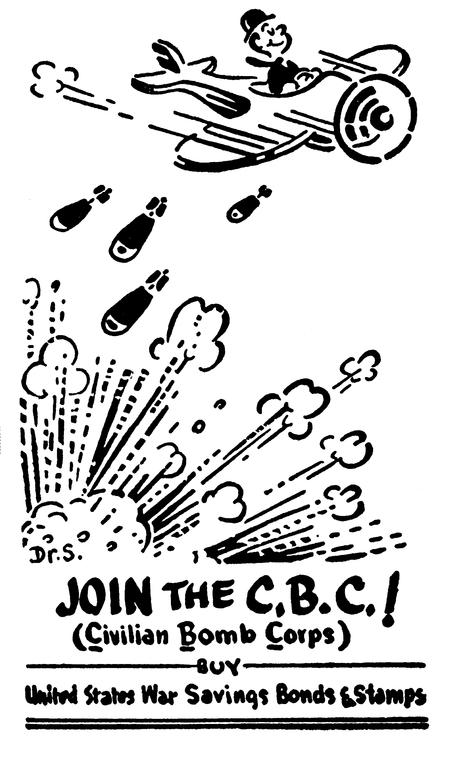
Disagree. Advertising tries to sell you something. Propaganda doesn't try to get you to buy things, it tries to force you to think/feel certain ways. They're similar media in a lot of ways but very different in thier purpose and outcome.
The father of "public relations", Edward Bernays, basically said as much.
> The entire aesthetic
Do you have any other examples matching such an aesthetic? I quite like it too.
Here is collection of Soviet post cards for International Women's Day celebrated in USSR as Mother's day.
https://kulturologia.ru/blogs/080315/23587/ https://swalker.org/other/1342-sovetskie-otkrytki-na-8-marta...
So does that mean that these are also propaganda?
https://upload.wikimedia.org/wikipedia/commons/d/dc/First_ma...

http://cconnect.s3.amazonaws.com/wp-content/uploads/2015/10/...
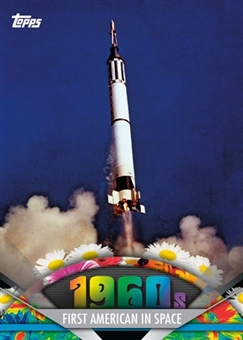
https://si.wsj.net/public/resources/images/RV-AD398_VISUAL_G...

Is celebrating your achievements propaganda?
Any art form that was created by the Soviet artists will be considered propaganda since it was state sanctioned. And they were pretty vocal and straightforward about that, art was to educate the people. In US, art many times is just away to make money. But I actually prefer the propaganda art. My favorite propaganda movies are by Tarkovsky - Mirror and Stalker....
> Any art form that was created by the Soviet artists will be considered propaganda since it was state sanctioned
How does this follow? Are US Army ads propaganda? How about NASA posters? Agricultural statistics leaflets?
What do you call media that uses manipulative language to stir popular feeling through appeals to emotion that was privately funded?
Nowhere in the dictionary does it say it's propaganda iff it's state-sanctioned: https://www.merriam-webster.com/dictionary/propaganda
Well there was America's Army[1], a video developed for the US Army. There are a whole series of these games and if they are not propaganda I don't know what is.
Propaganda can have a rather neutral definition. US Army ads are definitely propaganda. NASA posters are more of a form of marketing and self promotion. I don't think I've ever seen an agricultural statistics leaflet. But if you go to a public health clinic, you will see lots of propaganda about smoking, well care visits for infants, vaccines, STDs, etc. There is tons of propaganda in the US, much of it put out by 3rd parties, for example anything to promote "awareness" of some cause or issue. Also, any issue-oriented documentary is probably propaganda.
Everything done by the Soviets was state sanctioned. Making toothbrushes was state sanctioned (and centrally controlled, poorly).
So if a cultural piece is produced by, under the direction of, or with the sanction of a government entity, does that make it propaganda? If so, this would make it impossible for any centrally controlled populace to create anything not propaganda.
And impossible for private actors to create anything propaganda.
USSR was a state-wide-corporation, and society model was state capitalism. Just one big corporation where government is just a board of directors really.
Same is China now.
In fact as larger US company as more of those stuff from USSR in it. That was my biggest surprise when I moved to North America from USSR in 1999.
Imagine establishment of one big "USA, Inc" and you will get an idea how it could work. You will get planned economy on its next day, exactly what any corporation do these days - planning to minimize operational expenses.
ooh lets post one liner wikipedia links and feel smug!
Thats not at all what i was aiming for, however enjoy feeling like you got me
This isn't about whataboutism. I'm not referring to any hypocrisy here. The problem is with the criteria being used to define "propaganda".
In this case I argue that, when the same standards are applied to Western media of this type, the same (invalid) conclusion must be reached. Therefore, the evidence presented is insufficient for the charge of propaganda.
If NASA put out these postcards, we'd call them "marketing". Why is everything Russian "propaganda"?
Propaganda is meant to convey or reinforce an ideology. Since, at this time in history, there was a real “hearts and minds” battle between East and West, these kinds of campaigns can safely be considered propaganda. Similar postcards made by NASA at this time would certainly be propaganda as well.
A similar example in the West today is those ads for the US Army they sometimes show before movies.
JFK's famous "we choose to go to the moon" speech would be propaganda also.
I'll just add to what has already been said, that this is part of a broader campaign and is not just imagery used to promote the USSR's space agency. Also, literally every company in the USSR was state owned, so its hard for a marketing campaign to not be associated with them.
No, we'd call that propaganda as well.
It's not that "everything Russian is propaganda" it's that under the Soviet Union at the time these were produced there was a specific agenda and ideology intended to be propagated by the state and funded by it. And under that regime, if you made a holiday postcard showing a drunk Lenin and Stalin arm in arm staggering down a snowy street and tried to distribute it as "art" you would have likely ended up in a re-education facility. Context is relevant to the terminology here.
Also, checkout this: https://en.wikipedia.org/wiki/Whataboutism
If I had a penny for every time someone posted this link when it didn't apply...
This isn't an instance of tu quoque.
All marketing is propaganda, but not all propaganda is marketing.
Exactly my point. This is just marketing.
It's interesting that their Santa looks a lot like the US/UK version of Santa designed by Nast, later popularized by the Coca-Cola Co.[1], and not a continental Santa.
It is supposed to be https://en.wikipedia.org/wiki/Ded_Moroz, not Santa. (The article somewhat implies that Ded Moroz was a communist invention based on Santa Claus, but in fact this is not true.) And you can see even in the postcards and the article that he doesn't necessarily has a red dress, although I suspect (maybe some Russian can clarify) that the red dress is the influence of the West.
Russian Wikipedia says Ded Moroz is a merger of earlier folk and literary characters in Pagan-like tradition, with Saint Nicholas who was imported in the mid- to late 19th century.
E.g. this card is Saint Nicholas from sometime before the 1917 revolution: https://commons.wikimedia.org/wiki/File:Ded_Moroz_Snegurochk...

while this is an interpretation of the old Moroz character in traditional garb, by Victor Vasnetsov: https://commons.wikimedia.org/wiki/File:%D0%94%D0%B5%D0%B4_%...

White coat seems to be more in line with the tradition, but frankly I dunno if Ded got much of graphic development before Nick swooped in, as he seems to be more of a figure of fairy tales and some literature.
It's left to dig up why the card above depicts a Nicholas of Nast's design.
> The article somewhat implies that Ded Moroz was a communist invention based on Santa Claus, but in fact this is not true.
It is true to some extent. I'm not sure, but it seems to me that before communist revolution Ded Moroz was not an essential part of christmas. It was mostly fiction and lore character representing winter and cold, and was not connected with christian holidays. It is communist's work to make a strong connection, and it seems as an imitation of Europe and US traditions.
> he doesn't necessarily has a red dress, although I suspect (maybe some Russian can clarify) that the red dress is the influence of the West.
He have no strong preference for a dress color. Though red and blue are the most frequent. Maybe just because soviet industry made only red and blue dresses for actors playing Ded Moroz. A lack of variety is a known Soviet industy trait.
I suspect it has something to do with the communist revolution rather than the influence of the West
It is not Santa Claus. It is "Ded Moroz"[1]. An old bloke from the times before christianity came to Russia. Orthodox priests always (for a ~1k years) opposed such characters, trying to extinguish any lore except christianity, but never fully succeeded.
Thanks. Wikipedia has the drawing from 1885, i.e. more than two decades before the Soviets existed:
https://en.wikipedia.org/wiki/File:%D0%94%D0%B5%D0%B4_%D0%9C...

Anybody knows even older?
It's curious how Russian (or Slavic?) people never abandoned remnants of pagan traditions despite calling themselves Christians. Fairy tales and merchandise galore, dozens if not hundreds of superstitions. Plenty of older people still believe in folk magic practiced by ‘gifted’ individuals (pretty much witches), though apparently with God's blessing.
The same happened with religion and socialism: bolsheviks didn't hold back on killing priests, but the religion went strong (though it's said that the opposition to religion was abandoned in the light of unifying rhetoric of '41–45).
Basically, people don't seem to care about ideological purity as long as the rhetoric is attractive.
It kind of makes sense. If they had to appeal to the western image then they had to chose between capitalist Santa Claus and catholic Saint Nicolas.
Considering that Christmas was not officially celebrated in the Soviet Union and private celebration was repressed to a various degree then they were left with a single option.
Those cards are for the domestic market (pretty obvious from Russian writing), and that's ‘native’ Ded Moroz, not Santa. He just does look that way, possibly due to earlier cross-pollination.
Not even a single Снегурочка on this cards? No concept of women in the bright space future!?
There aren't any on this page but the Soviets definitely had space posters/postcards with women too. Especially since the first woman cosmonaut predated the first woman astronaut by 20 years.
Example: https://66.media.tumblr.com/cb254106ab11f89194fc172c1948f897...
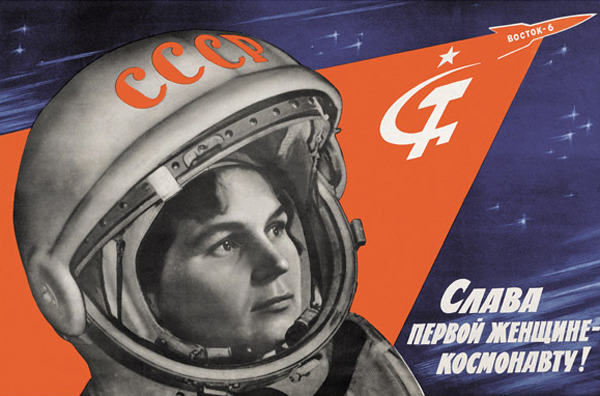
There's an exhibit at The Museum of Russian Art in Minneapolis about Winter Holidays in Russia that highlights both the state and the church's celebrations from about 1900-1970. Though celebrations started coming back in 1935, they displayed contemporary newspapers showing how the state truly embraced it to help with the hardships during WWII. It was a great exhibition, I went a few years ago but it seems to be running again if anyone is interested.
I love these vintage posters and artwork. In current times they are less propaganda and beautifully capture the essence of a certain time and culture. They are equally interesting posters this side of the 50s onwards that could be looked on as propaganda but also again capture an essence.
Communism was a response to the incomplete transformation from feudalism to democracy, for history buffs its easy to understand its context and its incredible that something so radical and egalitarian in its objectives was actually put into practice, that this was even possible in a time filled with feudal instincts, interests and attitudes itself is astonishing. The rest is history.
Future generations can learn from the multi dimensional failure in practice and learn to recognize how the significant gaps between ideals and reality came into being and use the same understanding to also recognize the significant gaps between our ideals and reality of current power structures and how the world works and is. That is our propaganda.
Lots more of this kind of thing here: https://www.reddit.com/r/SPACECOMMUNISM