▲ 58 points
back
69 comments
I have a couple VR headsets and, like someone on reddit recently observed, they sit mostly gathering dust - but, when I do put one on, I will use it for hours. Most times it's such a totally immersive experience that I'm usually shocked to discover that I'm actually at home when I take off the helmet.
IMHO VR (and AR) has moved on from being at a high risk of dying as an overhyped fad (e.g. 3D TV) to having enough niche utility that its uses will grow as people get exposed to it.
Using VR is a fun regular diversion at the moment, but not a highly useful tool - but I'm hopeful that will change. I would love to be able to easily use a VR helmet in conjunction with a keyboard/mouse/hands vs. holding controllers to do more intensive computer tasks like programming.
For what it's worth, gathering dust isn't universal. Pretty much every day mine gets fired up for half an hour of Pistol Whip or Beat Saber.
Other games get longer sessions, like Shadow Point which I just started yesterday. Neat game so far, puzzles based on perspective, light/shadow, mirrors/reflections, that kind of thing. It reminds me of The Witness in a lot of ways.
Also has some unusual spaces where rooms connect to each other or back to themselves in a ways that they shouldn't. Nothing new about that in games, but it's weirder to experience in VR than on a computer screen.
My favorite trick so far has been where they'll make you lean in close to something, and then when you step back you find yourself in a totally different space. Nothing changes on screen, they just pull the whole environment out from under you while it's outside your field of view, leaving only the part you'd been looking at unchanged.
Narration by Patrick Stewart is also great.
A friend was telling me last week that a 3D space strategy game is what he was hoping to see in VR before he jumps on board. Then last night I stumbled on Eternal Starlight, which will be right up his alley: https://twitter.com/e_starlight_vr/status/121164647988401766...
It's still early days, but I think VR has a lot of room for different kinds of experiences for all sorts of demographics. Very excited to see what we can do with it in the next couple of years.
> I would love to be able to easily use a VR helmet in conjunction with a keyboard/mouse/hands vs. holding controllers to do more intensive computer tasks like programming.
I'm looking forward to this with the Quest. I've tried out the hand tracking but there aren't many apps that support it yet. I haven't given bluetooth pairing a go yet but I'm itching to try out some kind of text editor with it when I have the time.
I agree that they need to reduce the barrier to putting the headset on even more, I think that moment will come when the UI experience is as easy as opening a laptop which probably means reducing the weight further and having much better video pass through so you're not completely hoodwinked while using it (being able to easily drink a coffee while working in VR is a must). AR glasses would be ideal but seem like they're still pretty far off for reasons like battery life, screen resolution, opacity, and bulkiness. The interim solution will probably just be comfort and durability for VR to the point where you can put it on as easily as a hat and treat it with the same physicality as a tablet.
Oculus' Half Dome 3 prototype[0] seems to be exactly this which is why I'm very excited to buy whatever iteration of it comes to market.
[0] https://www.oculus.com/blog/half-dome-updates-frl-explores-m...
>I haven't given bluetooth pairing a go yet but I'm itching to try out some kind of text editor with it when I have the time.
Seen a few people posting that Glitch's coding tools work in Firefox on the Quest with at bluetooth Keyboard.
>I have a couple VR headsets and, like someone on reddit recently observed, they sit mostly gathering dust - but, when I do put one on, I will use it for hours.
That was one of the key factors that influenced the design of Oculus Quest. Carmack spoke often of minimising the "time-to-first-fun" in both hardware and software. A VR headset that you can just put on and start using is meaningfully different to a VR headset that requires even the most moderate amount of setup.
> I would love to be able to easily use a VR helmet in conjunction with a keyboard/mouse/hands
Oculus Quest already supports the Bluetooth pairing of keyboards and mice, which can then be used to wirelessly interact with a remote PC via Virtual Desktop. We don't yet have a mechanism for tracking the position of keyboards and mice, but it's pretty much trivial if there's a market for it - we just need keyboards and mice with embedded IR markers.
Controllerless hand tracking is in beta on Quest and developers have access to the APIs; official support should be rolling out in the next couple of months.
The resolution is still much lower than we'd like, but 1440 x 1600 per eye provides a marginally tolerable experience for desktop computing. The HP Reverb already provides 2160 x 2160 per eye, so we're very close to having headsets that can truly replace a conventional monitor.
I wonder if there is any application for VR as an IDE tool. From what I understand, today it is very hard to see text clearly and type, but I spend a lot of time sitting on my couch or laying on my back trying to code pretend I'm not creeping up on 30 and that I can sustain that kind of computer use. I think if I could wear a headset and sit on my couch or even lay on my back and code it would be heavenly.
I've played around a bit with Virtual Desktop[1] on my Oculus Quest, and text is surprisingly legible, even over WiFi. I've seen some people on Reddit who claim they write code all day with a similar setup (often with 180° or more of monitors). It's not something I would want to do (esp. typing while using VR), but it's possible.
Have you tried the oculus dk2? As I recall text wasn't crisp enough to be usable - wondering if that's much better on the quest?
You're using the quest as a vr headset for your computer? Running W10?
Agree with all of the comments here which can be basically boiled down to: the hardware, especially the Quest, is great and "ready" for prime time. However the software is not. Yes, agreed 100%. As a hobbyist web vr developer I'd say one of the most difficult (and also exciting) things about the industry is that there are very few agreed upon conventions. As a developer you are faced with recreating the wheel for each and every experience. Imagine if as a web developer you had to literally recreate pixel for pixel a web form, checkbox, etc. and all its behavior. It would take forever to just get a basic application working. That's where VR is at. It's coming, just slowly.
We just got our 8yo son a Nintendo Labo kit to go with his Switch. I was skeptical about it, because anything with VR or AI or ML in the promotional material has the potential to be mostly hype. But I was amazed watching him build and use the kits.
If you're not familiar with it, the Labo is a series of cardboard devices that you build, which hold your switch and controllers and turn them into a VR setup. For example, you build a blaster and play a VR game where you shoot aliens from a few different virtual worlds. Or you build a bird with wings that flap, and then you fly around with other birds looking for eggs to hatch. Along with that, you build a foot pedal that makes you fly faster, which also fans you so you feel more air rushing by your face as you fly faster.
The first time I tried it, I spent about 5 minutes shooting at aliens all around me. I was laughing and jumping when the boss alien leaped into the air and came down over my head. When I took the headset away from my face, I was amazed to find myself back in my own house.
It's amazing to me that people at Nintendo built a VR kit around a device that, as far as I know, was never intended to be a VR device. It's been really satisfying watching our son build his own setups, rather than just using a manufactured plastic device. He's having so much fun with it, and he's learning so much from it as well. He sees what the screen looks like in VR mode when it's out of the VR kit, which has led to interesting conversations around concepts like raytracing.
If you're not ready to jump into an Oculus setup and you already have a switch around, I highly recommend trying out one of the Labo kits.
While the Labo is great, we should avoid describing it as VR. The same is true for Google Cardboard.
The experience in a "true" VR headset that offers 6 DoF and hands, such as the Oculus Quest, is just something completely different.
I could make the same argument that lack of eye tracking, native speech inference, better locomotion strategies, and higher resolution mean that today's cutting-edge VR headsets will be subject to the same misplaced scrutiny that you're currently giving the cheap, commoditized headsets. It's still Virtual Reality.
>It's still Virtual Reality.
It really isn't. 6DoF with hand presence is profoundly, fundamentally different to 3DoF. It's the difference between someone taking off the headset after a brief demo and saying "that was cool" versus someone taking off the headset and needing a moment to recalibrate their sense of reality. 3DoF is a panoramic monitor, 6DoF is being there.
Not really. It’s subjective, but full head and hand tracking is a radically different experience then all sub-options, and the things you mention do not seem to be as radical an improvement in comparison.
What would you call it? It feels completely different than any game I've played before.
Your comment makes me look forward to trying an Oculus when I have a chance.
The gap between a 6DOF headset and a 3DOF headset is almost as much as the gap between a 3DOF headset and simple stereoscopic images. The 3DOF viewers are whimsical but a good full motion VR experience can actually click you into full immersion. The kind of immersion where you might accidentally lean on a table or wall that doesn't exist.
It's still VR but I think the gap between a "Google Cardboard"-like experience and real VR is huge.
The 3D effect of VR is cool but the real magic is using controllers in true 3D space, the Oculus ones are really well designed and just sort of fade away and feel like your hands.
It's functionally VR and is most current gen folk's/kids first experience with VR. There is no point gatekeeping it
Unless you think ~20 million headset VR users is somehow a large number of people in a world saturated with smartphones
>It's functionally VR and is most current gen folk's/kids first experience with VR. There is no point gatekeeping it
A Zoetrope is technically a moving picture, but it's a fundamentally different category of thing to a real movie. Sticking your smartphone in a glorified ViewMaster is a cool gimmick, but it's a pretty disappointing experience after the very brief novelty has worn off. If we don't very clearly delineate "real VR" (6DoF, low latency, hand presence), we risk poisoning the well for the whole industry.
VR hardware, with the wireless Quest and its eventual successors, is ready for the mainstream.
VR software is not.
What drives an industry is value, whether business or recreational. While VR software has typically focused on entertainment value (and there is a lot there), business-driven VR software hasn’t received as much attention as it deserves. But thus far no killer-app of VR has been made. There is no excel, no word, no browser. But there could be, if more people thought about and identified what VR hardware can do that no other platform can. Moreover, its value needs to be a 10x moment. Minor improvements will not cause mass adoption.
So what can VR provide that other platforms can’t?
1) 3D Space
This is the first thing people think of, but is the least important. There are few business tasks that can’t be done on a 2D plane, and the value of going 3D (such as in industrial design) is not a 10x improvement over real-life prototyping.
2) Unlimited space
This also provides less value than it seems. A human can only be in one place, and our vision can only encompass so much area. There is a low upper-bound on how much space a human being can use.
3) Presence
The feeling of “being there” is something VR does 10x better than other platforms. This has been leveraged by entertainment software to good effect. However, the nature of recreational user experience — gameplay experience — doesn’t hinge upon presence in a location. VR games can induce strong presence while still not providing value with strong gameplay experience.
4) Social Presence
This is where VR hardware has the greatest possible leverage and impact. When you play poker in VR, you see this most clearly — people spend more time interacting with one another than actually playing poker. Even with cartoonish avatars, the feeling of being in the presence of another person is practically the same as being in the same room with them. There is large room for growth in improving social presence, but even the early state of VR software is 10x better than what exists elsewhere.
If there is to be a killer business app for VR, it will be akin to excel. But instead of transforming numbers and formulas, it will transform communication and relationships. Whatever replaces Facebook, video chat, JIRA, Reddit, Tinder, or even email will be done on VR/AR.
The gold is there waiting to be picked up. It’s just up to some great company to do it.
You're definitely right about social presence being the key but I think combining it with the other strengths of VR will be what produces a killer app. 3D space and unlimited space by themselves may not win out but sharing those spaces with other people is a huge multiplier. Conferencing comes to mind where you could have the Twitch of business/industry conferences so instead of attending a small handful during a year you would be able to organize and attend spur of the moment conferences focused on a recent development or regular get togethers for professionals to network and share ideas. Also, we may be able to do most work on a 2D plane but we collaborate more effectively in the physical world, instead of endless email threads, Slack chaos and video calls it would be much more effective to sit in a virtual room together talking, working, and sharing information the same way we would hash things out in real life but without the requirement of being in the same office or finding a suitable location. Personally I think education will be the big winner, VR already provides all the necessities of a classroom and offers to add a lot more value by having interactive components and keeping the social dynamic of attending lectures and study groups in person all while making the facilities cheaper and wider reaching.
Regarding points 2 and 3, I have the opposite impression. You can't actually walk anywhere larger then your room and you can't touch anything. If you lean in to get a closer look, you can't focus on the thing close to your face (and it'll be low res). You're right that clever software might fix some of this (better ways to "walk"), but hardware has a ways to go to get higher resolution, a focal distance that isn't a constant couple yards away, and tactile feedback. And solving the last mile of comfort and nausea.
True. I feel like all the inconvenience that comes with VR would be justifiable, if it could actually create true immersion. But it can't and never will.
Basic problems of VR aren't solvable. Just to fix motion sickness once and for all, there would have to be a device that fucks with the vestibular system or something that moves the player in the real world at close the velocity that the player is moving in the virtual world (Like a giant crane or something).I really can only see VR working as like a public thing where you go with friends in your free time similar to a cinema. Maybe "VR cafes" could be a thing in the future, like those gaming cafes are in south Korea. For home consumers VR-gaming will always stay just a fun addition to regular gaming, as they will never be able to afford the hardware that can make a VR experience not suck. I think it would be a huge success already if studios would make there regular games naively playable in VR. I think it says a lot about VR software that beat sabers is still the most popular VR game although it does not even try to use the full potential that VR truly has. Could as well be a mediocre Wii game.
VR hardware is awful. It's bulky, uncomfortable, and annoying.
Until VR headsets are as light and unobtrusive as a pair of ordinary glasses, VR will never become mainstream.
Even ordinary glasses are unacceptable to many people for aesthetic reasons, despite being much lighter, less obtrusive, more comfortable, and more convenient than VR headsets, which look even geekier than glasses.
That's what John Carmack says. He's said that VR headgear needs to get down to swim-goggle size to become mainstream, and down to eyeglass size to become pervasive. He's probably right.
I think even ski goggle size would be fine for a lot of people. People make sacrifices for features, just look at the giant phones everyone is using.
> VR hardware has the greatest possible leverage and impact
Highfidelity tried to do that and it failed miserably. I think their major problem were the controls - they refused to add text chat and people felt incapacitated in a social environment. Second life, with its old graphics, still does it 100 times better using just a screen
- https://forums.highfidelity.com/t/going-out-staying-in-judas...
Agreed. I also dive deeper into some of your points in these two blog posts, and mention new ones (remote work, "TikTok of VR", creating a movie in VR etc.):
I forgot to mention that fitness is a uniquely great use case for VR. I use my Quest daily to work out cardio and core (Box VR and Thrill of the Fight are awesome for this)
You might be interested in our project at Mozilla, Hubs [1]. It’s focused on multi user avatar communication in mixed media spaces, and supports VR for the reasons you mention.
Next year, we will be releasing a version that makes it easy to run your own custom server on cloud providers. Our thesis is that this will open up a lot of use cases, especially for enteprises.
[1] hubs.mozilla.com
the problem I see with 4 is that the best VR experience (Oculus) is pretty much closed and kept in tight grip by Facebook. So if anyone ever starts to make any progress on a Social Presence app, it's unlikely Facebook will just "let it happen" - in particular because Horizon seems to be the end-all of VR for them, so the first wave of developers that try to do any baseline experience will probably be either kicked out of the platform or never allowed in.
I imagine a "content kit" is in the works as part of Horizon, to enable developers to build their own experiences within the Facebook VR universe. That _may_ be game changing for consumers, but I wouldn't hold my breath as the potential as a developer.
Really hope I'm 100% wrong with this, though.
To be honest, I feel that Oculus/Facebook are really fair with their headsets. All of their headsets can natively play SteamVR titles and there is no major gatekeeping in that direction. Sure, they do have criteria for getting included in their store but they are not blocking anyone from using other kind of software.
With Oculus Quest, they are even slightly allowing "unofficial" content on the device with sideloading APKs onto the device. They could close everything down if they wanted but they seem to be quite fair so far.
As a developer, you can stay on SteamVR and ignore Oculus. If your content is good, people will use their Oculus headsets with SteamVR to access your content.
My issue with VR has always been UX. I purchased an Oculus Touch a couple of years ago. When it works and I'm in-game it's utterly transporting. Truly a next-gen feeling. Everything else about it is an absolute nightmare. The software insists the headset is working fine while the headset is blank and displays an amber warning light. It requires you to have a computer monitor facing your VR area, which for me involves twisting my desktop screen completely around backwards. The slightest vibration throws the tracking cameras off forcing me to set up the entire play area again. Game downloads refuse to start for unknown reasons. Games designed for use with a traditional gamepad won't work with the Touch controllers and my gamepad won't work unless I pull the batteries from my Touch controllers and unpair them from my Rift. Oh, and my new glasses don't fit in the headset and they don't sell wider adapters.
VR is the future but its present will make you want to beat its developers with a tire iron.
I was extremely worried about buying a VR headset for similar reasons, I had heard a lot about the magic of it but was concerned that it would be buggy or basically a glorified screen strapped to my face. I finally made the leap and bought a Quest since it doesn't require a gaming PC and is completely cordless. The first time my girlfriend and I put it on we were stunned by the seamless experience of being instantly transported to a different reality. So much so that she went from being peeved at me for spending money on a toy to laughing with glee in about 30 seconds flat.
I haven't had any difficulties with controller or position tracking at all with the Quest. The only time it can't find the controllers is when they are out of site in the case or placed behind something. The position tracking has been 100% solid. There are no tethers or requirements for a play area, I've brought it around to various places to show friends and family and it's worked every time. I honestly can't think of any serious complaints other than that I wish there was more content for it but that's just a matter of time. Granted the graphics have to be scaled back due to the limited hardware for some titles so you won't see photorealistic games for it but it has the option to play those games when connected to a computer using Oculus Link. Most games make good use of stylistic effects and shrewd design to hide the low poly count and you definitely don't notice it when you're caught up in an experience or playing a game. A lot of the lofi ones even seem better in some ways because they are just having fun with the media and embracing the limitations and focusing on gameplay and interactivity instead.
Sorry for the rant but they got me, I'm a convert now and I'm never going back ;)
Give the Quest a shot. No setup besides putting it on your head and tracing out the guardian area.
Controller tracking is nearly flawless, with some limitations like not being able to hold a controller behind your back or hidden behind your other arm, but I don't run into those limits in practice.
Probably won't help your glasses though. That's one of the Quest's bigger design oversights IMO, that wearing glasses can scratch the headset lenses even with the glasses spacer installed. There are 3d printed lens rim bumpers that will keep glasses from touching the headset lenses, but if your glasses don't physically fit that just trades smushing them into the headset lenses for smushing them into your face.
Missed the edit window, but for the glasses issue I should also mention the 3D printable inserts to hold corrective lenses, designed to match a $10 pair of glasses from Zenni Optical. Pop the lenses out and put them in these:
https://www.thingiverse.com/thing:3642004
Not as convenient as just keeping glasses on if you share the headset with other people, since they'd need to remove your prescription inserts. I believe someone made a similar adapter in two parts with magnets to pop the lenses off quickly.
Or if you prefer a more finished product instead of 3d printed frames and ordering glasses from Zenni, WIDMOvr sells prescription inserts.
Buy some VR Lens protectors. I got some for my vive, there were some special dedicated ones but I just got a pair of smart watch protectors that were recommended on Reddit.
I printed a set of the bumpers, I think they're protective enough for me while not having any impact on the optical quality like a stick-on protector would
Inside out tracking is really the only way forward. Having to deal with camera positioning, initial setup and bunch of cables running around is a huge roadblock to adoption. I'd go so far and say that tethered headsets are a huge problem as well.
I've bought a Oculus Quest, it's a standalone headset with inside out tracking that works extremely well. Recently Oculus released an update that allows you to tether Quest to the PC so it can stream PCVR games to the Quest. I believe this is first step in creating an untethered PCVR headset using Quest. Whether we will get it in Quest 1.0 is still to be seen but it's the way forward.
Right now feature wise Quest is very close to the complete package. Only thing really missing is officially supported wireless PCVR capability. When they get that, feature set is complete and only thing they need to do is iterate and improve on the comfort (massively) and quality of optics.
VR development is very difficult, and very underfunded.
I only have an Oculus Go, which I decided to get as a test drive.
It's... fun, but the graphics quality is lacking. Some people say they stop noticing the screen door effect, but I never do. Plus I do notice the limited FOV.
Watching movies in a virtual theater is pretty bad, and I can't even smile or laugh because then everything goes out of focus, or have a snack, obviously.
I did love the various travel videos on Oculus Video, 360 VR makes it a whole new experience.
If there were any VR MMO's I'd try them (Zenith had some hype a while ago).
It's a real pain, but you can use the Go + a PS4/Xbox controller to play games on a big screen, and indeed it's a nice experience even if it's not VR/3D.
Still prefer a projector for anything 2D.
I was intrigued by VR so I picked up the Oculus Go. It was interesting, but felt lacking. I wasn't disappointed but the whole experience felt pretty meh.
For Christmas I thought I'd test the upgrade and purchased an Oculus Quest. Wow, this thing blew me away. The experience is night and day different, so much so that I stuck my Go in the closet and may be selling it down the road. Having two controllers, hand tracking, Oculus Link if you have a gaming PC, overall improvements to display and battery, and of course 6 DOF. I've never been more excited about VR.
The Quest really is an incredible unit. I've so far been able to:
  - Play "native" Quest games which have been very fun

  - Play PCVR (SteamVR) games using ALVR[0] over
    5ghz WiFi with great performance

  - Sideloaded RetroArch[1] to play N64, SNES, Gameboy
    and GameCube games with a bluetooth controller

  - Watching full length movies in a cinema-like experience

  - Enjoying many 360 videos on YouTube
I implore you to test out the Quest if you found the Go experience lacking as I did, it's really more than a minor upgrade.
[0] https://github.com/polygraphene/ALVR [1] https://www.retroarch.com/
How does oculus link on the quest compare to the latest-gen rift? Is there any reason to buy the rift any more?
Great to see VR more frequently on the first page here.
with prices of huge tv screens dropping , what about 3d projection rooms like this? https://prodisplay.com/wp-content/uploads/cave-projection-sc...
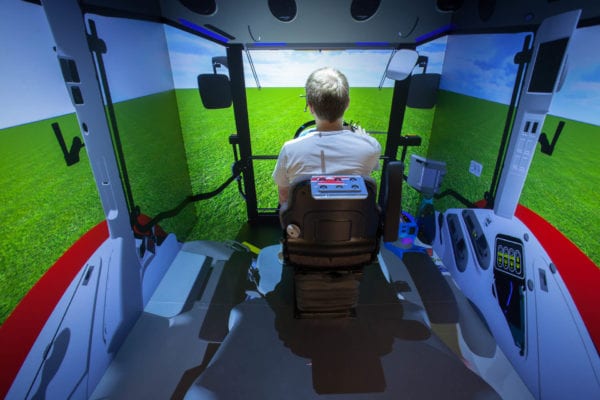
That's the tech that I want to see grow. I have no interest in wearing a headset for long periods of time but a holodeck-like room would be amazing.
You don't get 3d with that kind of setup. It can work for seated experiences like driving or flying sims but for any kind of game where you interact with the environment it doesn't work.
Holodeck is effectively VR, not walls with projections on them.