I'm not denying the existence of bubbles, busts, and crashes, but historically and on average, the stock market does only go up.
This market is overvalued and will likely correct, but that doesn't mean it won't continue to rise on the aggregate.
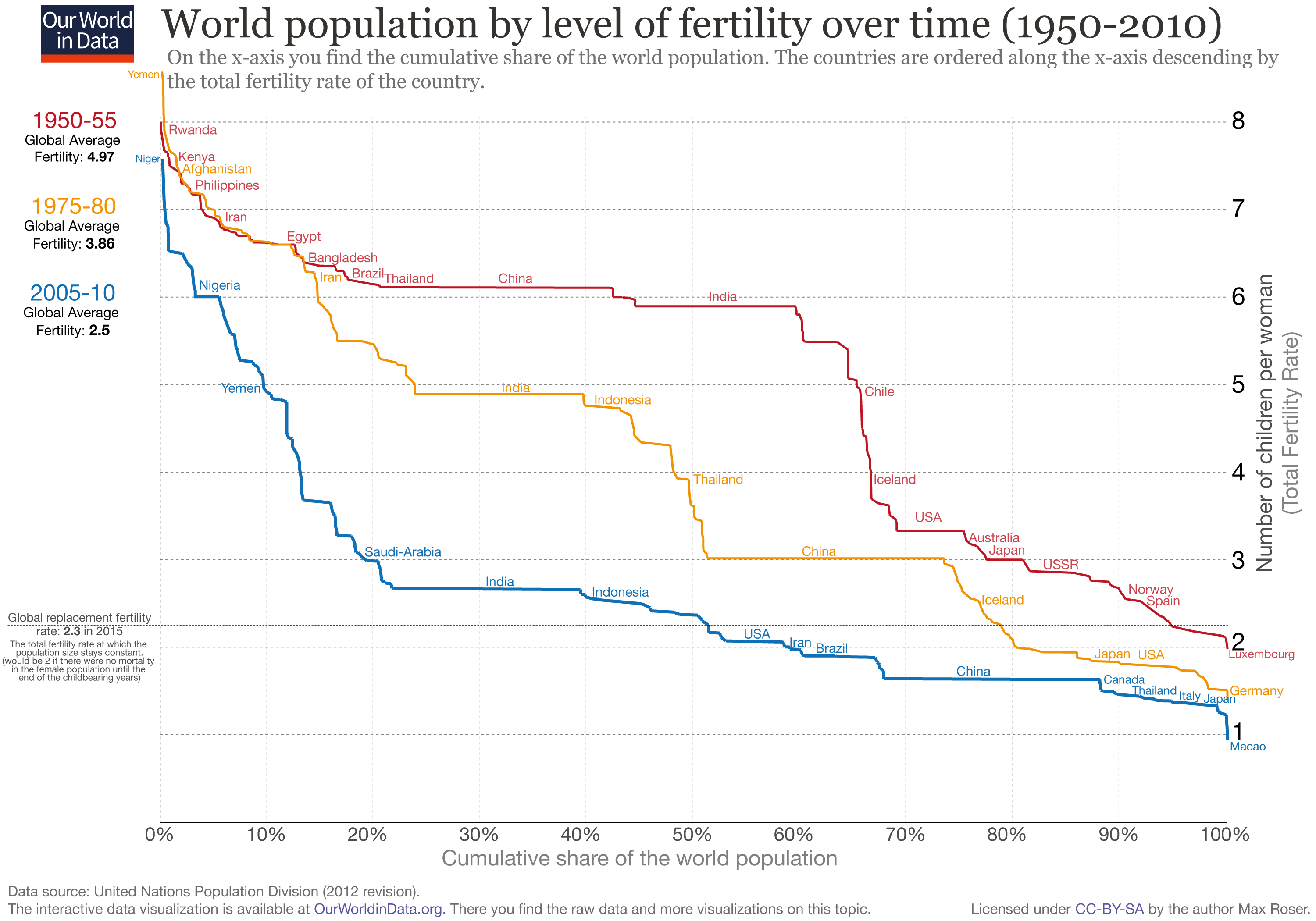
I'm not denying the existence of bubbles, busts, and crashes, but historically and on average, the stock market does only go up.
This market is overvalued and will likely correct, but that doesn't mean it won't continue to rise on the aggregate.
Over a long enough period, stonks only go up because that is what we've collectively agreed on, and government will backstop at all costs [2] while population and productivity extracted from that population declines over time [3].
I recommend "Shrinking-population Economics: Lessons From Japan" [3] on this topic.
[1] https://ourworldindata.org/uploads/2014/02/World-population-...
[2] https://www.bloomberg.com/news/articles/2020-12-06/boj-becom...
And even if DCA weren't factored in, how would the returns compare?
More value is created over time than lost.
When does this become unsustainable?
Buying S&P, or the Apple, Amazon and Tesla ones is another story. Looking at the average can be misleading.
What this is missing is the amount of time investors are investing in. Day traders don’t care about tomorrow, they care about the difference between 9 am and 4 pm. Options traders might care about the next few weeks. If you are investing for 20+ years in a retirement account, you don’t care about the bubble. It will self correct over a year and by the time you withdraw, stocks are significantly up.
Bonds make sense if you are investing for 1 month to say 3 years.
I don't think it is fair to call 2001 and 2008 "blips". Their combined effect was we lost 20 years worth of potential growth.
But look on either side of that blip and there is plenty of profit.