As a counterpoint the Nikkei has not since surpassed its peak value in 1989.
back
3 comments
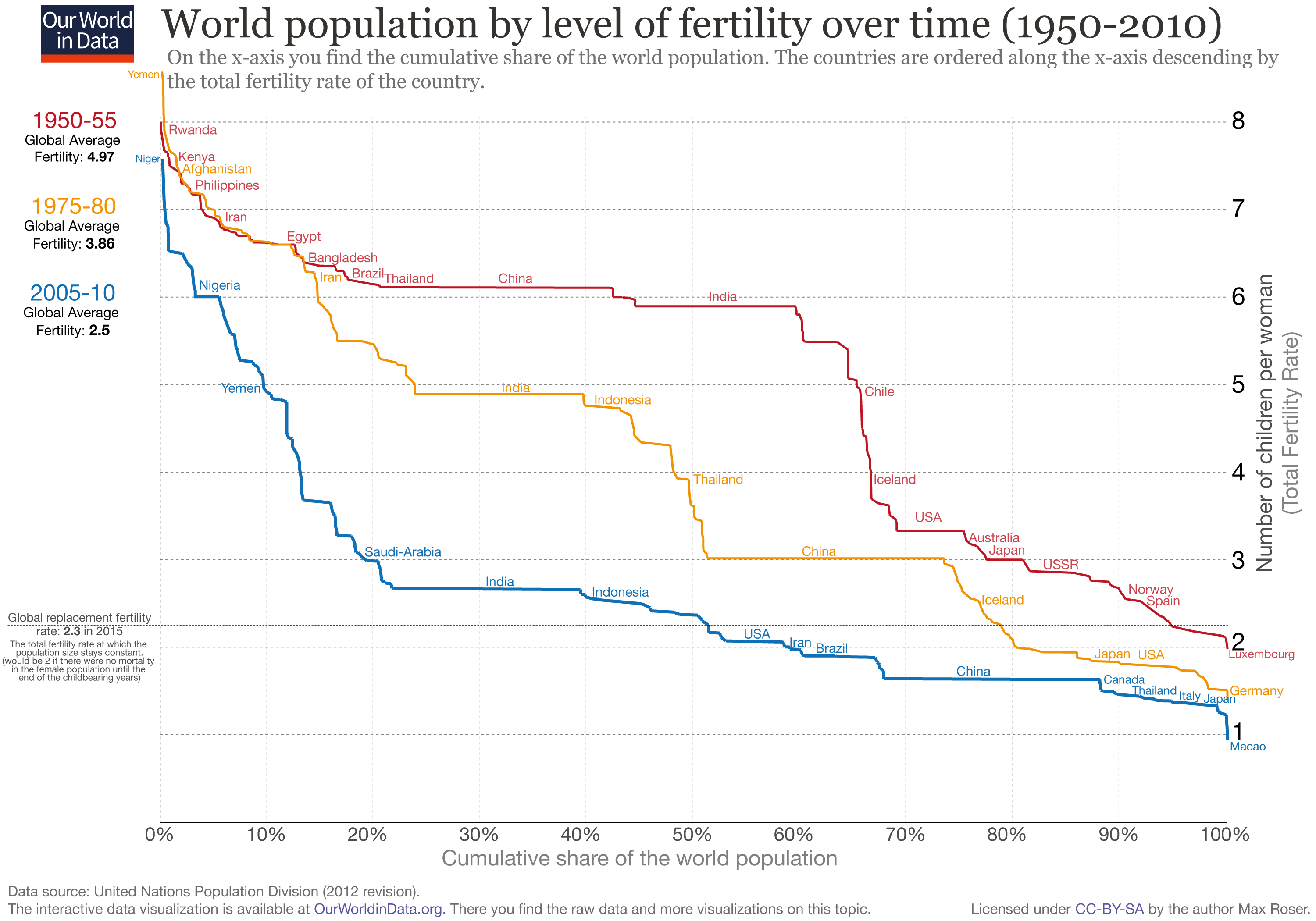
It's a good counterpoint. Every developed country will end up as Japan eventually [1], and timing won't help you; where else would you put your investment assets to get exposure to similar risk adjusted returns (developing country returns expose you to greater risk)? Waiting for values to decline will be ineffective, as central banks will acquire assets to prop them up (Bank of Japan is the largest owner of the Nikkei [2]). Returns will decline, and the cost to obtain those declining returns will rapidly increase as trillions of fiat worth of capital chases it.
Over a long enough period, stonks only go up because that is what we've collectively agreed on, and government will backstop at all costs [2] while population and productivity extracted from that population declines over time [3].
I recommend "Shrinking-population Economics: Lessons From Japan" [3] on this topic.
[1] https://ourworldindata.org/uploads/2014/02/World-population-...
[2] https://www.bloomberg.com/news/articles/2020-12-06/boj-becom...
I'm curious how dividend yield and DCA factors into that, though. Would a series of investments since 1989 still have underperformed bonds?
And even if DCA weren't factored in, how would the returns compare?
True. But in a period 1969-1989 it had a return of, IIRC, 5700%.