back

by carabiner·5y ago·view on hn ↗
> Without personalized advertising, businesses would be harder to start and grow, new products and services would be harder to discover and would cost more, and people would see less relevant, less timely and less interesting ads.

What about having control over our own minds? What about spending our moments in the present? When did life become about discovering "new products" and not just living in the world?

Here's a city that banned advertising: https://99percentinvisible.org/app/uploads/2016/04/london-be...
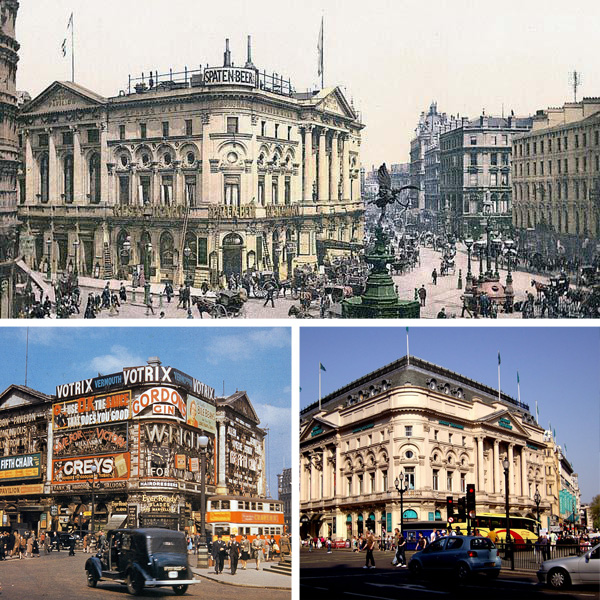
Are we seriously going to claim that the citizens are deprived now that those ads like barnacles are not covering these historical buildings? Think of the products they could be discovering! It's time to realize that ads are a net negative for society.

8 comments
I agree with everything you say, and some cities have banned advertising.

However, the pic is a bad example: if you look just a little to the left there is currently a HUGE screen[1],

Piccadilly Circus in London has been known for it's adverts in lights, then later screens for decades.

[1] See pic on google maps:

https://www.google.com/maps/@51.5097908,-0.1348659,3a,75y,30...

More info

https://www.bbc.co.uk/news/uk-england-london-41751310

Would be cool for a jurisdiction to implement a $0.01/impression advertising tax on all ads served to their citizens.

Could probably make millions before ad networks become compliant.

This policy alone would make me consider moving to parts of the country I've never wanted to even visit.

They didn't ban advertising. They banned billboards and certain signage. There's a huge difference.
Whenever I visit a country where billboards are legal, I'm always surprised how horrible they are and how the completely destroy the look of a city.

Banning them is such a no-brainer, and it only takes visiting a country which allows them vs. a country who don't to see why.

Agreed, I am strongly for a VAT on all digital advertising revenue. Let's make ads more expensive so people have a real choice to pay or not. Plus, we can use the money to fund something that helps people.
This would probably have the opposite effect of what you're looking for. You'd penalize non-targeted ads, which require a larger spend to be effective.

Personalized ads are ultimately cheaper than non-targeted ads because you don't need to buy as many impressions to hit the audience that you're looking for.

In order to accomplish the intent, have two tax rates: untargeted (lower) and targeted (higher).

As a rationale, consider the targeted tax difference the price of collecting, storing, and using radioactive personal data.

If Facebook had to pay a higher tax rate for targeted ad revenue, their priorities would start to shift.

So then only big businesses can advertise? There is some truth to Facebook enabling small businesses to advertise with a smaller budget.
Might be a unpopular opinion but I'll take free services funded by ads over paid services any day of the week.
Ads are fine in a certain, very limited scope. For example, the newspaper, back when it held a prominent role in society, had an "ads" section. You could go directly to it to "discover new products"

Whether or not we want to admit it or not, we've all had a a product we have bought as a result of advertising that has provided us a good amount of value/joy/utility. There is clearly some utility for society in companies, especially newer ones, being able to reach new audiences, especially if they are making good products/trying to do it in a more sustainable way/changing the status quo in some net positive way. You can't rely on just word of mouth alone.

Sao Paulo was really the first to ban public advertising, back in 2007[1].

It makes think of G.K. Chesterton's quip "What a glorious garden of wonders the lights [of Broadway] would be to anyone lucky enough to be unable to read."[2]

1: https://www.theguardian.com/cities/2015/aug/11/can-cities-ki...

2: https://www.chesterton.org/lecture-37/

They make it seem like personalized advertising is the only way to make products and services cost less. What if those products and services were made by a company that didn't make quite as much money, but still made enough to stay in business?
If they were a public company where shareholders could vote, they'd probably fire the board and replace them with people who could maximize revenues.