▲ 77 points
back
90 comments
As a manga reader, one of my biggest frustrations is with censorship.
10 years ago, Viz and Tokyopop dominated English published manga, yet they each had very spotty records with regards to translation quality, editorial decisions and censorship.
I didn’t want to read Full Metal Alchemist or Dragon Ball or Initial D knowing that random instances of blood would be erased or religious symbols replaced or weird editorial changes would change the tone. And unlike the edited anime airing on TV, there was no “uncut” version I could buy and even finding lists of changes was difficult.
So, I kind of learned to avoid buying North American manga. Only recently have I started buying some releases from publishers like Kodansha and Dark Horse that, from what I can tell, have a better track record.
But ultimately that’s the problem - you shouldn’t make a customer guess what they’re getting. I want to collect way more manga than I do, but my confidence in the industry was shaken very early on, and that’s hard to gain back.
Translation really is a major problem with Anime/manga. The unfortunate thing is the pirated versions often have better translations and translation notes vs the official release. Why? Because it's mostly just a bunch of nerds trying to share what they love.
It seems like the studio translators are very often just trying to churn out a translation as fast as possible. It gets a little better when dubbing is involved (because someone ACTUALLY has to speak the line, which makes bad translations/awkward phrases a lot more apparent)... But, like you said, there's often a lot of editorial choices to make sure things are palatable to the widest portion of the English speaking population.
Not really trying to nitpick here, but I’d say the official translations are usually way better than the pirated translations—but occasionally it’s the other way around.
There are a ton of really bad pirate translations out there. The vast majority of scanlations you’ll find, if you really dig through them, are barely readable. For every top-notch scanlation group out there, there are probably ten groups out there producing garbage.
I’ve seen groups that put out English translations which are translated from the Spanish version of the manga, because the scanlation group has nobody who can read Japanese (but has someone who understands Spanish).
Some translation groups put out super inconsistent work, such as translating names differently from chapter to chapter. Foreign names, especially, have already been transliterated into Japanese and you have to guess what the original name is before transliterating.
One particular offender was “Xerxes” in the Fullmetal Alchemist manga, which was spelled as “Cselkcess” in the official Viz translation and something similar in various scanlations. Maybe in the 1990s this would have given you trouble, but these days you just pop over to ja.wikipedia.org and look for クセルクセス, and find out that this is how “Xerxes” is transliterated into Japanese.
As a person who scanslated (and was active in adjacent TL scenes) in another life (and thus has some bias), I disagree. Yes some groups out there are pretty shoddy and they make cute examples. This was more common in the 90s when anime/manga in the West was new and expectations for translations were low. These days Chinese language translations leak before Japanese language raws (due to weak IP laws in China) and in order to be first, most speed-scanslating groups are scanslated from Chinese translations into English.
If you wait for a quality scanslation, it'll often be as good or better than the original.
Something that can cause poor scanlations is, ironically, competition. When there's competition, there's huge incentive to post chapters first. The first releases will get the vast majority of the views (they will often remain listed first, even after other versions come out), and cause other groups to drop the manga - even when their product was superior.
And for some groups, they leverage that to get ad impressions on their own sites (or YouTube videos) before releasing them via the more generic methods.
The best scanlations will usually be niche titles done by one group.
Scanlations of the big Shonen were far superior to the official translations. I read one piece and Naruto scanlated first and then through a subscription to shonen jump. The shonen jump translation were awful. Reading yugioh was so bad I just download the scanlations and found them much better. The best official translations I read were the CLAMP manga xxx Holics, tsubasa chronicles, etc. there was a lot of bad scanlations, but the good scanlation was better than the best official.
It might be unfair to generalize, because there are some shoddy fan translations out there, and I’m sure there are some studios / professionals that do great work.
But it can be jarring to see fan-translated versions put more care into preserving intent and readability in translations, and even preserve artwork like onomatopoeia while also providing context, only to see what appears to be sloppy disregard in the official release.
It feels like an industry where you as the customer never really know what you’re getting, because the standards are all over the place.
For all the legit criticisms, anime has at least generally evolved to have a minimum acceptable standard by which most studios operate, with considerable blow back when that doesn’t happen (see early Netflix dubs that they later re-dubbed based on complaints). The same can’t be said for manga, afaik.
> The unfortunate thing is the pirated versions often have better translations and translation notes vs the official release.
Depends on the team doing it, really. I've seen some fan translations before that are so obsessed with delusions of purity or faithfulness to the source that it beckons the question why they even bothered rendering it into English if it's going to be not so much translated as transliterated. We're talking guys who will unironically refer to the manga as "Boku no Hīrō Akademia" instead of "My Hero Academia"...even though the translated English title is literally in the logo:
https://upload.wikimedia.org/wikipedia/en/5/5a/Boku_no_Hero_...
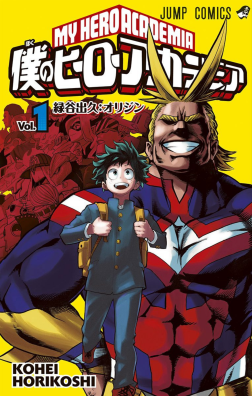
> It gets a little better when dubbing is involved (because someone ACTUALLY has to speak the line, which makes bad translations/awkward phrases a lot more apparent)...
I have played a video game (sadly, I forget which one) which had broken English subtitles voiced over in what sounded like a native speaker's pronunciation.
Either someone local really nailed their English pronunciation without managing to absorb the grammar, or the money for a voice actor was good and the studio wasn't open to changing the dialog just because a native speaker didn't like it.
Ironically, I think deepL has made this better for novels. It's shocking how good human-edited deepL transitions can be, and how fast they can be to produce compared to fully human translation.
Before anyone brings it up, it doesn't remove the need for a bilingual translator. They still have to do (sometimes significant) editing.
A lot of the comments here on official and fan translation are rather uninformed. As an active scanlator I will try and clear them up.
With regards to translation quality, there is considerable variability with officials almost always coming out on top. A native-speaking friend ranked translation quality as follows—Viz/Kodansha>=very best scanlators>=Yen Press/Seven Seas/others>average scanlation>poor scanlation/MTL. Naturally it depends considerably on the effort the given scanlation team puts in to translation and editing. Some are exceptional, most are not. The average scanlation is worse than a mediocre official.
Regarding sound effects, there is no one way to do these. Both officials and scanlations vacillate between panel notes/in-panel subs/redraws. Officials are generally better and more consistent although again YMMV. What any given publisher picks is a product of their house style, what you prefer is a product of your personal taste.
Editing-wise, there have certainly been instances of overzealous editing and censorship in the past. But it is far less common and less egregious than it used to be. Seven Seas has their own smut line for publishing particularly daring titles, for instance. And it’s not as though fan translators have never been known to produce intentionally biased translations, insert panel notes of their own views with no relevance to the content, and the like.
Fan translators are dedicated, dedication which (even if you dislike fan translation as a practice) should be commended. But that dedication doesn’t always (or even often) translate into a high quality result.
It's always a bit jarring when the ara-ara anime lady with big breasts and no inhibitions about showing them off, drops a reference to "toxic masculinity" in the dub.
> Translation really is a major problem with Anime/manga. The unfortunate thing is the pirated versions often have better translations and translation notes vs the official release. Why? Because it's mostly just a bunch of nerds trying to share what they love.
This is rarely actually true; what happens is that fans learn a little Japanese, but only enough to be dangerous, so they start complaining that the translation doesn't include the few words they hear and ignore all the reasons it's good. That's why translations end up including a few honorifics like "-san", but rather than being literal, they actually end up translating other rarer honorifics into "-san" because it's better than actually explaining them.
I do think a valid complaint is when translators include modern slang which is being correctly used, but ESL speakers don't understand it. "Badly translated Japanese" is kind of a universal language they do understand.
Legal factors can also arise; such as one very popular franchise where many of the characters are named after western pop/rock bands or fashion icons, which are deliberately mistranslated by the publishers to avoid trademark infringement. It's still enjoyable, but loses some comedic/thematic elements of the original.
This is becoming even more widespread despite immense negative feedback from fans and it is really concerning. Companies like Crunchyroll carry around a laundry list of translation (as well as other) controversies but for most American anime fans there is no alternative, you either watch on Crunchy or you don't watch at all.
Or you steal it. It's really weird how some of the companies mentioned in this thread are run. I like this stuff, have the money, and I am more than willing to pay, but as others pointed out the quality is usually much worse than the same thing posted online for free. Whether fixing these quality issues would lead to less piracy overall I don't know but they'd have at least one more customer in me.
Also, wrt to physical manga, availability is often time an issue. I don't want to read everything on a screen.
I can think of at least 3 major groups doing anime in the USA:
1. Crunchyroll (aka: merged with Funimation)
2. Netflix
3. Hidive (aka: Sentai Filmworks)
Amazon Prime tried to do a thing (and still holds some licenses), but I don't think they have done any recent anime. (Especially with the stupid "double-paywall", requiring both Amazon Prime + an anime-specific subscription to get access... it was doomed from the start by bad business decisions)
I pay Viz and Shonen Jump as a subscriber in their apps. Whats frustrating is that I only get a tiny subset of their catalogue. I can't ready some of their older series. I'm even willing to buy them if given the option but I'm only offered new stuff that I'm not really interested in.
It is frustrating when you want to do the right thing and pay for a product that you have great demand for, but which nobody is offering to you.
You're in north America, I'm in Brazil. I have HBO Max, and I know for a fact that even on HBO dubs and subtitles are heavily censored. If you don't speak English, you'll think that the harshest word in The Sopranos is "damn".
How prevalent is censorship of imported anime/manga today? American media in general has become far less puritanical over the last 15 years. I can't imagine those changes being made to Fullmetal Alchemist today.
Don't get me started on the original (the later omnibus is way better) official english publication for Inuyasha... even ignoring flipping the reading direction and not updating references to which hand someone is using (so referring in text to a right hand, but visually a left hand) the amount of translation errors and swapped text bubbles was just maddening.
This is one of those cases where the pirates really are providing a superior product. Same-week translations that are often superior to the official ones, which come months (or worse) later.
Some publishing houses like alphapolis are so backwards they don't even license English releases at all. Even ones that have gotten a popular and officially translated anime adaptation.
Viki licenses Asian film and lets the community provide subtitles. The results are excellent. Viki doesn't do any translation themselves.
For one show I liked, Viki lost their license to show it. Instead, the show (and its second season) are available on youtube. English subtitles are provided, but they are so bad that it's clear there was no human input to or review of them. The show is unwatchable. (Think I'm exaggerating? See what you think: https://www.youtube.com/watch?v=LAOdWOS49RE&list=PLvBtqeytAL... )
I'm not sure how this could have happened, but there are failures at several levels. Viki got high-quality subtitles without paying for them. People who couldn't speak the language got to watch foreign shows. NoahMob is attempting to show a series with subtitles that aren't better than nothing. They could have real subtitles for free! It's not like I'm going to branch out into their other videos based on the experience of being unable to watch the show they ruined.
Not only is the product better, manga scanlators have a "code of honor." If a manga is licensed in English they will typically drop the manga no longer scanlating because there is now a provider in English. Of course, not all of them do this but more often than not it is adhered to.
Yes, this means that some clever folks realized they could have a legit manga website that removes the unlicensed translations the moment an official release is available. And they never allow uploads in the original copyrighted language. See mangadex.org
Idk who the founders are, or if it was a bunch of scanlation groups that combined their efforts, but it's a pretty smart way to get around the copyright problem.
People will always choose the product that best meets their needs (price, convenience, content, etc). Therefore, the only piracy that ever happens is that which provides a superior product.
> This is one of those cases where the pirates really are providing a superior product.
Product? Are they sellings these files?
The word "product" refers not only to things that are sold, but also to things that are produced (made, fashioned, fabricated, etc.).
You make a good point. Their product is better and cheaper!
Many individual manga are scanlated by commission, or the patreon model for entire groups. Weird no one else mentioned that. Lots of scummyness in that area, where individuals republish other groups and sell it.
In some cases, pirate sites do have a cost to be able to fund operations and maintain quality, but one way or another, the customer pays something to someone (even if it's just access to internet via their ISP) and receives a product. So yes.
Not the question you asked but to make it clear, I don't mind paying for things. I've had a Crunchyroll premium account for years and I have a whole bookshelf filled with official translations. But sometimes they come years later and you want to actually discuss the series that's going on right now with fellow fans, just like you would for an English book. Or you want to be able to read it at all (see: alphapolis).
I recently got to try out an IPTV service on a smart TV and was amazed at the amount of content you get for about $15/month (I ended up buying a $75 android TV box which is way faster than a TV and has Kodi w/ torrent search + streaming).
It has 4000+ channels but also has two additional sections for on-demand movies and TV series. Each of these has a Netflix/Paramount+/Disney+ etc section that contains every movie/show on all of these platforms (hundreds for each) available with a single click and max quality.
I subscribe to 3 different paid media streaming platforms primarily for content-discovery. The only thing missing in the IPTV app is the recommendation algorithm and the 'featured/trending' movies.
Using a single IPTV service sounds nice, I'd love to be able to just use that...but the recommendation/reminder side seems to be a gap in the market, although I'm not sure there's enough of a market to justify a standalone service (ala last.fm vs Spotify).
IMDB does a poor job of recommending stuff, even though I rate every movie I watch. Seems to be a major oversight on their behalf.
IPTV is a hoot to explore: Emirati horse racing? Got it. 24/7 Bob Ross? Yep. Seemingly endless podcasts about bass fishing and bird shooting? Right over there. Ecuadorian soccer league? ¡Si!
Some universities have excellent channels that stream lectures, demonstrations, performances, and all kinds of other content.
> I ended up buying a $75 android TV box which is way faster than a TV and has Kodi w/ torrent search + streaming
What product is this? It sounds freaking amazing!
Amazon is full of these boxes, you can use any of them that support new android versions + 4k/8k.
The software I use for torrent streaming is a Kodi add-on called "Elementum". For a similar app that crawls all of the steaming websites see "The Crew".
https://howtomediacenter.com/en/install-elementum-kodi/
https://kodi.expert/best-kodi-addons/the-crew/
It really changed the way I download movies. No need to keep a NAS or collections when you can just stream anything on demand (unless you use private trackers w/ bandwidth caps where streaming doesn't make sense).
> I recently got to try out an IPTV service on a smart TV and was amazed at the amount of content you get for about $15/month
Which service do you recommend?
I wouldn't recommend a specific one but the one I tried was called BESTO
The ongoing and rather poorly executed merger of Funimation and Crunchyroll certainly isn’t helping in my circles. After years of subscribing to Animelab, which merged into Funimation in rather poor fashion, I was abruptly told no new content would be added and that I should sign up for Crunchyroll, never mind that my annual subscription had renewed a month prior. Crunchyroll then announced that annual subscribers would be given credit for their remaining time, but no timeframe was given and after waiting months, I ended up getting a refund last week and am now looking for another company to give my money to. Unfortunately they all seem to be owned by the same group now, with ongoing concerns around quality and conditions for the voice actors working on their content, so for now I have started buying physical media again from the Japanese distributors to at least register my interest in these shows in some way.
Content in Australia has aways been a bit of a mess and I can’t see the market improving, meaning to me the conditions that I believe drive piracy are only set to continue and expand. We really need less exclusivity in the market and more of a competitive landscape for sourcing existing content. I’m happy to deal with a few extra players for original content, but needing 5 different subscriptions to watch all of Stargate, Star Trek, and Star Wars is never going to work for me.
On a related note, I am ever grateful that I still have my Amazon.co.jp account and a Japanese kindle / Japanese credit card, and a VPN for Amazon Prime Japan. The situation for legal product in foreign languages has barely improved in Canada.
When I was studying Japanese in the early 2000s, you were basically locked into ridiculous 60s-80s era material by Tuttle Publishing. The only way to be culturally fluent was Aozora Bunko and piracy - which is probably why it is less common to find 40+ year olds in the west who are fluent non-Japanese Japanese speakers.
Considering the near zero cost of publishing ebooks, you'd think some enterprising Japanese company would sell their books abroad for the same price as in Japan, but I guess that's not happening.
Another reason for me to download stuff and put in a home streaming server is that I get to control what my small kids watch. There are so many stupid stuff on YouTube and other streaming services, so I just download good cartoons for my kids to watch.
Somewhat related, Tachiyomi really is a great Android app for manga, it makes it very easy to read on the go.
I'll add the only reason I pay for a viz subscription is because their site works with tachiyomi. Honestly most subscription services require you install their own specific shitty app that's such a downgrade it just ends up not being worth it, it's frustrating really.
Manga's tough because it's so easy to pirate and there are so many older titles out there.
Viz has done an amazing job by having access to a decent Shonen Jump library for only $2/month that hopefully will grow, but it's dead simple to go to a manga fan translation aggregator site and read a larger range of comics (and from non Shonen-Jump titles). I'm a subscriber and read titles they have there. The image quality is better than fan sites unless you download torrents or something.
The obvious solution for this era is to have a Netflix or crunchyroll-like approach with Manga. Also for some newer titles, they're creating the translations to be released when the title is released in Japan.
> The obvious solution for this era is to have a Netflix or crunchyroll-like approach with Manga.
But there's a very vocal group here that says Netflix is not the solution because not everything is available through Netflix because evil rights holders don't want to and so it's okay to pirate content. Some go as far as to say they are forced to pirate content not available on Netflix because it's the right holder's choice.
Viz is already the Netflix of manga. And that includes the justified pirating stance.
I cannot believe manganato/manganelo has 100m monthly visits. I mean I just finished catching up to manga(s) and it's my only source but damn, considering the simplicity of the platform, I could have never imagined.
Their search function is also buggy, does not include/exclude categories i am interested in.