▲ 72 points
back
78 comments
As someone who lives in Tokyo, I admit I've never seen this before. Not sure about "suddenly everywhere" but if it is I've never come across it. I haven't gone out much since covid but still...
I teach at a public university in Tokyo. “SDGs” is clearly a current buzzword being promoted by government policy in Japan. I subscribe to the paper edition of the Nihon Keizai Shimbun, and nearly every day there are multiple advertisements and articles that mention “SDGs,” often prominently.
Not only Japanese companies but also Japanese universities have been quick to adopt it. Some examples of university programs with “SDGs” in their titles are at [1, 2, 3, 4, 5].
In my experience, the currently promoted buzzwords are often included in university program names in order to attract government funding. Five or ten years ago, the leading buzzword was “global.” My own university has probably a dozen or more programs with “global” in their titles; my colleagues often remark how hard it is to remember which is which.
Another current buzzword, in both business and academia, is “DX” (digital transformation).
Though the SDGs bandwagon is still going strong, some Japanese commentators have started to question it. A person interviewed in an article posted on Friday to a radio station’s website [6] calls SDGs “fraudulent.” He also notes that Japan leads the world in Google searches for “SDGs,” followed by Zimbabwe.
[1] https://www.nara-edu.ac.jp/ESDC/
[2] https://www.chubu.ac.jp/academics/college-education/sdgs/
[3] https://www.senshu-u.ac.jp/social/senshu_sdgs/challengeprogr...
[4] https://www.koeki-u.ac.jp/academics/personnel-training-progr...
[5] https://www.it-hiroshima.ac.jp/about/gp/center/sdgs.html
[6] https://web.archive.org/web/20220828044344/https://www.joqr....
Not sure it's a pure scam, but it sure is very performative. But then, when you see the number of businesses proudly showing "ISO9001" on their buildings...
As a counterpoint, I see it so frequently you could conceivably describe it as being “everywhere” but it’s mostly within corporations, so you wouldn’t exactly be seeing it on the streets of Shibuya (although you do in fact see it there sometimes too)
Now that you’re aware of it, keep your eyes open and you’ll see it pop up in various spots
Always be suspicious of New York Times trend pieces.
It's a running joke in New York that if the NYT writes a piece on a particular trend or sub-culture it may as well be the subject's obituary.
It is everywhere, and you'll notice it now that you know about it. I never noticed until I learned about about sometime last year and then I saw it everywhere. It's on suit pins, trucks, businesses, etc.
I have to admit it's a bit less prevalent than maybe 2 years ago but
The yamanote line:
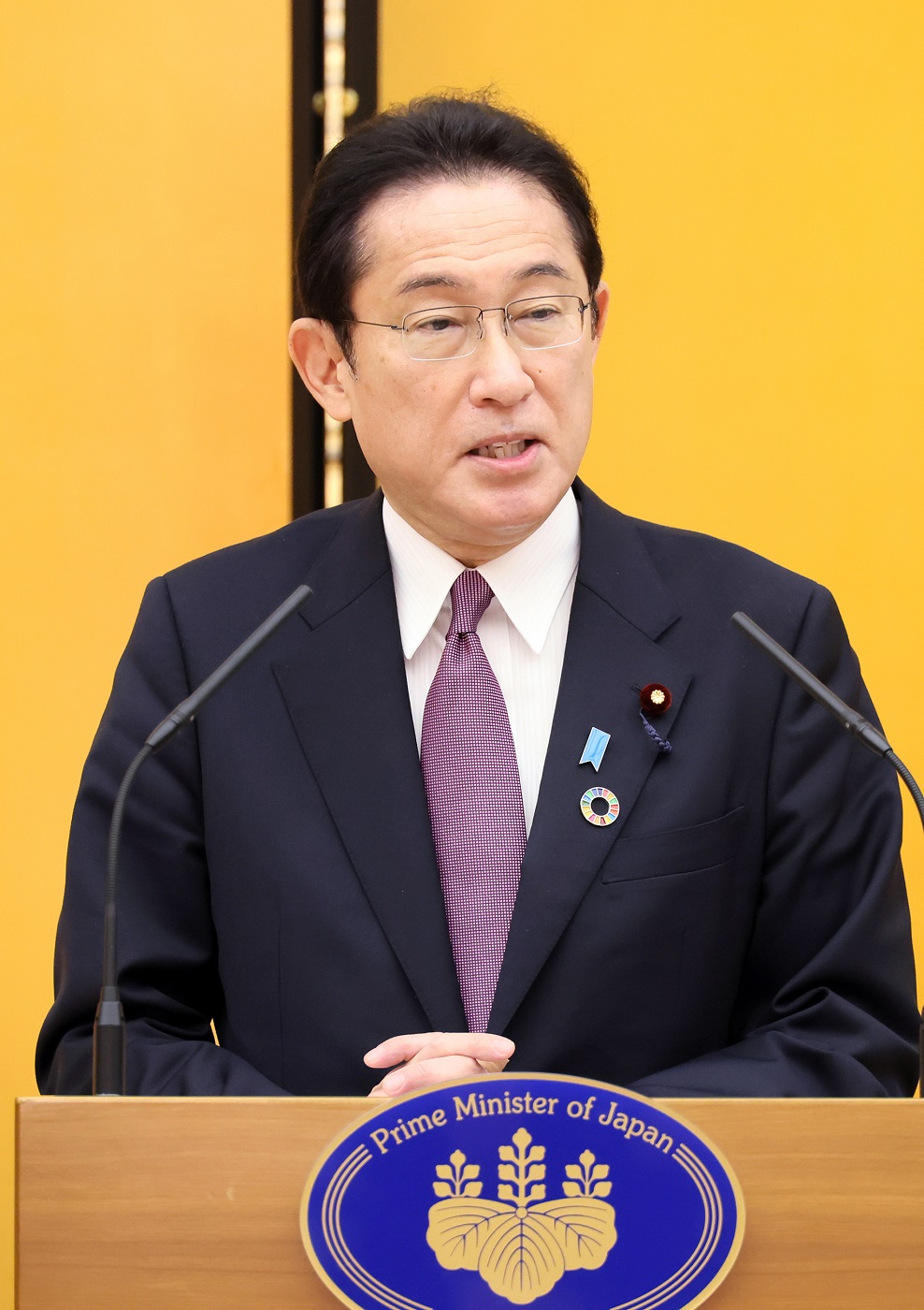
Quite often on politicians/government worker lapels:
https://www.kantei.go.jp/jp/content/20211224_sdgsaw02.jpg
Skytree event:
https://www.tokyo-skytree.jp/en/press/post/493
...
I expect it to be everywhere mid September for "sdgs week"
Moved to Tokyo from the US in 2020. I first heard of the SDGs in language school.
They're also heavily promoted in my work's orientation and training material, but the hq's over in Europe.
I've seen it in the wild maybe two times at most. Once in Ikebukuro as part of some volunteer clean up thing and another on some building somewhere.
So to me, it's not completely unheard of, but "suddenly everywhere" is still definitely a huge stretch.
Same here. I've been living in Tokyo for the past several years and I've never seen this thing.
If you live in Tokyo, there’s no way you haven’t seen it. You just haven’t noticed.
Now the at you’ve read the article, you’ll surely see it.
As someone who lives in a not exactly big but also not quite small city that I wouldn't quite call inaka but my wife does, I've never seen this logo, and not much about SDGs around here, but boy is it all over the media. I remember checking out when the initiative started because I hadn't heard about it even once before suddenly you couldn't spend a day without hearing about it. IIRC, it started in 2014, and somehow, Japan suddenly woke up a year or two ago.
I work in sakuragicho, quite busy there and I haven't seen this either.
Also living in Japan and have never seen it.
> Whales, the argument goes, consume a ruinous quantity of fish, and controlling their population is critical for preserving the oceans’ diversity. An online video from an industry association recommends eating the mammals “to protect the balance of the marine ecosystem and contribute to marine S.D.G.s!”
Among whales, only the Killer whale and the Pilot whale feed on fish, and they do not consume a ruinous quantity of fish. Only commercial fishing consumes a ruinous, species-extinction level quantity of fish. It is a shame we can't do anything about this sort of ignorance and bias that is engrained in some cultures, nor hardly anything to stop commercial fishing from depleting fish stocks season after season. We are killing the ocean. Once the fish are all gone, they never ever come back from being fished to extinction.
Same for humans i'd say
Here's some background on the simple open source project used for data reporting on the SDGs co-developed by the US, UK, and some other countries - https://open-sdg.org/blog/2021-01-09-open-sdg-origins/
It’s the logo of the United Nations’ Sustainable Development Goals. And Japan is all in.
Those goals being: No poverty, zero hunger, good health and well-being, quality education, gender equality, clean water and sanitation, affordable and clean energy, decent work and economic growth, industry, innovation and infrastructure, Reduced Inequality, Sustainable Cities and Communities, Responsible Consumption and Production, Climate Action, Life Below Water, Life On Land, Peace, Justice, and Strong Institutions, Partnerships for the Goals.
All agreeable prospects, but all too vague and hard to define. They're more a wish-list than goals.
For example, what defines poverty? Wages vs the median, or quality of life factors? What makes work "decent"? What does inequality mean in this context, economic, judicial, racial?
Vague aspirational goals sound nice but are rarely met without considering the real decisions that have to be made to meet them. These things are things everyone wants, but what are we willing to sacrifice to meet them?
> All agreeable prospects, but all too vague and hard to define. They're more a wish-list than goals.
> For example, what defines poverty? Wages vs the median, or quality of life factors? What makes work "decent"? What does inequality mean in this context, economic, judicial, racial?
They're actually defined in far more detail: https://sustainabledevelopment.un.org/content/documents/2125...
(The details of the goals start around half way through)
Japan consistently ranks the last of the developed countries on gender equality[1], and they kill hundreds of dolphins a year in a frowned-upon manner[2], so are there any specific measures Japan is taking or is it all posturing?
Those are just the names of the high level goals!
If you go here: https://sdgs.un.org/goals#goals then click on each goal, its expanded in more detail, including implementation targets, of which there are over 150.
> For example, what defines poverty?
Many, especially governments, have definitions of poverty which are statistical, either percentile or a proportion of median income which makes it either actually impossible (there will always be a bottom n percent) or practically impossible (nobody earning less than half median wages).
They assume all these goals are mutually compatible. I see clean energy and climate action vs. everything else. Look at Sri Lanka for example.
https://foreignpolicy.com/2022/03/05/sri-lanka-organic-farmi...
> For example, what defines poverty?
I think we can all agree that homelessness is a problem we should address. If we could somehow tackle that one our country would be in a better place.
No need to kill the idea because we can't precisely describe what the definition is.
Aim for best possible outcomes in each category, and be satisfied failing but pushing the overton window up.
for evidence that this is mostly bullshit, look no further than bizarre things like this:
> Whales, the argument goes, consume a ruinous quantity of fish, and controlling their population is critical for preserving the oceans’ diversity. An online video from an industry association recommends eating the mammals “to protect the balance of the marine ecosystem and contribute to marine S.D.G.s!”
It is fascinating that whales have found a way to be both an endangered species, and an overpopulated ocean scourge (as an apex predator, no less) at the same time!
The last time I felt the U.S. as a country had a goal that was outward looking, forward looking was when we were adopting the Metric System back in the early 70's when I was in elementary school.
Good times.
Okinawa is derided as being "a time warp 10 years behind mainland Japan". The first Don Quixote was opened shortly after I got here (2011? 2012?), we just got 7-11 konbinis within the past 5 years, and we are still waiting for our 1st Costco to be built.
I've never seen these wheels. Maybe in 2032? shrug
Hopefully it'll be dead before then. Sociopathic power whores create and ride these grand gestures everytime the old gestures start to slow down.
“ Whales, the argument goes, consume a ruinous quantity of fish”.
I think humans are doing that
When people hear the word 'propaganda' often what springs to mind are relics of the cold war: gritty soviet posters; or GI Joe. This is what the propaganda of the 21st century looks like, however.
Hopefully such propaganda works well in this case then!
No one is really talking about how all these goals are already incorporated into your local administrative region's development plan. Normally, if you search 'xxregion development plan' you get a document of what is planned - more bikes lanes, less cars, denser housing, etc. The documents are very similar everywhere. And this is because they are working off the same templates. I'm not sure about this but I understand there are monetary incentives given for the implementation of the goals.
Which is to say, that without a vote being cast, these plans are being implemented locally across the world.
If that's correct, is this not a UN takeover of government? Yes, worthy words around the goals etc, but aren't the people allowed a choice, with understanding, about what's coming their way?
In democratic countries, if it’s being implemented by the local authorities, you can’t really say it’s ‘without a vote being cast’. Elected representatives of the people have bought into the ideas. They’re not only allowed a choice, they’re actively making one.
In the other direction, the UN only exists because nation states voluntarily choose to be a part of it. It’s not some external force.
UN takeover? No, the ideas are good, so lots of people independently decided to implement them. Simple as that.
You may as well ask whether Dennis Ritchie took over Microsoft.
Paywall.
Never seen it before. So much for reliable NYT reporting. Pure trash disguised as news. Yet "japan is all in" they say.