▲ 26 points
back
24 comments
My assistant Kate Mann was with Koko, then tipping the scales at 90 pounds, when the gorilla plumped down on the kitchen sink in the trailer and it separated from its frame and dropped out of alignment. Later, when I asked Koko if she broke the sink, she signed, “Kate there bad,” pointing to the sink. Koko wouldn't know, of course, that I would never accept the idea that Kate would go around breaking sinks.
-- Francine Patterson, "Conversations With a Gorilla", National Geographic (1978, republished 2018)
<https://www.nationalgeographic.com/magazine/article/conversa...> <https://archive.is/pZcu3>
Dogs certainly lie, as any owner knows. And beyond that, lying is a cache behaviour.
I watch squirrels, in my back yard, bury food and then straighten blades of grass, and pull leaves over the area, to hide that the ground was disturbed.
To conceal, is to lie.
I watched a neightbour's cat, stalk a squirrel, and when the squirrel turned around, and noticed the cat, it swatted the leaves of a nearby bush, acting as if the bush was the most interesting thing in the world.
The squirrel's body language showed, it didn't buy it.
Wolves hunt in packs, and will chase prey into dead ends, and to do so, one has to conceal intent. Again, lying.
I've seen chipmunks hide food from each other, underneath something when another approaches. Conceal, lie, or your food may be taken.
Birds won't approach their nest, when a cat is near, or quite often even humans. Often one bird will be nearby, calling to another that it is clear to leave, or go to the nest. Swallows do this in my area. Concealing a nest, is lying.
Many birds with ground nests, will act hurt, pretend to have a broken wing, and do so to lure animals away, before they get close eniufh to smell the nest. To pretend you are hurt, is to lie.
I am astonished people get surprised animals lie. Lying, is survival.
As someone looking after 4 cats atm I can tell you they lie if they think they can get something for it.
They'll meow to me as if they haven't been fed in the morning when my partner has already fed them.
If my partner isn't around I'll then look to see if there's evidence of her having already fed them.
They'd happily pretend to be super hungry just to get a second helping.
Eh, this abuses the meaning of the word "lie", which I take to mean "a statement at variance with the mind"[0]. Used figuratively, it's fine, but you run into problems when you begin to treat the word literally in this context.
The first obvious problem is that non-human animals don't communicate in a manner that involves statements. Statements are propositional in nature, and you need language for propositions. According to Popper, there are four functions of language: the expressive function, the signaling function, the descriptive function, and the argumentative function[1]. Non-human animals are at best capable of the first two, and it is in the second two that propositions, and therefore concepts, make an appearance, and therefore it is by means of the latter two that lying takes place. If you don't have propositional content, you cannot have lies.
> To conceal, is to lie.
The second problem is that this is most definitely not true, and it follows from the definition I've given. This would mean that wearing clothing in public is an act of lying because we conceal our nudity, which is absurd. Not only is there no general entitlement to see anyone else nude, but concealment does not provide intentionally wrong information to deceive another. Concealment merely withholds information. (You could, however, make the argument, that plastic surgery or excessive makeup are a kind of deceit, because you are presenting yourself to others in a manner that you are not, and with the intent to deceive others into believing you are. It is an act of simulation with the intent to deceive that one has supposedly better physical fitness, health, fertility, youth, etc. than one actually has, though non-verbally, but certainly with intent and concept.)
The third problem is that you assume animals intend to deceive, and that the animals that are supposedly deceived are in fact being deceived. But to be deceived, again, requires the capacity to form beliefs, and beliefs presuppose propositional content. Even having an image of the environment, coupled with what we might call instinctual responses (which include emotional states and appetites) to that environment perhaps mediated by that image, does not entail propositional content. These can be purely sensory. To assume that these behaviors entail propositional content is to anthropomorphize non-human animals.
[0] https://www.newadvent.org/cathen/09469a.htm
[1] https://edwardfeser.blogspot.com/2015/04/animal-souls-part-i...
Eh, I think your definition leans too much on the particulars of human communication.
Take, for example, a scrub jay initiating a red tailed hawk to scare other birds away from a food source. It's a pretty common occurrence. There's no common language per se, but creating the illusion of a hawk is a kind of propositional statement that there is a predator nearby.
The nearby animals believe that there is a predator, so they leave - that's a belief formed by the deception.
It's worth checking out Carl Safina's 'beyond words', which is about animal minds and communication. You can definitely overdo anti-anthropomorphization - an huge amount of the hormonal signaling systems underlying many of our feelings match across an incredible array of animals. For a long time scientists denied that animals experience pain, which is just incredibly wrong - in addition to observing behavior, we also know now that the chemical signals are the same ones we use. One still needs to be a very careful observer and formulate and test alternative hypotheses, but the days of treating animals as unfeeling unthinking machines are thankfully behind us.
(Well, except for the industrial meat system... But that's another conversation.)
Dogs do lie but also play emotional tricks, this https://koreaboo-cdn.storage.googleapis.com/2017/05/Puss-in-... is not uncommon for young labradors
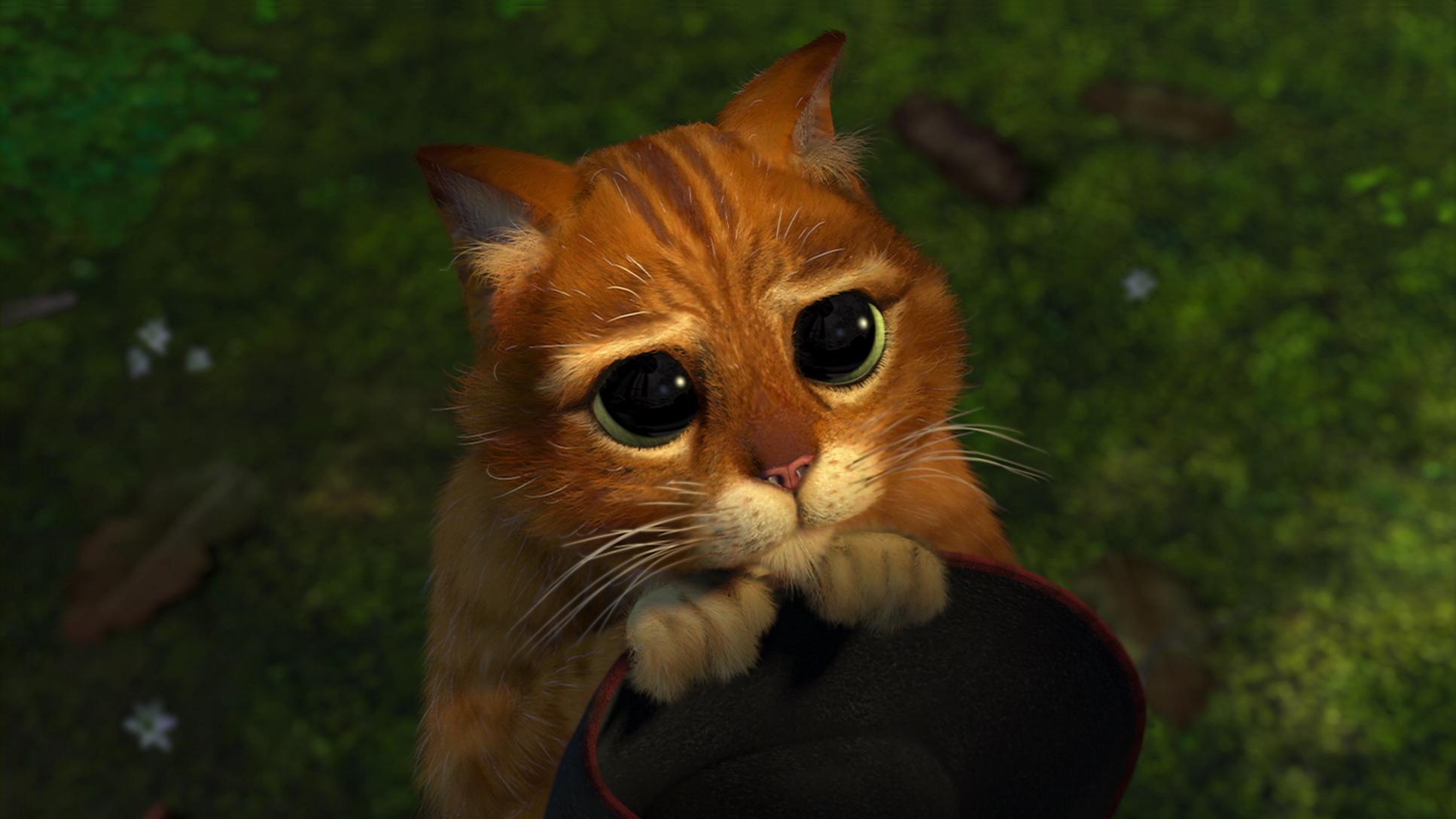
the fact that animal "lie" means they have a deep representation of others and their needs
Certainly, and I'd considered several of those as examples.
A specific documented case of an animal using language to communicate to humans struck me as a particularly strong case.
“ When it becomes serious you have to lie"
In natural English a lie is words that a person says that they know are incorrect that they know is putting incorrect words in another person mind.
No one says the military wearing camo is lying or a sports person feinting is lying.
No one says yelling is lying yet we know it changes the other persons mind and can be done for deceit. ASMR is not lying.
This all matters because part of IQ is understanding the mind of others and the ability to abstract.
There is a real question "then straighten blades of grass" what this is. You can evolve to do this without knowing why on multiple levels. Do they know it helps secure food or is it instinct? Do they know it effects another animals minds or just know the food is more likely to be there when they come back? Even at the highest level I would not call it lying.
I question do my goats have names or have they all just learned a different word for come here? It's takes involved testing to try and understand what is happening.
Maybe the gorrila thought the sink should have been more substantial for them to sit on, and Kate was bad for what could be viewed as a situation which set the gorilla up to fail?
Its all about perspective.
In the absence of other evidence, I'm going to accept the interpretation of the person who regularly conversed with Koko, trusting that they developed expertise in interpreting her statements the same way any two people learn to understand each other better over time.
To be clear, Koko’s handlers covered up sexual harassment by the gorilla: https://en.m.wikipedia.org/wiki/Koko_(gorilla)#Nipple_fixati...
I condemn Patterson's behavior (in my view the gorilla can't be held morally or legally responsible for it's actions, the handlers are responsible for them) but I don't see why that should change my mind that she probably knows better about what Koko meant?
If they organized some kind of Weinsteninan cult of silence and abuse then I could see how we might view them as dishonest and refuse to take them at their word, but that's not what the article describes?
Am I missing something? I read that section of Wikipedia and the Slate article it cites (though that was more about the hypothesis Koko couldn't speak and that it was a Clever Hans scenario - an argument I'm open to as a refutation of what I said) and I'm not seeing a suggestion of a cover up, I'm seeing someone behaving inappropriately and being a missing stair in the weirdest way, and then getting sued for it. I have to take care of some household stuff, so I don't have have to read more articles at this particular moment or I would try another source, but if I picked the wrong one let me know.
None of this is an endorsement, if we take these statements as read (and I have no reason to doubt them), Patterson (and anyone else who behaved that way) is guilty of a serious crime and can't be trusted to supervise anyone or work with animals.
Until a moment ago, I didn't even know what sex the gorilla was, but can see it was female.
So many different angles to this, Identify crisis in animals, seen through out the animal kingdom, some even seen in humans, I see the zoo was in san francisco, so air pollution could have been a factor, were hair samples taken to measure the chemical content, like manganese when thinking of Methylcyclopentadienyl Manganese Tricarbonyl in gas guzzling US vehicles, due to where manganese can accumulate in the body and where else it can be distributed. Thats something that radioactive isotopes show all the time.
Like I said so many different angles with this, what angle does science or law want to fixate on, in order to win an argument?
No, you are projecting human experience into the void of a few words, best represented with the saying "less is more".
Is that not a mistake of science?
Otherwise you are suggesting the gorilla cant feel humiliation and yet I'm pretty sure most animals feel it, so why wouldn't the gorilla say what they said, ie set up to fail and direct that sentiment at the person using their limited vocabulary?
Pardon? I don't see how I'm doing any of those things.
I'm suggesting that, if we don't have new evidence to bring to bare on the issue, we should probably take the word of the person who was there in the room, who studied and developed proficiency in this specialty, and developed experience communicating with Koko in particular.
I definitely didn't suggest Koko was incapable of experiencing humiliation. I'm sure something like what you're describing could happen, but the researchers who have the skills I outlined and were physically present (thus able to see body language and able to ask followup questions) are in a better position to evaluate that then we are.
If I said anything to unintentionally imply these things, I am always interested in feedback about how my writing could be clearer.
> thus able to see body language and able to ask followup questions) are in a better position to evaluate that then we are.
I'll quote Thomas Pynchon, if you dont ask the right question, you dont have to worry about the answer. Do you know what questions were asked, and do you know if those questions came from outside the cohort?
Subconcious bias is such a divisive and diverse field of knowledge, but one that is expanding rapidly with todays technology and surveillance.
Does anyone know what bought Francine Patterson to be interested in Koko, was it her interest in developmental psychology?
Deception can be looked at from the lens of probability & friction. Biological and physical processes optimize for low friction especially when it comes to instant reactions.
The outcome of not lying is typically perceived penalty, loss or some form of high-friction endeavour. There is a probability of being caught in a lie, but then the risk reward is what we balance out in our heads at the moment.
Reinforcement on the risks of lying if ingrained within a system will quite obviously lead to the more truthful behaviour being practiced. Think of how Singapore has a high risk reward for bringing drugs into the country.
If you break down a lie into a combination of risk, reward and friction in the alternative, suddenly you put yourselves into situation where you are able to look at it more objectively and decide on whether the situation would warrant a lie from a biological machine.
https://archive.ph/S0gU3 (ehh, such times)
change the word just slightly. ask "can nature deceive", and feel the mass of apparent profundity evaporate from the question. A lie, just as with an illusion or a deception, is a means to impair or blind someone's or something's mental model of a future state in a way that disadvantages them to one's own. I think the depth in this question, and I'll confess I didn't read the article so it may go into this, is not whether nature can lie but whether consciousness can be dedined along this axis. that is, whether the deceiving entity is aware of what it is doing, and further, has any agency over doing it. Or more succinctly, this is another entrepôt to the ancient benighted debate of free will vs determinism.
I think the nuance is that deception doesn't require a theory of mind (eg camouflage or mimicry can be evolved by observing that certain patterns increase survivability without any model as to why), but lying necessarily requires a theory of mind. You have to imagine what information someone has consumed and what conclusion they're liable to come to, and then try to imagine what additional information would change that conclusion to the one you want.
Reminds me of the Trisolarians in the 3 Body Problem. Despite that, they figured out the Dark Forest situation before humans.
so many false premises here, and typos
starting at the very beginning: octopus don't starve themselves to nurture eggs, their digestive tract closes at sexual maturity, highlighting a limitation of natural selection: dumb mutations that happen to have nothing to do with reproduction therefore getting passed on to the whole species.
I would pass on this article.