▲ 116 points
back
74 comments
If you're wondering why 13, I assume this is the reference: https://www.poetryfoundation.org/poems/45236/thirteen-ways-o...
Wonderful poem. Thanks!
The easiest way to understand art is that it allows you the freedom of abstraction. I'm a designer / artist, I come from an art family. As a designer my work has to be agreeable, coherent, and functional. As an artist, I have no such restraints. And by nature, my wildest thoughts can only have a home as "art", because even trying to articulate those thoughts might not be reasonable.
Art is a form of expression for the parts of us that are hardest to express.
Your last sentence rings true for me, when it comes to the style of art I enjoy. Often darker themes that other people may be disgusted or disturbed by, I find peace in, such as death and alienation.
Excellent piece that touches on a diverse variety of thoughts! Each of the thirteen would make for a good conversation in cafe with one or two friends while drinking good coffee and sharing lemon and poppyseed muffins.
The question posed in the first definition is perhaps the most interesting, i.e. why are flowers beautiful? Flowers appeared ~130 mya while mammals appeared ~225 mya, so this cannot be coded in our "reptilian brain."
I like the answer posed "natural selection went too far", the only answer we currently have. To push the analogy, these traits that we take to define our humanity are probably our brains "hallucinating," trying to optimize some unnecessary group of functions. Why are flowers beautiful? Why do we believe in God? These are probably unintended consequences of our evolutionary brain. Yet these "bugs" define us and are the source of all that we find great about us.
They can also be unintended consequences in the evolution of the flowers. As I understand it, they are beautiful because they are trying to attract the attention of their pollinators.
Some flowers are plain-looking because they are beautiful in infrared or ultraviolet, for example. That is, they are beautiful to their intended non-human audience. The fact that other flowers are beautiful also in the human visible spectrum is either a fortunate accident for us (if it is a wild flower) or a deliberate choice by their pollinators (if it is a domesticated flower that people plant on purpose).
Good point about coevolution. Of course all thoughts on this subject are (currently) speculation.
Here's a quote by Georgia O'Keefe: “Whether the flower or the color is the focus I do not know. I do know the flower is painted large to convey my experience with the flower – and what is my experience if it is not the color?” I don't think color is the whole story: As I write this I have a vase of yellow tulips in front of me. My wife and I are particularly fond of this particular combination, any other flower of the same yellow color won't do.
I imagine the answer to "why are flowers beautiful" is probably linked to a different question: why do humans have superior color vision vs. almost all other mammalian creatures?
A dominant theory is that natural selection favored individuals with extended long wave (red) perception. Better color perception enhanced locating high-quality food resources and avoiding toxic plants. Human vision also resolves finer detail than many mammals.
Flowers are worth noticing, after all, they're precursors to fruit which may be edible when ripe. Appreciating the form and color of flowers isn't a random phenomenon. In its present-day form, like most things human, the "beauty of flowers" is a complex phenomenon arising out of interacting biological, social and environmental factors.
We should resist the temptation to create "evolutionary just-so stories" to explain human behaviors.
> why do humans have superior color vision vs. almost all other mammalian creatures?
Why limit to mammals? Female birds of paradise are way more likely to mate with the male birds of paradise that do exhibit the most harmonious colors (to our human eyes: so female birds of paradise happens to share the same taste as humans when it comes to harmony of colors).
Specifically in regards to flowers, I believe the vast majority of flowering plants are not fruiting, so there would need to be some other case here. More likely not having to do with humans, and more to do with attracting pollinators.
Isn't the human liver also very good at breaking down toxins?
Flowers aren't beautiful. We experience flowers as triggering a subjective sensation we label beauty. Which is not the same thing.
I'm fascinated by how our brains get from "A beautiful woman" (feel free to modify according to gender and sexuality) to "A beautiful building."
Beautiful humans - whose attributes aren't necessarily physical - are mostly just high quality potential mating partners.
A beautiful building will have proportion, texture, and rhythm. But it's quite a reach to get from one to the other, even if you start from "symmetrical faces are attractive."
Somehow the experience became abstracted. Or certain features did.
And then you get music, which is even more abstract.
How does all of this work? I have no idea. It's fascinating, but hugely under-researched.
> Flowers aren't beautiful. We experience flowers as triggering a subjective sensation we label beauty. Which is not the same thing.
By that logic, isn't everything subjective? I mean, everything we experience triggers a subjective sensation on which we put labels.
The notion of beauty can be rationalized to some degree: that's the goal of composition. Let me give you one notable example: unity in diversity.
Clouds, flowers, trees (vegetation really), mountains, all follow this rule, and are generally subjects considered pleasant. The principle can be used to give a strong identity to an artwork, while keeping it interesting.
I let you ponder about how this principle manifests itself in music.
That's to say, I don't think it's under-researched. Instead, I think that the "everything goes" mentality we've had for a while now, especially in visual arts, has concealed the idea of the existence of such principles from everyday people. But they're still well-known, at least as soon as we demand strong technical skills from artists.
> Flowers appeared ~130 mya while mammals appeared ~225 mya, so this cannot be coded in our "reptilian brain."
Why not?
I find this a concise definition of good art:
> The true work of art leads us from that which exists only once and never again, i.e. the individual, to that which exists perpetually and time and time again in innumerable manifestations, the pure form (or Idea).
Schopenhauer, On the Suffering of the World
Worthy of contemplation and a fuller read.
My 13 year old daughter came home last night and wanted to tell me some things about Schopenhauer. It was a good day.
great quote - and the dialectic is that it is only through the most "individuated" individuals that such work can be brought forth (the Frankfurt school would say during Modernity, such individuals are not so much distinct, but the most alienated)
I think this individuation and uniqueness is probably what makes art truly "beautiful." I tend to be drawn to art that is often darker and would be described as depressing by most people, while finding positivity in the themes.
I am always wary of “true” as a qualifier of art.
What is untrue art?
Ymmv.
I prefer to think of art as anything made by man. Using this definition I can cherish a poorly crafted thing made by a friend, a child's scribble, a well crafted gear or an antique bronze from thousands of years ago as art. And that means we all are artists. All artistic categories are just groupings around an idea. Imagine a taxonomy tree where each branch has proponents screaming 'here is where art starts'
Banksy — 'Art should comfort the disturbed and disturb the comfortable'
Banksy's art is definitely closer to teenager #deepthoughts Instagram pages than contemporary art imo.
He reminds me of YouTubers that got famous making like reaction clips, pranks and the odd sketch that then think they can write (or even act in) a feature film
I’m really tired of “art” needing to have an edgy message. All this messagey art doesn’t have the one quality I want in art: beauty. Why can’t art celebrate the good and beautiful in the world? What value does focusing on all the ugly stuff in the world have? It’s easy to find dirt in the ground, but rare to find gold; why not focus on the gold?
Art doesn't have to have a "message" to be "edgy" and to say that art doesn't celebrate the beautiful in the world makes me think you don't engage with much contemporary art. What it makes me think is that you engage with art by reading about other people's reactions to the type of art you are decrying, and then jumping to the conclusion that is what makes up contemporary art.
As long as you don't think more than 60 seconds on what might comfort someone truly disturbed, this is a great definition.
One productive way to think about the question what art is, is to consider the concept of "Family resemblance" [1].
The fun thing with art is that people started making anti-art [2], which is now, of course, also considered art. Possibly the only thing not being art is mediocre art. I am perfectly willing to devote some time to making that into proper art as well.
Give a contrarian artist a definition of art, and they will destroy it.
Maybe not quite what you mean by "mediocre", but there have been claims that deliberately pushing kitsch to the extreme elevates it to Art:
https://news.artnet.com/art-world/koonss-monument-to-the-unk...
My undergraduate degree is in Fine Arts, and we did a Senior Seminar which amounted to a month of talking for a few hours a day on these kinds of topics. It was a ton of fun, and did force us to really go deep down all the paths mentioned here, and many others... and at the end of it all, there are no definitive answers. Art is whatever the artist or the audiences make of it.
Art is for getting high.
The process of making art gets the artist high.
The consumer of the "art product" gets high too, but in a somewhat different and lesser degree.
"Taking Drugs To Make Music To Take Drugs To"
-- https://www.superiorviaduct.com/cdn/shop/products/SV154_web_...
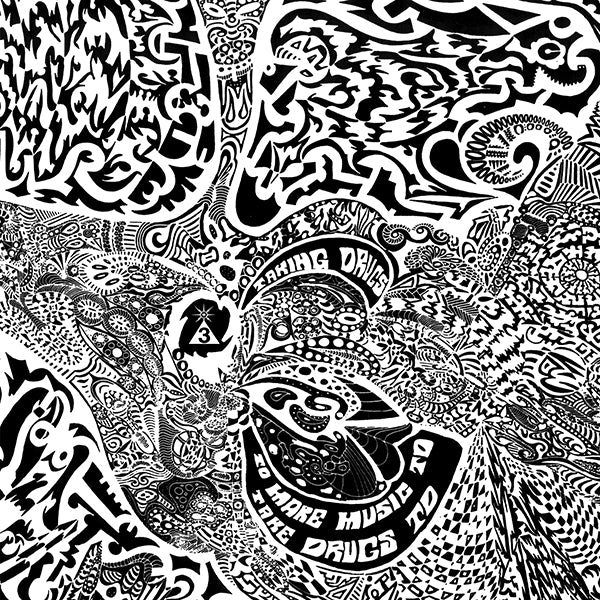
> In order to go far enough, to make that feeling strong enough, it went too far. Others are powerfully lovely to us, but so, in a strangely different, strangely similar way, are flowers and sunsets.
I have such little patience for this sort of writing. If you are going to claim there are 13 ways to look at something, then put numbers on them and make it a list so it's easier to consume.
Art is for seeing the world from different perspectives.
And also money laundering.
Excellent composite quote:
"Art is for seeing the world from different perspectives. And also money laundering and tax avoidance."
;-)
This guy do love to namedrop.
The purpose of art is to figure out what the purpose of art is.
That's philosophy. Replace the word 'art' with 'philosophy' and it makes more sense.
"Philosophy" etymologically, is the "love of wisdom". It's very remote from what people commonly understand philosophy to be nowadays (and that you seem to be alluding to!).
Art(n.): An overloaded catch-all term for various creative things which people can nearly define however they want in any given context to lend unearned credence to their glib and/or self-interested philosophical stances.
Cynicism is cheap. What's some "art" you like?
A useful reminder to the AI crowd: it is an inherently human experience. You can gin up all the picassos you want on your LLM, but it'll never achieve the impact or emotion of Guernica.
> You can gin up all the picassos you want on your LLM, but it'll never achieve the impact or emotion of Guernica.
Bet. Of course if what you care about is something that has nothing to do with the actual content of the painting, then you'll need to generate that part too to make a comparison.
I'm curious if you think that AI art is only attractive to people generating the content? Surely there is an audience, since it continues to grow in popularity.
Your example of Guernica: If someone with no knowledge of the meaning behind it, and saw it for the first time... would they really be emotionally blown away? Should a painting have to be explained?
I dunno, I prefer art that is breathtaking at first sight and self explanatory (eg. Starry Night), versus a piece that requires an explanation, like Andy Warhol's soup cans or some abstract modern art that consists of random splashes of paint that somehow makes sense of it all.
I come to art for a very different reason than modern art tries to press on me and emotions they try to evoke in me. I simply refuse to play that game, have herd mentality and just accept opinions and emotions of others.
Maybe I was spoiled by art of folks like Rembrandt or Vermeer viewed in museums, I like this form of art, I like seeing proper multiyear effort of struggling artist recognized only long after death and the resulting beauty, this sort of suffering always brings the best artist forward.
Especially compared to folks who pump their ass full of some color, spray that shit on canvas and sell it for millions. The only emotion in this is insult, and you definitely don't need art for that, daily news is enough. Literally everybody I ever asked this, from various professions and intellect and so on has roughly same opinion.