▲ 113 points
back
192 comments
While "a major department store in every town" is probablty a thing of the past, my impression is that at least in major European capitals, the "national" department stores are still going strong.
I make it a point to try and visit them when I can. A couple hours in Selfridges in London, Galeries Lafayette in Paris, Stockmann in Helsinki, Nordiska Kompaniet in Stockholm or Magasin du Nord in Copenhagen will tell you something about the country you're visiting, and keep you well entertained. I never buy anything outside of maybe a snack from their over-the-top food halls (most recently Moomin-shaped-gummies in Helsinki), or a sometimes surprisingly affordable lunch at one of their lunch counters (it's hard to beat the view you get along with your lunch or apéro at the top Galeries Lafayette on their terrace).
But in any case, none of these flagships have ever seemed empty or disused. On the contrary, I'm always surprised that while I might be astounded by the prices on display, there are always hundreds of local shoppers who seem to be quite happy to pay them.
I'm Germany, the writing is on the wall. 30y ago, there were three chains operating nationally (Karstadt, Galeria Kaufhof, Hertie, maybe there were others), each represented in bigger and even medium cities, often multiple times.
They've all merged into one chain, and the resulting company is perpetually on the brink of bankruptcy. Every year or two, they announce store closures. This year, 9 out of 92 were closed, fewer than planned, because each closure gets heavy local opposition. That's down from 171 in 2020.
Despite the opposition, the last time I went to one, it was a ghost town. I'm sure it wasn't prime time, but still, a weird vibe. Expensive, too.
What killed it? Online shopping and non-food specials in discounters like Aldi.
In the Netherlands, most of the traditional department stores have imploded and are long gone. I live in Germany currently and the local chains here have been struggling for decades as well.
The exception to this seems to be flagship luxury stores with exclusive and expensive stuff on display. Here in Berlin that would be the Alexanderplatz Galeria and the KaDeWe on Kudamm. Both attract a lot of tourism. But the chains that own them are struggling as well. Tourists of course look but there's only so much they are going to stuff in their hand luggage when they fly back home. And they don't come back that often. The issue is that the locals ignore these stores because they can get better deals online for essentially anything sold inside those stores.
KaDeWe filed for bankruptcy and is being restructured. And the group that owns Galeria is also being restructured. And not for the first time. Most of these things have been handed off between various hedge funds for decades now and they are just milking these things for short term profit.
Online shopping killed off that market. If I need socks, I get them on Amazon.
Couple of years ago I went to Helsinki for my birthday, and got a gift card for Stockmann department store. I was so disappointed. I found the "department" for cooking things. But I did not find a section for frying pans or scissors. I found a section for Fiskars brand, and others. Fiskars had frying pans, scissors, and everything they make, up to and almost including their wood splitting axes. Other brands had their frying pans, pots, cutting boards, aprons, salt shakers, and whatever. I felt that I was supposed to decide first on what brand I wanted, and then what kind of thing. Maybe some people shop that way, but for me it certainly didn't work. Same thing with Magasin du Nord in Copenhagen. All about brands. A little bit of friendly service, but nothing special. But yes, they are busy with tourists and even some locals shopping. Glad we still have a few shops that specialize in the kind of things they sell, and can provide good service. That is the kind of shops I want to support, even at a bit higher prices.
Stockmann is dying slowly. They already shed at least food and electronics in at least their other stores in other cities. Also they are constantly losing money. I would not call that going strong, just barely surviving...
Nordiska Kompaniet is no longer a proper department store, but a collection of boutiques. This has been the case for a couple of decades. The real department store that's left in Stockholm is Åhléns, but it's very mid-market, not fancy.
Maybe most people in there are like you, sightseeing
I also enjoy El Corte Ingles in Spain.
Sadly the German department stores seem to be dying and in the eastern countries the stores died in the 90's after the fall of communism.
> Magasin du Nord in Copenhagen
I'd recommend you go to Illum instead next time you are in Copenhagen.
Seems like they just got so much bigger that we don't even recognize them as a department store. Walmart, Costco, Home Depot, et al. are just variations on the theme. Extrapolate and discover that we'll eventually live and shop in a department store that encapsulates the planet like Trantor.
Not exactly - part of the department store experience is the relative expertise of staff in each department. And the sales pitch is one of high value, you might even say beauty or care.
Costco/Walmart are, from a European perspective, more like a "cash and carry" wholesaler masquerading as retail. There is very little effort made to present the goods, it's all about high volume and the lowest possible price. They're equivalent to our supermarkets/hypermarkets, but even bigger and broader in scope.
This might sound like I'm stanning for department stores but not really. They're way more expensive than Amazon or discount retail, priced more like a specialist, and the quality and expertise doesn't always match the presentation. You can easily end up paying specialist prices for Amazon quality if you're not careful.
Anyway, I think their time is up, perhaps with a few high-end exceptions surviving as a luxury tourist experience. In central London, we've a department store just for toys - like an old-fashioned and upmarket Toys'R'Us - and today's generation are basically un-wowed. Like, sure it has a lot of stock, but the big etail operators have a lot more again. And you don't have to travel 40 minutes to look at it.
> Seems like they just got so much bigger that we don't even recognize them as a department store. Walmart, Costco, Home Depot, et. al. are just variations on the theme.
I don't think so. Home Depot is clearly a big hardware store / lumber yard. Costco may carry many kinds of merchandise, shelved roughly according to type, I don't think it really qualifies as it has unspecialized staff (and very few of them), little selection within each type of item, and probably its only true "department" is the tire department.
The only thing you list that could arguably be a department store is Walmart, and I think the reason it's not recognized as one isn't because of its size, but because it's been drained of all glamor.
And none of them (at least in their non "super" sizes) are subjectively much bigger than the old mall department stores.
Big box stores are really qualitatively different from what a department store was - although the department store's brilliant marketing innovation of letting customers handle the merchandise as if it was already theirs led to big box discount stores and supermarkets. Merchandising and decor have been going downhill in even the best mall anchor stores for decades, so maybe the gap isn't as big now, but it was a really different shopping experience within living memory.
I think the Costco Idiocracy scene is probably going to be the most prescient portrayal of the future: https://www.youtube.com/watch?v=sdNmOOq6T8Y
Trantor is the seat of a galactic empire with thousands if not millions of planets supplying its population. Skynet by Haliburton-Costco-TraderJoes will eat the world long before we're interplanetary.
I think the distinction is between historically urban department stores and big box suburban stores although there was a period when you had (now dying) department stores like Macy's in the suburbs.
I think it's an open question what happens to downtowns with the diminution of brick & mortar retail and people coming into offices (even if the latter has reversed in favor of office work more than some had predicted). A lot of cities have ebbed and flowed over time and there's no guarantee of a specific universal future pattern whatever some individuals may wish for.
> Seems like they just got so much bigger that we don't even recognize them as a department store. Walmart, Costco, Home Depot, et al. are just variations on the theme.
That's not an issue of size; Walmart, Costco, and Home Depot are smaller than department stores are.
And department stores have gotten smaller over time; they used to be much bigger than they are now, which you can see by visiting a flagship store.
Stores like Walmart don't provide the same level of service that department stores did. The staff at department stores were generally expected to more or less present as professionals and act as salespeople. The staff at Walmart more or less present as bored and spend most of their time stocking shelves. The staff at department stores were expected to have some level of expertise in their department. The staff at Walmart often seem to only have a vague idea of what products they sell.
Thank you, You just randomly use Trantor as an example, Give me a warm feeling :)
The experience of something like Walmart is so much degraded from, say, the Marshall Field's I grew up with in Chicago, that... no. They are nothing like classic department stores. They are more like a modern K-mart.
The department store embodies middle-class consumerism of the 20th century. While consumerism is going stronger than ever, the same cannot be said about the middle class.
The shopping experience of the department store (pleasant environment, individual attention by knowledgeable salespeople etc.) is now only to be found in upmarket boutique shops, whereas hoi polloi are being served by goods distribution systems that are essentially automated.
The department store embodies old lady consumerism.
It's where you go to find mediocre but overpriced products. It's where your mom bought clothes for you that you didn't really like. It's where your mom still shops. The pricing structure is based on making moms feel like they got a good deal on a "sale", but actually everything is just overpriced and you can't get things with the appropriate price unless you play their dumb game. There are stories about department stores stopping this and losing lots of sales because their customers were addicted to it.
They simply failed to change to attract new generations, their buyers couldn't buy for the next generation, so they kept targeting their aging customer base until they were gone and poof, no more department stores.
You probably could do a new generation of department store targeting younger folks, but it would have to be much different. Probably won't happen.
My last department store trip was to buy socks, they didn't have what I wanted, then I paid an outrageous price for average athletic socks because I didn't have the right coupon, store card, flier, whatever. I wanted socks more than I wanted to go through the trouble of buying nicer or cheaper ones on the Internet as I was already there.
Kohls has a deal where they will give you a substantial coupon if you return something from Amazon to the store. Fuck me though, I'm not going to do the obvious scam.
I'd feel less ripped off spending $50 per sock at Hermes.
I’ve traveled to many places where stores seem to be doing just fine. They have too many employees, even, by American standards.
I think it comes down to the cost of real estate. Both for the store, but also for employees’ housing. Higher rents mean people need to be paid more which means fewer employees and a worse experience.
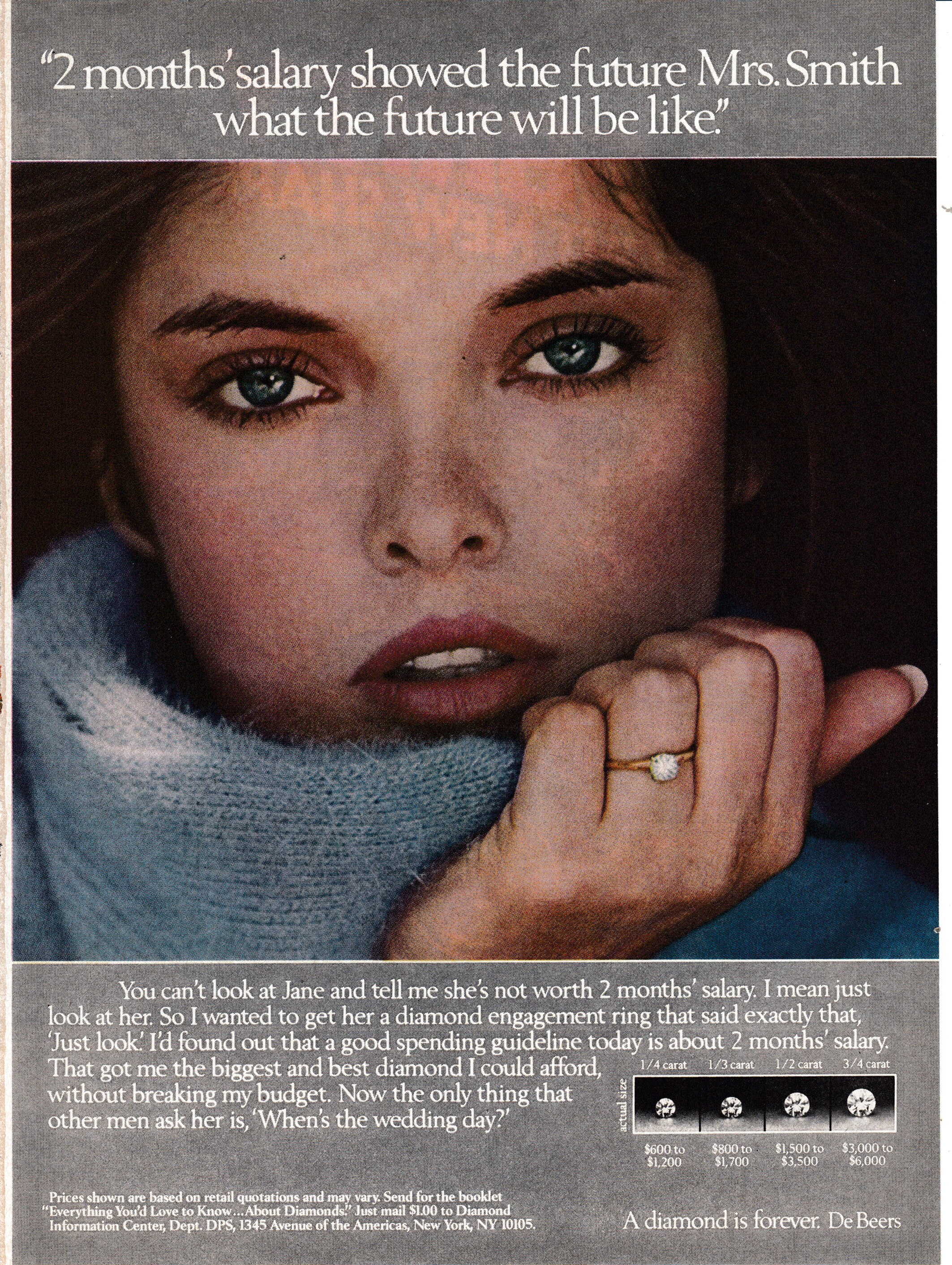
I don’t know who came up with the “30% of your salary” rule for housing, but it was probably the same person who came up with the “3 months salary for a ring” rule. It seems made up. 30% is way too high. I’d love to see a survey of these factors globally. I think we put up with things in America because we don’t know any better.
> 30% is way too high
Underestimate in many circumstances. Poor people living in UK cities are paying up to 50% of their income in housing. https://ifs.org.uk/inequality/wp-content/uploads/2023/11/IFS...
(the Georgists have a point; over time, rentiers gradually capture more and more of an economy)
Also department stores are a victim of a gradient across the globe. You want a westerner, standing in a western city, to spend time with you selling you a product? Of course all those things are staggeringly expensive. See also healthcare.
> I don’t know who came up with the “30% of your salary” rule for housing
The "30% of your salary" rule for housing stems from U.S. federal housing policy. It was first introduced in 1969 under the Housing and Urban Development Act as part of the government's effort to define affordable housing.
25%-30% was a benchmark used in housing assistance programs to determine eligibility for federal aid. If households spent more than 30% of their income on rent, they were considered "rent burdened" and might qualify for subsidies.
https://www.hud.gov/about/hud_history https://en.wikipedia.org/wiki/Housing_and_Urban_Development_...
---
> person who came up with the “3 months salary for a ring” rule
That was good old De Beers. In the 1980s, they promoted the idea that spending two months' salary on a ring was appropriate, which later increased to three months in some markets.
Example of their marketing campaigns: https://i.etsystatic.com/17868656/r/il/2bc5ab/1933571085/il_...
> 30% is way too high.
It is not something to strive for. It is offered as a warning.
Like how the US suggests 50 mSv/year for occupational radiation exposure. That doesn't mean you should go out and purposefully expose yourself to radiation to hit 50 mSv. You still want to minimize exposure to the greatest extent possible. The figure indicates the danger zone where if you see yourself drawing near, you need to get off the path you are going down.
It's not a rule, it's guidance to say - if you spend more than this you're probably being irresponsible and living outside your means.
The thing is that you're never going to convince most people to give up living in the place they want to live in, they'll stick around until the bitter end, and that means you end up with people earning 10 pounds an hour living in Zone 2 London in some dickensian shoebox.
Everything in every society is just "made up".
> I don’t know who came up with the “30% of your salary”
Well of course, it was "the experts". You know... "THE experts".
I wish I had $20 for everytime the media parrots something without every questioning it. And the masses nod mindlessly and think, "Yes, of course."
In this case... Landlords, banks and real estate agents - all with an interest in higher === better - are the likely candidates for "the experts".
The switch to massive, centralized logistics, is itself a indicator of the impending death of a society. It removes the little local depots that are department stores, thus allowing supply-chain "kicks" to come in ever harder.
If you remove dampening elements, the resulting system is more agile but also more fragile and potentially self-destructive.
Maybe department stores are very different in the US, but I'm not sure how much social benefit we gain from having a buffer in the supply chain of expensive clothes, cosmetics and homewares.
Any inventory warehouse can choose how much inventory to stock. If it maintains, say, 1 month of monthly demand instead of 3 months, it is more likely to run out of inventory during a supply chain shock. The fragility of the system is more related to this aspect than to anything else.
Capitalism reinvents communism: many such cases.
Impending death based on what? There’s plenty of boutiques that cater to things above “the necessities”, like groceries or clothes. Why do we need mom and pop grocery? It’s not efficient. Take a look around at the amount of thrift or boutique clothings shops, they’re small but large in number and it’s not even including purely online boutique. People who cry about the death of the corner store have insane tunnel vision.
> the impending death of a society
A society. The old society. To be replaced by a new society that doesn't work like the old one.
The new society is evolving towards humans that behave like frogs: They're born in a certain area and don't roam too far from that original spot because everything they could ever want is available at their fingertips or only a hop away.
To be fair, this is the primary factor why frogs (anura) have "survived" with few changes for about 250 million years. Innumerable creatures have come and gone in that time yet frogs are still around. Not a bad evolutionary strategy if you ask me.
This isn't terribly surprising: it's an inferior business model to online sales.
They put too many obstacles between the customer and the checkout counter. The customer had to travel, potentially long distances. Then they had to wander the aisles looking for the product, compare it without any unbiased third party reviews. Then they had to travel back home. This all added friction, not to mention the overall price of the products.
All the opulence of those stores came from high operating costs, which were ultimately borne by the customer.
The sales staff expertise came with commission-based sales, which meant you could never really trust the salesperson because they had a vested interest in making a sale whether the product was good or not.
Mourning the loss of department stores is like bemoaning the loss of fancy horse carriages.
Compare that to todays model where I get to spend hours scrolling through Amazon listings of mostly the same product sold by different vendors, except occasionally there are small (but significant) differences. I don't get to see or touch the product until it arrives. For the product categories that still have recognizable brands (fewer and fewer every day it seems like) I am 100% reliant upon online reviewers, many of whom are biased and paid by the brands they are supposed to be reviewing.
Amazon makes a lot of money by showing ads on their own site, so they are incentivized to keep me scrolling through page after page of listings crammed with ads, for as long as I can tolerate before I actually do make a purchase.
Go to Asia, the department store is not dead in the slightest. Though, definitely changed a lot.
Department stores are doing great in Mexico.
For example, the high rise Mitikah in CDMX was recently completed, and it has a mall complete with metro access, cinema and a giant department store chain called Liverpool. Pictures from the opening[0].
Another new mall, Portal Norte is under construction in Naucalpan, a suburb.[1] Not sure whether it will feature a Liverpool but I would almost be surprised if it wouldn't.
I went to Puebla last month and it has a whole neighborhood of malls called Angelopolis, including bike paths to connect them.[2] The last mall opened in 2018.[3]
I love malls because they are car free, pretty plants and have armed guards. It feels safer than being in the street.
[0]: https://www.facebook.com/liverpoolmexico/posts/liverpool-m%C... [1]: https://www.eluniversal.com.mx/edomex/portal-norte-es-un-mon... [2]: https://www.corazondepuebla.com.mx/descubre/parque-lineal/ [3]: https://www.e-consulta.com/nota/2017-12-14/ciudad/abre-soles...
The whole time I grew up Department Stores were not functioning like old school department stores. With the exception of the cosmetics area in Macy’s and Penny’s that’s still pretty true.
Meanwhile Best Buy is looking more like an old school department store, with sections for one vendor.
I remember the early/mid 70's when I was a little kid and department stores with multiple floors, elevators and escalators and Santa. They were nice. But buying something at the time was en event (at least for my family) too. A small microwave was hundreds of dollars (in 1970s dollars). A TV was a giant purchase.
It seemed to start changing in the 80s when the "Mallrats" style malls came to prominence followed by the big box stores in late 80's/90's.
We lost our local family owned department store a few years when the CEO retired. Walking around in there was like stepping back in time.
For me personally they are just not a very attractive place. At best you get the grocery section and the shoe store.
Everything else is usually too expensive, doesn't offer a good variety and quality of products, or is highly targeted at teenage girls for some reason. As a guy I honestly don't know where to go shopping for clothes... I just have to hope for occasional random finds.
There is a department store in Berlin called KaDeWe that is definitely worth a visit if it is doomed. It is probably the coolest department store I've ever seen.
I've come to the conclusion that men will eventually just be naked in the future. Every time i go to shop for clothes in the USA the men's section has shrunk and the women's has gotten larger.
Or we will all eventually just dress like steve jobs, just pairs of the one legal compliance shirt and pants combo available for sale.
I buy about 99% of what I consume online, so yeah, I would guess that old, large, and wasteful ventures will eventually die out.