▲ 29 points
back
23 comments
I hope to read the Power Broker some day.
Listening to the series on the 99% Invisible podcast until then..
The podcast has been amazing. I started reading along at the beginning but couldn't keep up. It's been great to get such an accessible but in depth look into the book. Fascinating look at tactics and strategies for influence and power along with a ton of history of New York. I would highly recommend it.
I have multiple copies, one a first edition that I bought at the sadly departed New York Bound Books shop, and have read it several times.
Don't be intimidated by the length. Caro's writing draws you in so effectively that the pages fly by. It's extraordinary.
When I finished the book, I was so disappointed that it was over.
Supposedly the original manuscript was like 40% longer. I hope thats published some day.
As amazing as it is long
It just sounds upsetting to me. A glimpse of the built world we used to have and could have still had if not for one extraordinary psychopath.
That's what I expected going in, but one thing the book really opened my eyes to is how much red tape makes it impossible to build even "popular" projects legally. Until Robert Moses started building highways, many of his early public park projects were not only popular, but projects that people had wanted to do for decades, but it was impossible to get them done.
You basically need three things to build a public works project: 1. The engineering design 2. The money 3. The political will
And 1. is basically the easiest of the three, by far. For 2., Robert Moses was good at finding and selling projects to sponsors, especially when the federal government started funding public works. One of the most exciting chapters of the book is how he goes from zero funding for a particular highway to getting the full amount, purely by pitching the project to enough sponsors.
For 3., the hardest part was that anyone who owned an inch of land where a project would go had a veto, and they often did. Here Robert Moses gleefully embraced a lot of "corrupt" practices: graft in order to convince people to sell him the land, buying corrupt judges to rule in favor of Moses for the people who couldn't be convinced with graft, and aggressively writing and passing sneakily-worded legislation that gave him the freedom to get stuff done.
This book is pretty eye opening because of that third part. Robert Caro certainly goes out of his way to paint Moses as a bad guy, and certainly all the above practices are "bad" because they break the rules, but you kind of come away from the fact that if he didn't commit those crimes, he and his department would have simply collected a paycheck for their whole lives while accomplishing nothing. And the corruption Robert Moses practiced was definitely of a different kind than the Tammany Hall men before him, who really did just create government jobs for political patronage with no intent of accomplishing anything. It was different because he used it to build something.
You look at projects like the California High Speed rail, where the project appears to be an unending money pit and wonder why there isn't a Robert Moses who could ram it through at much lower cost.
Now unfortunately, some of the things that Robert Moses is disliked for were precisely because he became a freight train of getting people out of the way so that things could get built, to the point where no one could stop him even if the idea really was bad. But why do we need such a freight train to do public works?
I would pick someone like Moses - for all his corruption but who got things built to the current crop of politicians who are full of hot air and accomplish nothing.
If it needs some greasing to get things going so be it.
Thank you for this incredibly thoughtful reply. I’ll pick it up sometime soon.
It's not that black-and-white. Notwithstanding Moses' ruthlessness and whether some changes were for the worse, the book does not paint the past as rosy, pristine and superior. There are also many figures highlighted, each appearing dynamic and full of character with their own interests. It becomes a kind of general history book in a way, with Moses at the center of it.
If you haven’t read them, they’re all worth the time.
Especially if you ever have lived or will live in Texas the first volume of the LBJ series is essential.
I often see the LBJ books cited as essential by those who've read them. I'll surely get to them as I enjoyed the Power Broker.
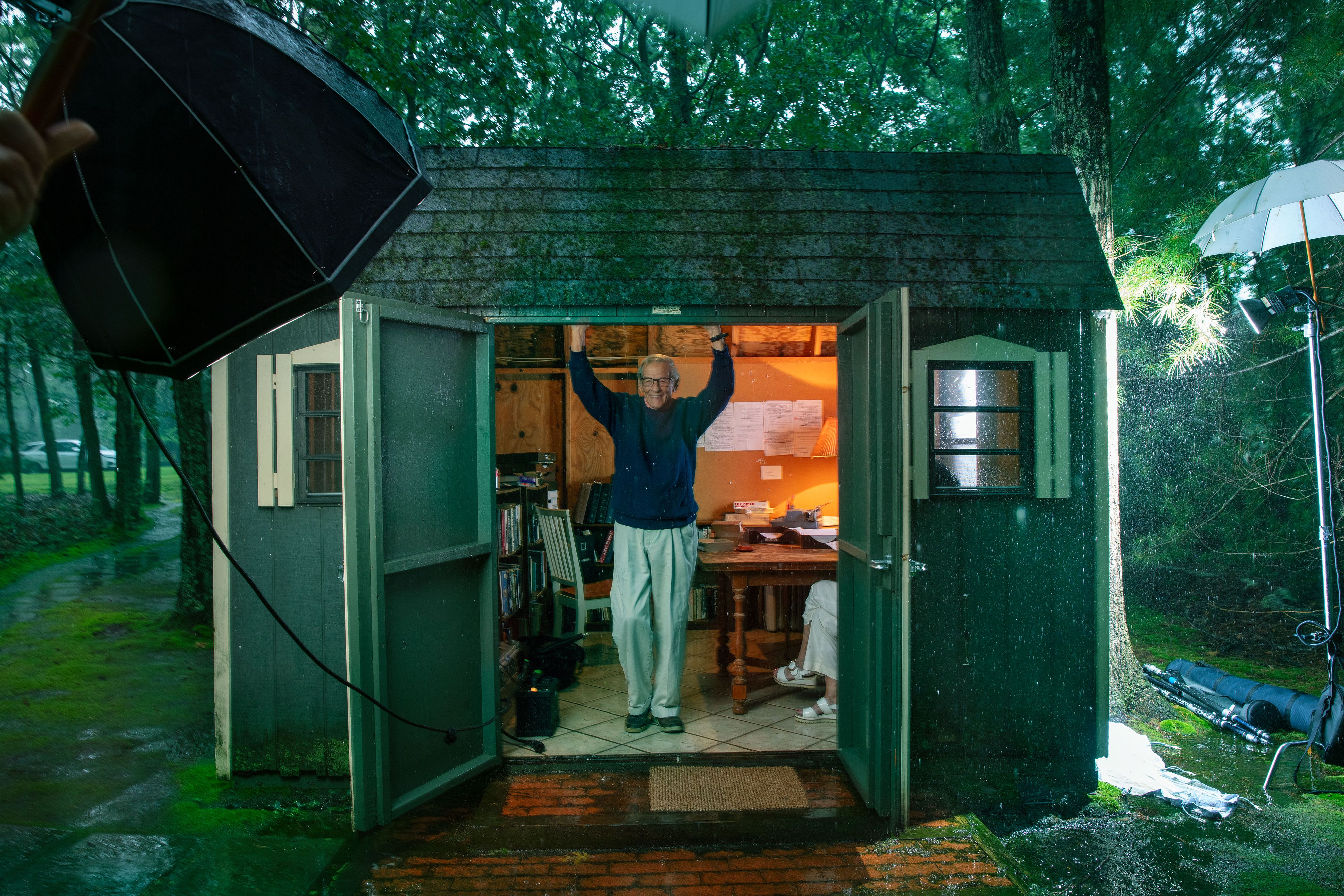
Looks very flood-prone
"A couple of bookcases, a plywood work surface, corkboard with outlines tacked up, an old brass lamp, an underworked laptop for emails, a Smith-Corona typewriter. "
I wonder if software engineers would pay for some software (or dedicated hardware) to turn their laptops into a coding typewriter with maybe just a GPT connection to probe documentation and whatever tunnels they need to work on internet deployments.
I'd love to experiment with something like this.
I understand exactly what you mean. A disconnected, distraction-free place to focus and think... the equivalent of a "wooden shed with nothing but books and a typewriter", except the isn't typewriter work; it's more difficult to fully "detach".
What *is* the software-world equivalent of a typewriter?
I recently got a reMarkable Paper Pro with the keyboard folio and that's about as typewriter-esque as I would voluntarily choose to get.
Can you jerry-rig something to code on it?
That's a very complicated question! You get root access, and they released the toolchain and kernel source less than a week ago, so I'm not sure what will be possible going forward. I don't recommend getting the keyboard folio based on future guesses as to what the software will support, but it's great for... Just. Typing.
A standard coding setup but with a very strict block list for time wasting websites.
Wait…what?
TuffShed will sell you one of these for just a few thousand dollars prebuilt and delivered and then you too can enjoy working in the sweltering heat or bitter cold
https://www.tuffshed.com/products/#/details/Premier%20PRO%20...