▲ 349 points
Ask HN: What are you working on? (May 2025)
What are you working on? Any new ideas that you're thinking about?
At the moment, the flow goes like this:
1. During the week, write posts for things that have happened.
2. Posts can be assigned to groups. (family, friends etc).
3. At the end of the week (or month), the app automatically creates a newsletter for each group by pulling posts assigned to each group. Add some final touches yourself and send it off!
4. Every newsletter will come with a link to download all images.
I'm trying to design it to be as old people friendly as possible which meant making the experience as simple as it can get. This made me settle on email newsletters. Emails are ubiquitous, have been around and will be around for a while. It's easy to sign up and things are just pushed to you instead of having to go to another app.
Another thing I want is multilingual support as my family is Korean my in-laws are not.
I'm hoping to get an MVP working this week and get some testing done with my own parents and in-laws.
I've been building on the opposite end of this. It's an open-source form submissions forwarder. I built it mostly because I wanted a service thats transparent, with usage based pricing that I could use economically for my low traffick sites.
Sometime this year I want to add docker-compose to make it easier to self host. Currently it's all manual. https://simplecontactform.org
- Nuclear Reactor Starter Kit --- an open source set of procedures, processes, templates, and maybe even some IT advice that should help newcomers start companies with nuclear quality assurance programs easily and quickly while also making a new format in which nuclear companies can share lessons learned in efficiency.
- Reactor Database --- similar to the iaeas PRIS but focused on reactor development rather than power reactors. Will include nuclear startup company tracking with details gleaned from statements and maybe extrapolated where necessary from simple simulations. Will include things like fuel cost and licensing progress. This way people can more easily separate vaporware from real nuclear, and keep track of promises vs delivery.
I have tens of thousands of ads in the collection and it would take me many lifetimes to complete, but I've been using AI to extract and catalog the meta data. I can get through about 100 ads/day this way.
One of my favorite ads, a computer from 1968 that "answers riddles": https://adretro.com/ads/1968-digi-comp-digi-comp-1-table-top...
It allows us to control the algorithm. It’s all LLM translating to YouTube search queries under the hood.
Visually it looks the same. The suggested videos come from predefined buckets on topics they love.
E.g. 33% fun math, 33% DIY engineering, 33% creative activities.
Video recommendations that have a banned word in the title/desc don't get displayed e.g. MrBeast, anything with Minecraft in it, never gets surfaced.
For anyone interested in using it, send me an email.
I'll put you on my list. And you can contribute ideas to our community Google Doc.
jim.jones1@gmail.com
A game engine that lets you code multiplayer games without coding the multiplayer! My idea was to put multiplayer into the fabric of the programming language itself. This allows the engine to automatically turn your game into a multiplayer game, without you needing to learn anything about networking or synchronization. I imagine there are lots of people who have the talent and creativity to create a multiplayer game but don't have the interest or patience in learning how to code multiplayer, and so that's who this is for!
I've been working on this for 3 years and there were lots of tricky parts rolling back and deterministically executing a whole programming language, but it's working now! My next phase is to increase the breadth of features so better games can be made with it!
A random button in a park with a countdown timer.
Instructions:
- Press the button to reset the 24-hour countdown timer.
- If the timer ever reaches zero, the project ends and the project will be removed.
- To keep the project alive — press the button
Its been running for 56 days with 820 button presses.
Write up: https://blog.abluestar.com/projects/2025-counterproductive/
Stats page https://blog.abluestar.com/other/counterproductive.html
https://github.com/scallyw4g/bonsai
I also wrote a metaprogramming language which generates a lot of the editor UI for the engine. It's a bespoke C parser that supports a small subset of C++, which is exposed to the user through a 'scripting-like' language you embed directly in your source files. I wrote it as a replacement for C++ templates and in my completely unbiased opinion it is WAY better.
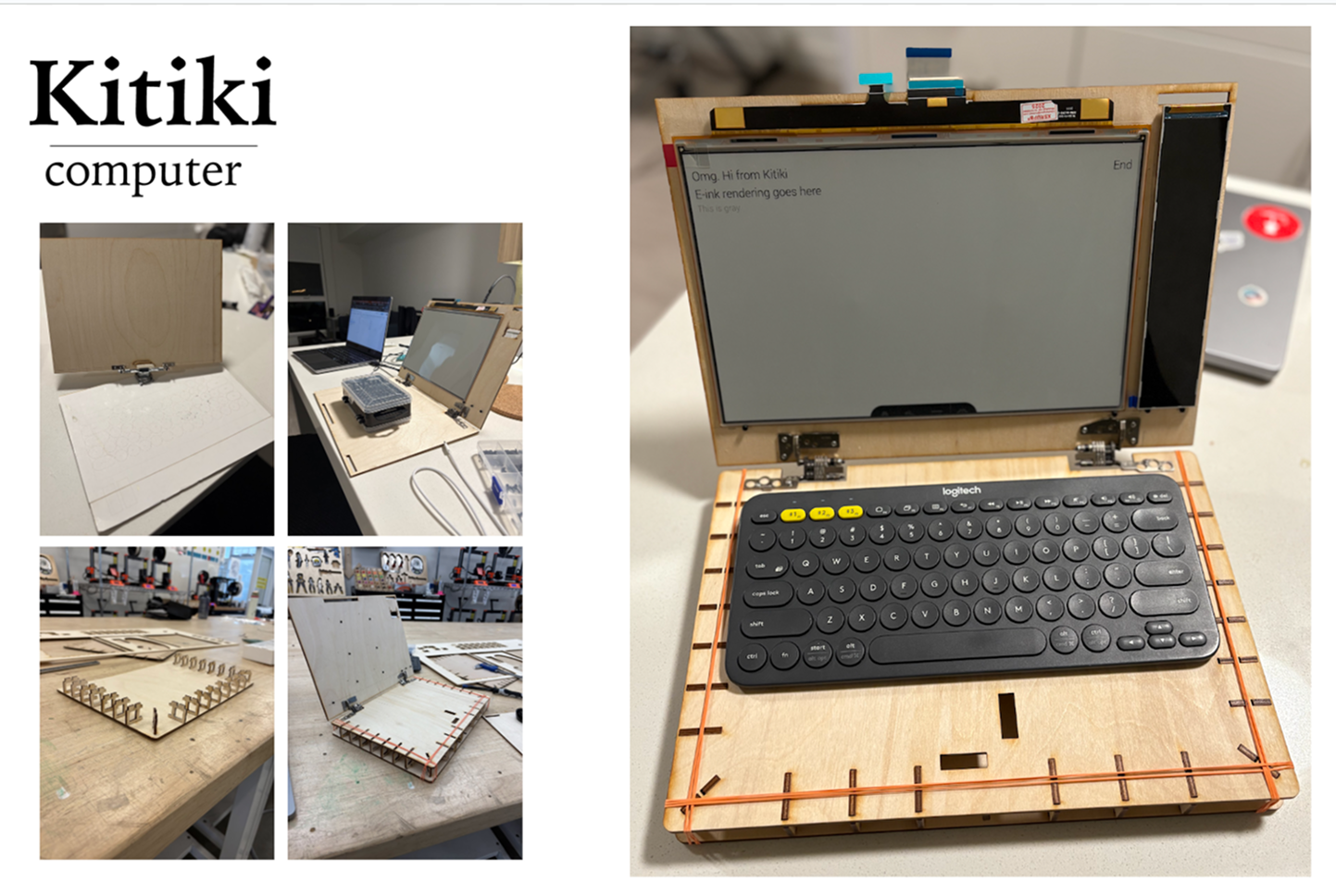
I'm designing everything from the chassis to the software OS. E-ink has its own design constraints. I'm building 5 apps for it: a browser, reader, mail, writer and code editor. It's still a ways to go. Here's a picture of what I have so far:
I was a YC founder in 2006 and still do software engineering and data science full-time, but on the side I also do Christian apologetics, helping fellow engineers/scientists/mathematicians seek answers to life's deepest questions.
Some cool articles for the HN crowd:
- My interview of Evan O'Dorney, a three-time Putnam Fellow and two-time IMO gold medalist, who converted to Catholic Christianity: https://www.saintbeluga.org/veritas-part-i-conversion-of-a-p...
- In-depth scientific overview of Eucharistic miracles: https://www.saintbeluga.org/eucharistic-miracles-god-under-t...
- Conversion testimony by the Chief Scientist at NASA JPL: https://www.saintbeluga.org/veritas-part-iii-bellows-of-aqui...
So I thought: what if, when you opened the PR, you had a tool that actually executed your migrations, saw what locks they acquired (in runtime) and then reported it as a comment to your PR? This would provide you with yet another data point you could use to reason about whether your migration is safe to deploy or not. For example:
    ALTER TABLE users ADD COLUMN email TEXT:
      acquired AccessExclusiveLock on relation `users`
It's in early-stage and very much a PoC yet, but I think there's merit in the idea.
https://github.com/agis/pglockanalyze
P.S. Also, an excuse to learn Rust - so any feedback from Rust ppl more than welcome
In the app you pick a folder with videos in it and it stores the path, metadata, extracts frames as images, uses a local whisper model to transcribe the audio into subtitles, then sends a selection of the snapshots and the subtitles to an LLM to be summarised. The LLM sends back an XML document with a bunch of details about the video, including a title, detailed summary and information on objects, text, people, animals, locations, distinct moments etc. Some of these are also timestamped and most have relationships (i.e this object belongs to this location, this text was on this object etc). I store all that in a local SQLLite database and then do another LLM call with this summary asking for categories and tags, then store them in the DB against each video. The App UI is essentially tags you can click to narrow down returned videos.
I plan on adding a natural language search (Maybe RAG -- need to look into the latest best way), have half added Projects so I can group videos after finding the ones I want, and have a bunch of other ideas for this too. I've been programming this with some early help from Aider and Claude Sonnet. It's getting a bit complex now, so I do the majority of code changes, though the AI has done a fair bit. It's been heaps of fun, and I'm using it now in "production" (haha - on my PC)
It’s the biggest and dirtiest dataset I’ve ever worked with, so it’s been interesting to figure out practical solutions to run things fast and generalize cleaning tasks. Of course it’ll be impossible to get every case (I can only match about half of the state licenses to national records at the moment), so I’ll have to figure out a user-edit/consensus system for the rest.
Decided to do an extended sabbatical after being part of one of the many tech layoffs the last years, and I'm thus working on things I like, instead of things that pay..
Collecting and cataloging craft beer venues from around the world, at https://wheretodrink.beer Still a WIP, and it's not trying to be the most extensive list, but I want it to be a substantial list. Once I reach a certain maturity in the data I'll probably look to spawn minor projects off from the data set.. have a couple ideas already that I'll just keep to my self for now :D
I also had a set of left over domains relating to beer that I'm offering up for use with BlueSky handles, and beer related link pages at https://drnk.beer - a bit on the back burner.
The idea is to improve the tooling to work with grammars, for example generating railroad diagrams, source, stats, state machines, traces, ...
On both of then select one grammar from "Examples" then click "Parse" to see a parse tree or ast for the content in "Input source", then edit the grammar/input to test new ideas.
There is also https://mingodad.github.io/plgh/json2ebnf.html to generate EBNF for railroad diagram generation form tree-sitter grammars.
Any feedback, contribution is welcome !
I analyzed 7 years of Armorgames.com data (999 games) to understand web gaming market trends.
Key findings that might interest fellow developers:
User standards are rising: Average ratings dropped from 7.02 (2018) to 6.45 (2025), but the percentage of high-quality games (8.5+ rating) actually increased from 12.3% to 14.7%. This suggests quality polarization rather than overall decline.
Genre trends: Rising: Idle games, Strategy, RPGs (deeper gameplay mechanics) Declining: Traditional arcade/action games Stable: Puzzle and Adventure (web gaming staples)
Innovation wins: The highest-rated "hidden gems" all had one thing in common - innovative mechanics rather than genre variations. Games like "Detective Bass: Fish Out of Water" (9.3 rating) and "SYNTAXIA" (9.1 rating) show originality still pays off.
Market maturation: The correlation between rating and popularity is surprisingly weak (0.126), suggesting quality ≠ virality. However, play count strongly correlates with favorites (0.712).
I had fun with the interface - it's themeable, and inspired by classic cameras: lets you quickly switch between full auto/half auto/full manual modes with dedicated dials.
Going to add more features in the coming months, but the #1 focus is keeping it super simple and blazing fast.
Given that virtually all processing pipelines these days stack multiple shots to create a photo, as far as I'm aware this is the only way of getting a "traditional" single-exposure photo on iPhone, where the shutter speed is actually meaningful.
There are other camera apps that support Bayer RAW capture, but those support a bunch of other formats, and you probably don't want Bayer RAW for most of your shots anyways, so for my own workflow it's better to have a dedicated app that I can launch really quickly rather than tap around in menus.
The whole thing works pretty well, it's built using Godot & a custom Rust extension with the 6502 emulator & assembler. It can even be exported to the web so you can write your code using a CodeMirror editor and send it to the game in the browser.
Now, as expected, the hard part is making it fun. Just giving players an empty code editor and a manual for the sensors/actuators doesn't seem great, and there's also no goal for now. I'd like to take inspiration from Shenzhen I/O to build a sense of progression by tackling more and more difficult control challenges maybe?
It also supports running multiple computers at once so I think there's some fun potential for a "multiplayer" mode where you try to achieve some objective (scanning X, mining Y) against other players by sending spacecrafts with your code on them and all the crafts would run on one server. Anyway I'm curious if people would be interested in such a game!
Everything from farm related stuff (water, food, shelter, etc.) to self-sufficiency (solar, etc.) to real time monitoring (which cameras, affecting power supply).
Who knows if it'll ever happen, but just planning everything in detail is a lot of fun. Especially with weird regulatory constraints where I'm living, there's a lot to watch out for.
Example: Solar panels at >3m height need building permits. Snow in winter means panels should be set up at a specific angle. So my initial plan of putting the panels on my 2.5m high carport doesn't work. Either lower carport, lower angle, different place or getting a building permit.
So I started building something simple: a tool that lets me turn highlights into flashcards with as little friction as possible.
Just select text on your iPhone, share it with the app, and it creates a flashcard using AI — a Q&A pair and a short summary. You can browse cards in the app, or show them on your Home Screen, Lock Screen, or watchface of your Apple Watch.
This is my first iOS app, and building it has been a great learning experience. I’m using Supabase for the backend which have been mostly great.
Check it out: https://komihag.com
I've seen some pretty fun novel use cases, such as (multiple!) people using it to pick out glasses, wedding invites & so on.
I recently completed a leaderboard function that cross compares photos from different tests using Claude, which was really impressive and scared me for my day job..
A 3D game to help students in grades 5-8 learn Arithmentic, Fractions, Geometry, and Algebra.
50% or more of middle school students experience math anxiety, and it's no wonder that so many people grow up believing, "I'm not a math person." Math can be incredibly fun and beautiful if approached and experienced the right way. Mathbreakers is a vibrant, interactive world where all game mechanics are built on intrinsic mathematical properties, so simply by playing the game, a foundation of understanding of those concepts is built.
We're doing early prototype testing now with a planned launch in September 2025. The game engine is PlayCanvas (engine-only) and the platform is WebGL (Mac/PC/ChromeOS).
The poetry one is react native. Art and philosophy ones are swift/kotlin. I wanted to see if you could use LLMs to effectively create a cross-platform app. The idea behind react native was that you write it once in an approachable language, then the framework compiles to native app code. In 2025, the approachable language you code in is English, and the LLM now generates native app code.
It was generally a success and I feel less of a need of the development overhead of react native these days.
https://apps.apple.com/gb/app/for-arts-sake/id6744744230
https://apps.apple.com/gb/app/daily-philosophy/id6472272901
https://apps.apple.com/gb/app/the-poetry-corner/id1602552624
The idea is simple:
1. On the days I work, I get an email one hour before the end of the day (as I usually use emails as todo lists).
2. I reply to that email with what I did just like I would in a personal journal.
3. My reply gets saved and shows up on a calendar. It's nothing fancy, just the content of the email on the day it was written.
4. When I need to prepare for a performance review or a manager check-in, I can generate a clean report based on my past entries with summaries written by AI
That’s it. No login every day, no new tool to open. Just a little trace of my work, saved quietly, and summarized when needed.
Now I need to figure out an alternate payment handler, or just give up on my modest monetization plan where players can pay a small one-time fee to unlock all of the archived puzzles. It was never going to make a fortune, but it would have been nice to offset some of the hosting expenses.
Don't use Stripe. They shit on you just because they can.
now i'm starting on adjusting the model to include the liquid water ocean underneath the shell and observe the effect of changing viscosity gradients in the equilibration of the ocean and ice shell, as well as adding in compositional impurities (chloride brines) and tidal heating effects.
An AI-trip planner with a nice twist. It shows you everything you need to know about a place even before getting there: Images, a great summary, cost of living broken down weather conditions etc. It also comes with the usual features you'll expect in a trip planning app (ai itinerary suggestions, travel expenses tracker, group chat for group trips, google places integration for looking up places to eat, things to do, healthcare places and transportation centers, and a private travel checklist). You should check it out today!
The two things I've open sourced that I've been moonlighting after hours for:
https://canine.sh/ - An open source Heroku alternative, 10x cheaper. Got sick of paying those prices
https://hellocsv.github.io/HelloCSV/ a free open source flatfile alternative
- The idea: https://carlnewton.github.io/posts/location-based-social-net...
- A build update and plan: https://carlnewton.github.io/posts/building-habitat/
- The repository: https://github.com/carlnewton/habitat
- The project board: https://github.com/users/carlnewton/projects/2
https://swarmmo.games The game is playable in browser! And theres no sign-up required to try it out.
So I'm giving a try to a project which started with marketing. No implementation, just a TikTok to see if people like it. And holy crap, we got 75k views!
The new idea [2] is easier to explain (1 pushup = 1 minute of scrolling) and already has a community. Plus, not working alone helps me focus on what I'm good at: programming. I don't regret learning about other areas but doing marketing for a living is not my thing.
I'm not getting rid of SpeedBump, though. It's a fun side project and it does help people :)
https://shorturl.at/LKMxS (Amazon link)
[1] https://codeberg.org/gudzpoz/Juicemacs/src/branch/main/elisp
[2] https://www.graalvm.org/latest/graalvm-as-a-platform/languag...
[3] https://www.gnu.org/software/emacs/manual/html_node/elisp/Bu...
A document specification for defining command line interfaces.
It's really just a fun side project to get more familiar with Go. The goal is to be able to generate boilerplate code in a few languages/frameworks and to generate documentation in a couple formats.
I've been doing a lot of experiments evaluating LLM translation performance, and I used what I learnt (that LLMs make mistakes, but different LLMs make different mistakes, and they're better at critiquing translations than producing them) to make a hybrid translator (https://nuenki.app/translator) that beats everything else.
And I was invited to do a talk about that to a company, which was really cool! I'm 19, doing this in my gap year before uni.
It started because I wanted to send my sister an old photo for her birthday, and instead of using CVS or Shutterfly like a normal person, I ended up building it using Bubble and Lob.
Now I’m exploring the B2B angle — a friend asked if I could do postcard mailings for her medical practice. Curious if anyone here has experience with postcards for outreach or marketing?