but some other people are looking forward to use pi for more 'serious' applications. luckily a quick google revealed that risc os supports lua and python, although jvm would be nice.
back
1 comments
I'd argue, having used it extensively in the 80's and 90's, that the BASIC variant shipped with RISC OS it is very serious.
It's a different league to your usual BASIC variants and scales up very well to large applications and even down to system programming.
It's completely unique and people could learn a lot from how little time it takes to knock out something useful, fast and powerful in it.
FWIW, we've developed and supplied safety-critical, soft-real-time applications in BBC BASIC. It was a genuinely serious language.
I also developed symbolic execution and partial verification systems for it, and that helped confirm that our systems were appropriate for the context in which they were used.
Please tell me who you work for, so I know to avoid any of your products. Using BBC Basic like this terrifies me. If anything, because its total lack of type safety for anything but the simplest of values.
Anecdotally, I think you got the wrong end of the stick regarding type safety.
I used to work for a defence contractor who avidly programmed everything in ADA with verified compilers and mathematically proved algorithms.
Stuff still broke because the algorithms and designs were wrong. That particular problem is far more problematic than type constraints.
Regarding BBC BASIC, it is strongly typed but all casts and conversions are implicit so you need to know what it's going to do:
   REM win
   p%=4;q%=4;r%=p%/q%;PRINTr%

   REM fail
   p%=4;q=4.0;r%=p%/q;PRINTr%
When it goes wrong, it's not usually the code that's gone phut:
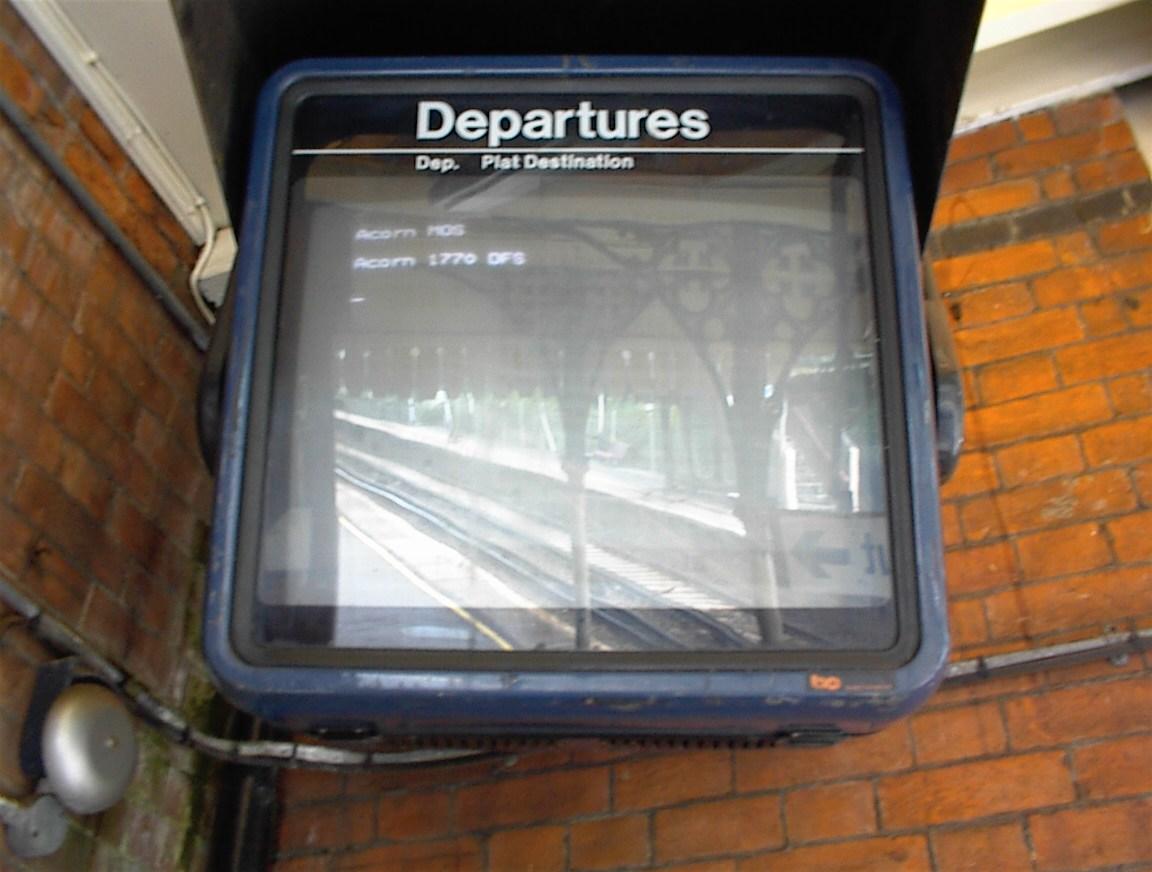
Wow! Thanks for the reminder about how great NTK was. :-)
Out of interest, let me ask: Do you believe it's impossible to write safety-critical software in C?
+1 for awesomeness :)
but it's missing "hip" language constructs like closure or functional approach, unless there's something like CoffeeScript for basic
Yes there's nothing hip about it at all. But for the best part of 30 years of BBC BASIC, I've not heard a single complaint about that fact.