back

by shagie·4mo ago·view on hn ↗
https://www.etymonline.com/word/*teks-

> Proto-Indo-European root meaning "to weave," also "to fabricate," especially with an ax, also "to make wicker or wattle fabric for (mud-covered) house walls."

> It might form all or part of: architect; context; dachshund; polytechnic; pretext; subtle; technical; techno-; technology; tectonic; tete; text; textile; tiller (n.1) "bar to turn the rudder of a boat;" tissue; toil (n.2) "net, snare."

> It might also be the source of: Sanskrit taksati "he fashions, constructs," taksan "carpenter;" Avestan taša "ax, hatchet," thwaxš- "be busy;" Old Persian taxš- "be active;" Latin texere "to weave, fabricate," tela "web, net, warp of a fabric;" Greek tekton "carpenter," tekhnē "art;" Old Church Slavonic tesla "ax, hatchet;" ...
2 comments
According to William Dalrymple, India was once responsible for a third of the world's GDP, with the most advanced textile industry in the world before the East India Company dismantled it.

A Sanskrit origin is intriguing.

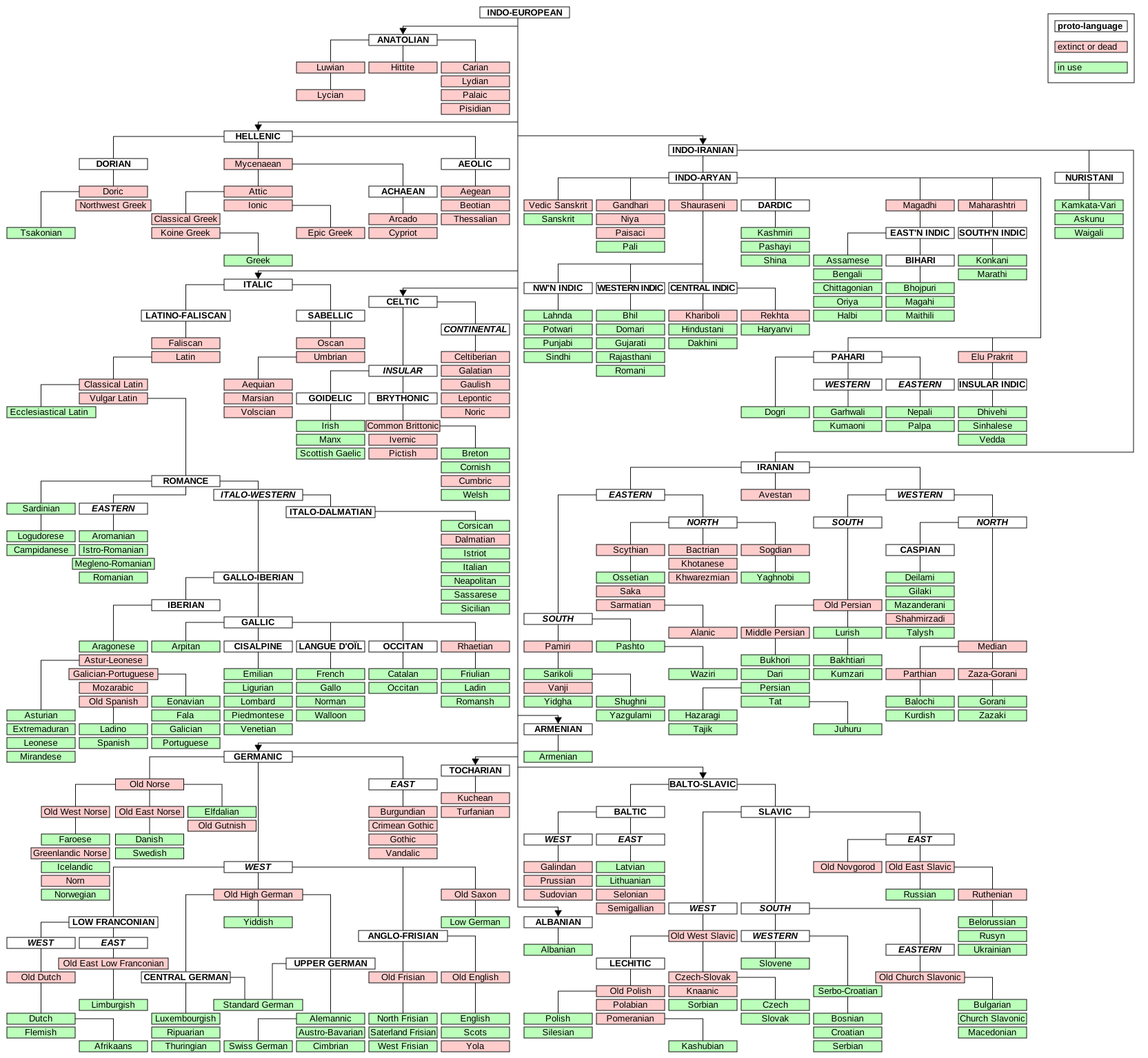
As a note, Sanskrit is a "sibling" or cousin of Latin or Greek in the family tree of languages ( https://upload.wikimedia.org/wikipedia/commons/4/4f/IndoEuro... ). Neither Latin nor Greek grew from Sanskrit but rather each (and many other languages) grew from Proto-Indo-European that was believed to exist somewhere in 4500 to 2500 BC.

https://en.wikipedia.org/wiki/Indo-European_vocabulary (the "Construction, fabrication" section includes *teks)

As a novice in the history of languages and being k-lingual in a couple of Indian languages and English, the Farsi language is such a delightful stream of discoveries.

Regardless of which k of my languages I restrict myself to, I end up discovering words that are same between Farsi and that language.

I understand that this should not be surprising given their roots in Indo-Iranian languages, the largest branches of Indo-European.

Nonetheless it is delightful everytime I discover a new one by accident.

Hmm, Finnish has "tehdä" (to do,make,fabricate) with forms like "tekee" and "teko-".
Huh; that seems like a way better etymology for the "tada!" flourish than any of the explanations in this rather heated discussion: https://english.stackexchange.com/questions/33564/origin-of-...