but it's difficult to say how economical it would be in market economy since they did it in centrally planned economy
use translate https://panelaky.info/vyvoj_panelaku/
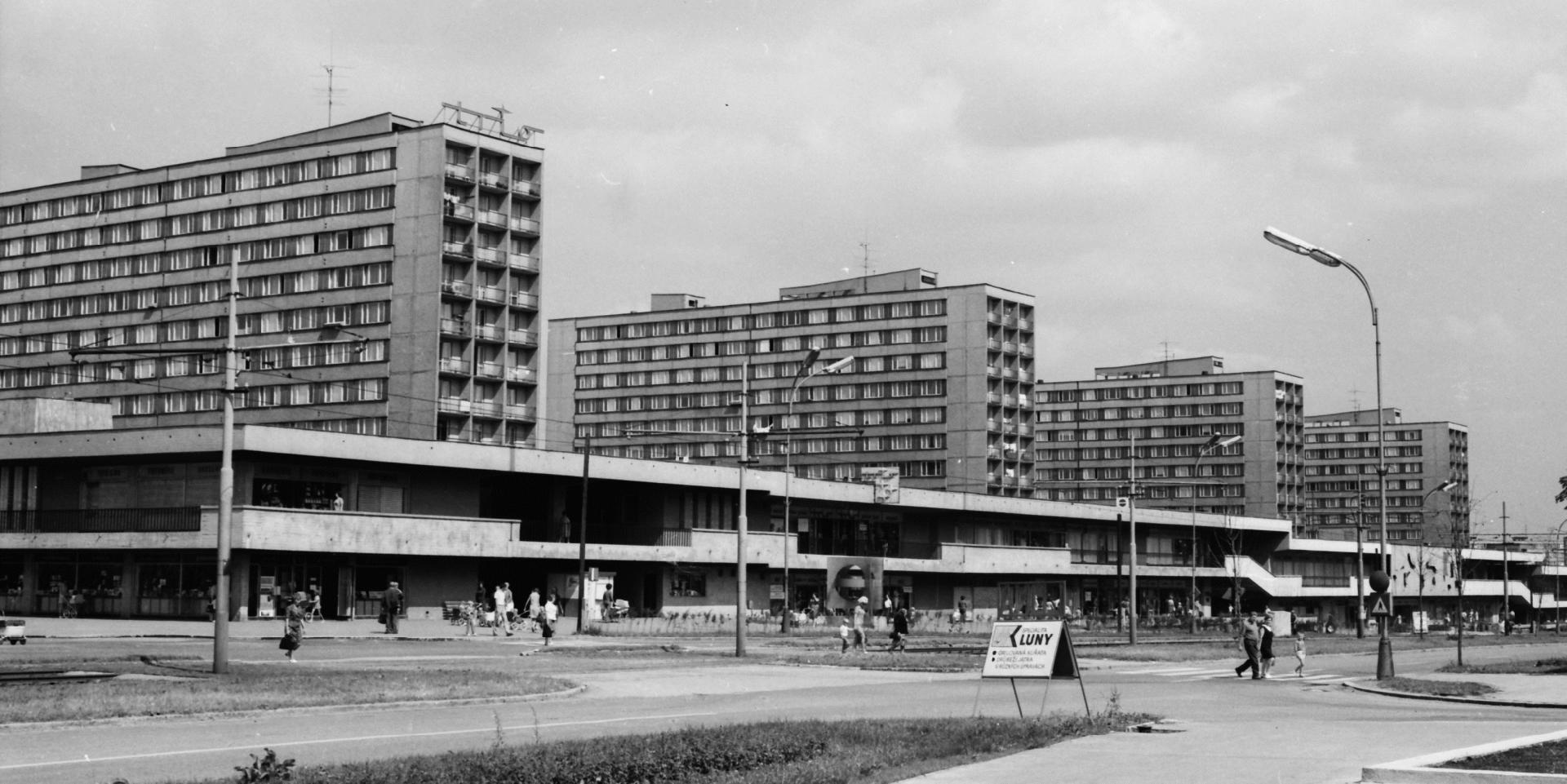
but it's difficult to say how economical it would be in market economy since they did it in centrally planned economy
use translate https://panelaky.info/vyvoj_panelaku/
Some comments from the Commie era, though:
* quality of work used to be shoddy in a legal environment where firing a drunkard was illegal and there were no competing firms. In a competitive market, this can only work if the people doing the building are reliable and competent,
* some level of personalization, if only decorative, goes a long way. If all the buildings look identical, it wears down on people:
https://historie.ovajih.cz/wp-content/uploads/2019/02/G-OS-K...
* you really, really have to think about how people will use the resulting architecture. Some such buildings had a lot of various empty corners and dead ends where people would piss and worse, thus developing an extremely disgusting smell.
I have good examples, we had vote in our building who will upgrade our roof, we had offers for like 1.2M CZK, 1.8M CZK and 4-5M CZK, while they all had space specs, same warranty, I was the only one who voted for cheapest option, the rest of the people used logic "won't vote for the cheapest" option and the result was exactly as I expected, instead of the cheapest Ukrainians we paid 50% extra for very same Ukrainians doing the job under different company with bigger margin. Of course the roof which didn't leak before "upgrade" started to leak in my apartment, so much for the quality of work. When we asked them to fix it, they claimed it's leaking because of my A/C on the roof (which didnt leak for years before their "upgrade"), but 3rd party inspection confirmed they glued insulation wrong and surprise surprise after fixing it stopped leaking while nothing was done about my A/C. There was not a single Czech speaking person working on the roof since I could hear them shouting until very late and had to climb to roof at one instance when they kept working still around 9PM, why would they care when they go to dormitory without families...
Building across the road was fixing the roof as well, done by usual non-local suspects as well and the quality? Immediately after they "finished" their job I could see objects slowly falling from under the roof, which is now going on for years, but most of the residentof the building seem to not care or are unaware of this since it's empty wall without windows, which my kitchen window faces.
So yes, quality of work on panelaks was very inconsistent (there was no 90 degree corner in my bathroom/toilet when I was remodeling, my panelak has even concrete walls in toilet/bathroom unlike the cheaper prefab core in most newer panelak buildings, prefab with 90 degree corners would be in this aspect improvement), but so is quality of the work on new buildings by my experiences and I could add more.
I was able to hire a company that employed locals and you know what, the price was 25% higher, they took twice the time to finish, and the roof still leaked. I've had one fixed and now have another leak to get fixed. I won't let them back on my property.
Lol, the illusion of choice
The USA, and Australia actually use to have far greater state capacity.
Besides political will, the structure of institutions and distribution of authority in both Australia and USA act against the federal governments of either country enacting this.
> At the time, the intention to build one million new homes in a nation with a population of eight million made the Million Programme the most ambitious building programme in the world. In contrast to the social housing proposals of many other developed countries, which is targeted at those with low incomes, the Million Programme was a universal program intended to provide housing to Swedish people at a variety of income levels.
I currently live in a townhouse built during that period, the house is from 1974, around me in the same neighbourhood there are many houses of the exact same floorplan. Each row has 4-5 townhouses, 3-4 rows are built around a central playground where each row faces each other, this pattern repeats spreading across a 2km stretch between two lakes and a forest, there are around 200-300 of these townhouses in the neighbourhood. Closer to the metro station there are higher density buildings, the low-density ones (like mine) are built on the edges of the suburb, still a short 10-15 min walk to the station.
They are all based on pre-fabricated concrete structures, the finishing varying a bit (wooden panels, different colours). Also they were built in a way to make renovations and reconfigurations easy, accessing utilities is straightforward and it was easy to upgrade my house's electrical systems to have many more outlets in different rooms than it was originally planned for.
I wish similar programs would be discussed these days, it was an effective way to improve the housing stock in a short period of time.