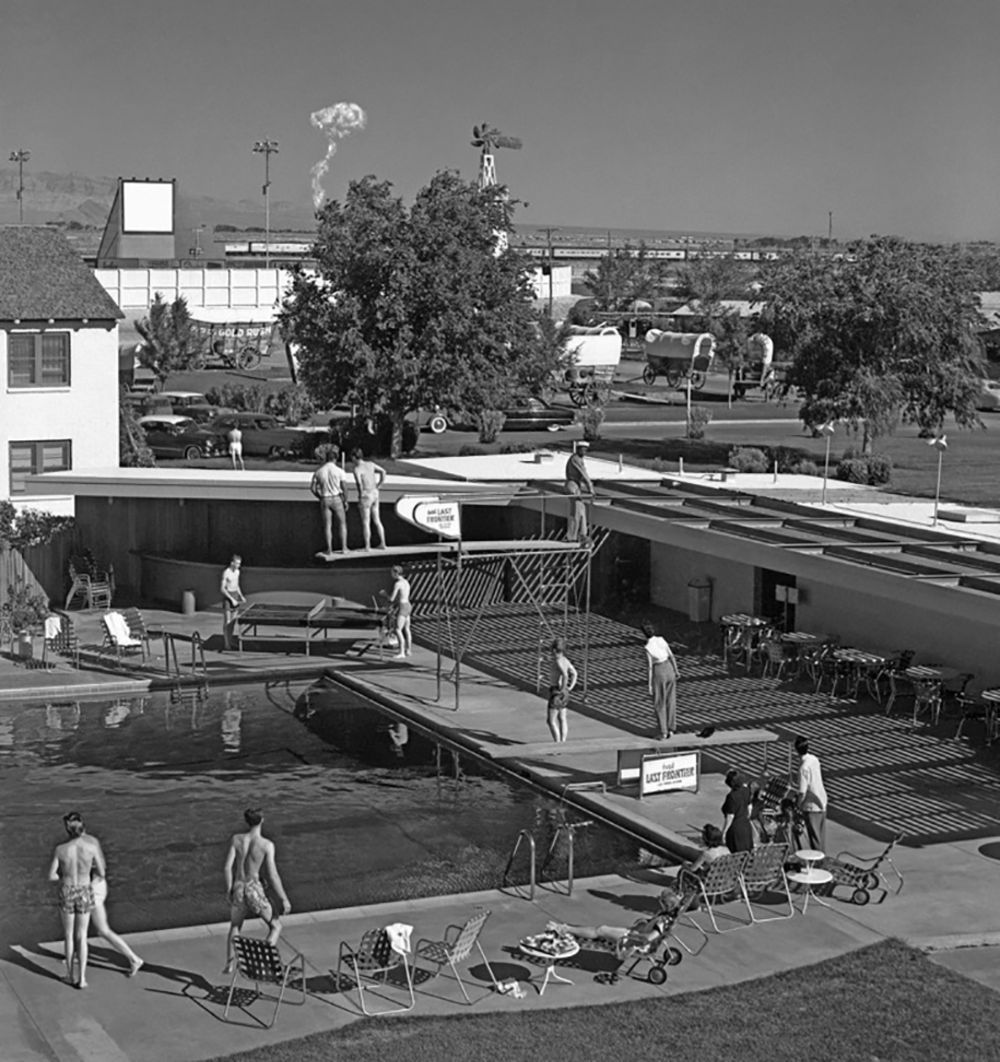
▲ 63 points
back
31 comments
I think that everybody who supports the use of nuclear weapons should look at these pictures and listen to the experiences by the survivors of the blast about what it was actually like just afterwards and think critically about if any creature deserves to be subjected to that
Is it actually the case that deaths and injuries in H & N are distinctly worse than the deaths and injuries in the other 72 cities levelled by bombing in the few months prior to the H & N bombings?
Before the dropping of the atomic bomb on Hiroshima and Nagasaki, there was the burning of Tokyo. Operation Meetinghouse, the early March 1945 raid on Tokyo that involved over 330 B-29s dropping incendiary bombs from low-altitude at night, killed roughly 100,000 people, and may have injured and made homeless an order of magnitude more. As with all statistics on the damage caused by strategic bombing during World War II, there are debatable points and methodologies, but most people accept that the bombing of Tokyo probably had at least as many deaths as the Hiroshima bombing raid, and probably more. It is sometimes listed as the most single deadly air raid of all time as a consequence.
> "Is it actually the case that deaths and injuries in H & N are distinctly worse"
Hiroshima and Nagasaki had radiation - many died in the following months from the "atomic bomb disease", now known to be acute radiation sickness, and many died in the following years from cancer, for example. See https://en.wikipedia.org/wiki/Effects_of_nuclear_explosions_... for details of all the different ways a nuclear explosion can cause death or injury in the initial stage (1-9 weeks), intermediate stage (10-12 weeks), late period (13-20 weeks), and delayed period (20+ weeks). Bear in mind that the effects of radiation weren't well understood at the time.
Furthermore, all the survivors of Hiroshima and Nagasaki and their children "were (and still are) victims of severe discrimination when it comes to prospects of marriage or work due to public ignorance about the consequences of radiation sickness, with much of the public believing it to be hereditary or even contagious"[0].
Depends, do you consider death by burns and smoke inhalation to be worse than death by having your skin stripped off by the blast, your appendages completely burned off in an instant, people completely losing their mind, pregnant women dying and having their unborn children exposed to the open air? I've heard all of those in testimonies from survivors.
Yes, both of those events are terrible and shouldn't have happened, but which is "worse" probably depends on if you consider more deaths or worse deaths to be "worse"
> I've heard all of those in testimonies from survivors.
You've read the testimonies of those that survived Dresden and Tokyo then?
Again, dead is dead, injured by temperatures that melt flesh is the same regardless of heat source.
Is there any reason to elevate death by atomic weapon above death by carpet bombing HE's and incendiaries?
Hmm yes there are multiple reasons. If you were to survive a nuclear explosion you are probably going to go through a slow and painful death that can go from minutes to years.
Depending on how affected you are, you can become literally poisonous to touch. And that's just for people affected by the explosion. Then there are the people that won't be able to go back home because of radiation. That's a different kind of pain. And yes, bombs also can bulldoze cities, but at least you can recover and reconstruct
You might have watched too much Chernobyl. It's not true that an irradiated person becomes itself radioactive.
Once a potential radiation contamination (radioactive dust and material) is cleaned from a person, independently of how much radiation they were exposed to, they don't become radioactive themselves.
You can easily look it up online to verify
I've not heard testimonies by those survivors, no, but I have heard about a lot of other burn victims and survivors in mass casualty events.
How about we both don't have nuclear weapons and also don't carpet bomb people?
None of the ways of dying in wars sound particularly appealing to me; instant disintegration doesn't sound like the worst of them
If we're going to move the goalposts, why don't we just move them to the logical endpoint and proclaim "why don't we just not have wars"
Which, by the way, perhaps it's of interest to compare the frequency and severity of war before and after the invention of atomic weapons
Anyway, I'd be curious to hear your ethical solution to the trolley problem? (https://en.wikipedia.org/wiki/Trolley_problem)
The fire bombing of civilians was wrong too.
Those other cities sustained multiple bombing raids dropping multiple bombs. These cities suffered this damage from solitary bombs with little to no warning. This whataboutism isn't really even comparing the same things. Yes, losses from any war/battle/excursion is horrible, but this is cranking the knob to an 11 while all of the other damage was 0.5 on the same logarithmic scale
Horrific, yes. However, estimates for the total number of people killed by Imperial Japan during World War II (primarily 1937–1945) range from roughly 20 to 30 million or higher across the Asia-Pacific theater, and they refused unconditional surrender until 2 atomic bombs stopped them killing who knows how many more.
And most importantly, they still controlled vast swathes of territory and thousands were dying every day under the brutal occupation. Bringing that to an end quickly was very important.
It also prevented Russia, after having annihilated the nazis (from the east), from spanking Japan's ass and conquering Japan.
The US killed two birds with two nukes: they prevented Japan from continuing their rampage and they prevented Russia from taking Japan.
> The US killed two birds with two nukes: they prevented Japan from continuing their rampage and they prevented Russia from taking Japan.
While this is coïncidentally true, and a benefit given the later situation with the Cold War, it should be noted that there is no documentation from that time period where the 'Russian threat' was taken into account when the decision to drop the bomb has made.
There was, in later years, speculation that this was one of the reasons, but there's no memos, telegraphs, or other documents to show it was the case.
Do you really think any European country was in shape to face Japan? Russia experienced a famine right after Germany capitulated, they almost lost Moscow, they received billions of dollars from the US to be able to finish the war.
I think just trying to mobilize their troops to the east would have been unimaginable
Russia invaded and occupied the Sakhalin islands near the end of World War II. Native Japanese were allowed to leave, as I understand it.
"Japan invaded the northern parts of Sakhalin, and ruled the entire island from 1918 to 1925. Russia has held all of the island since seizing the Japanese portion in the final days of World War II in 1945, as well as all of the Kurils."
That was literally in August 1945. Basically using the confusion after the bombs were dropped to gain territory
Interesting, I did not know that the Soviets declared war against Japan between the Hiroshima and Nagasaki detonations.
People who say this gloss over the horrific fire bombing of Tokyo, etc (so bad B-29 crews could smell the bodies burning from thousands of feet above...). Hiroshima and Nagasaki were no worse than that.
I always wonder if people who make this argument would be against nuking Berlin or other major German cities if it would have stopped the European war much earlier.
Not to mention that the bombs dropped on Japan were primitive and small fission bombs and pale in comparison to today's thermonuclear warheads.
I don't support the use of nuclear weapons (and I'm 100% sure that should Iran get it, they'd wipe Israel off the map) but I honestly think Japan got a better "deal" than eastern Europe by getting two nukes, surrendering, and not being conquered by Russia and becoming a satellite of the USSR.
They haven't suffered decades of communism and have seen an extremely successful recovery from WWII in a short amount of time.
The reason they sided with the nazis --and two nukes were a harsh price to pay for having picked the wrong side-- is because they knew Russia would come after Japan.
The two nukes stopped Russia's thirst for Japan on the spot.
We'd be living in a very different world if the two nukes didn't happen and it's not clear at all Japan would still be japanese.
P.S: I've got family in Japan and I've been many times and I'll probably be going on vacation there next summer. I love Japan.
> I think that everybody who supports the use of nuclear weapons should […]
I think that everybody—pro and con—should read 140 Days to Hiroshima: The Story of Japan's Last Chance to Avert Armageddon by David Dean Barrett who uses Japanese sources (including Cabinet minutes) to look at Japan's decision making process before, during, and after the bombs were dropped.
* https://www.goodreads.com/book/show/51089656-140-days-to-hir...
* https://www.nationalww2museum.org/about-us/notes-museum/140-...
The first bomb was dropped on August 6. On August 9 the Japanese War Cabinet met in the morning and got confirmation that it was a new type of weapon—and decided to not surrender. They then got news around 13:00 that in the morning a second, similar bomb was dropped, and they—could not decide to surrender or not. The War Cabinet was dead-locked 3–3, so they called in the full Cabinet and it was also dead-locked, and so they called in the Emperor, who broke the dead-lock and decided to 'stop the war'.†
And even after the Emperor himself made the call, there were still elements of the Japanese military that wanted to keep fighting and attempted a coup:
* https://en.wikipedia.org/wiki/Kyūjō_incident
So if it took two bombings (and the Emperor's personal involvement) I'm not sure how people can think zero bombings would have allowed the war to end. (The Japanese had already known for a year before the bombings that they could not win militarily).
The other two options were blockading Japan, causing mass starvation, or an invasion:
* https://en.wikipedia.org/wiki/Operation_Downfall
> […] and think critically about if any creature deserves to be subjected to that
I would think critically about if any creature deserves to be subjected to the being ruled by Imperial Japan given the Rape of Nanking and other things:
* https://en.wikipedia.org/wiki/Nanjing_Massacre
* https://en.wikipedia.org/wiki/Bataan_Death_March
* https://en.wikipedia.org/wiki/Unit_731
† The Japanese do not use the word "surrender" in their announcement: https://en.wikipedia.org/wiki/Hirohito_surrender_broadcast
I think no creature should be subjected to such pain, but wishing doesn't change the reality that Putin invaded Ukraine, so devices exist to cause such horrible destruction. The remaining question is, who's holding the trigger?
Nuclear devices existed way before Putin. Currently, many countries hold the trigger. I appreciate that my wishing doesn't change anything, but I can't exactly do much about it concretely
From the article:
> It is an impressive sight.
The fascination with this is more than a little disturbing.
Somewhat reassuring to see that many comments here interpret the images as a call to eliminate nuclear weapons. But it's hard to image our current ape man species moving away from mass murder as an international policy implementation.
The propensity of our primate species for self annihilation doesn't pose much hope for extended survival.
Innate murderous tendencies that may have encouraged the caveman's survival will surly be what wipes us out...
Impressive photographs, especially the ones on the ground. It is no wonder that they capitulated soon after the second one. The statistical reality of the war must have been frightening but the visual impact must have been overwhelming. To stare up at a pillar of cloud representing an unprecedented form of destruction that ends cities in a single bomb. Terrifying.
I've read somewhere that other factors were more important, such as the unpalatable prospect of surrendering to the USSR. Most cities in Japan were already firebombed when the atomic bombs fell. It's not like the people making the decision to surrender were at the scene?
I've never seen the ones from the ground, truly an apocalyptic sight if I've ever seen one. I can't imagine what it would be the to be person actually taking that shot. I bet they are forever changed. Thank you for posting! a welcome change if only for a minute from the deluge of openAI posts.
Especially apocalyptic given that they had never knew such things possible.
Later it became routine.
https://youtu.be/YtCTzbh4mNQ?t=62 (narrator saying - "the mushroom cloud reached 65km altitude" ) Our high school military preparedness classes teacher was a retired "Captain of 2nd rank" (subcolonel equivalent in USSR Navy) who had served at that "Novaja Zemlja" islands nuclear testing range. He was describing that regular nukes they would just watch from 20km. While large hydrogen bombs they were watching from like 200km, and it still was awe-fear-inspiring.
"Nuclear Tourism: When Atomic Tests Were a Tourist Attraction in Las Vegas, 1950s"
https://rarehistoricalphotos.com/atomic-tourism-las-vegas/ (cool sight https://1.bp.blogspot.com/-o6mAaNEPm8g/X212lrhyZPI/AAAAAAAD4... :)