▲ 80 points
back
10 comments
Link to the original image: http://marsrovers.jpl.nasa.gov/gallery/press/spirit/20050610...
How nice of her to give credit to the original. If it wasn't for your link I wouldn't have found that. This smells very IFLS-y.
Regarding IFLS: http://thebestpageintheuniverse.net/c.cgi?u=youre_not_a_nerd
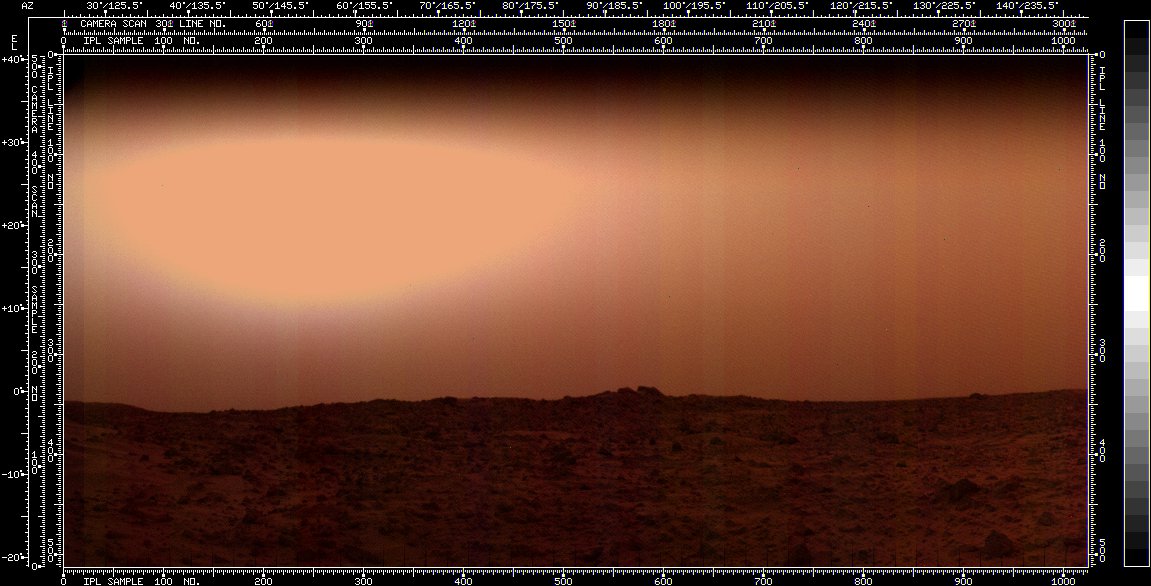
Wow, frisson-producing photograph [1]. I remember waiting for the mars rover to land on NASA TV, and watching the celebration [2]. Can't imagine what it might have felt like watching the moon landing live.
Wondering: Sunset on earth has blue sky and red horizon.
Why has sunset on Mars red sky and blue horizon?
Check out the nasa link. The colors are not entirely accurate.
The colors are not entirely accurate, but the fact that it's bluer near the sun and redder farther away is accurate- the image just exaggerates it.
The reason is that red dust particles in Mars's atmosphere scatter red light just like gas molecules in Earth's atmosphere scatter blue light; there isn't enough atmosphere on Mars for the blue-scattering effect to be significant, so red scattering off of dust particles dominates. That means that when you look near the sun, you see the blue part of the spectrum shining through while the red parts have been scattered off-axis, while in the parts of the sky away from the sun you see the off-axis scattered red.
Couldn't help but immediately think about Star Wars' "Binary Sunset" [1]. If you discard the red star, it's strikingly similar.
Sunset from the Viking Lander (1976):
https://www.avaneya.com/images/gallery/vlr/Sample_03.jpg
Part of the Avaneya project: https://www.avaneya.com/#!/store
this is beautiful.