Yeah, but that makes sense at the OS level. UX-wise (and generally speaking, for most common uses of a computer these days), Plan9 is, sadly, almost useless. I myself only use it because I _like_ messing about with different (and arguably better) operating systems, but it's very, very, VERY hard to do so for general "work" or even browsing the web.
back
1 comments
I've considered spending time on plan 9 making the UX less crappy. I think the stuff under the covers is fantastic but the UX is not great. The three button mouse thing is pretty stupid, for one.
While modernizing and redesigning the Plan 9 UI is a valiant cause, it may not be the most efficient way to accomplish your goals.
I'd venture to say that Plan 9 was never meant to be a mainstream OS. It essentially served as a playpen for new OS/systems ideas and research at Bell Labs at the time.
A lot of those ideas were pretty influential: union mounts, per-process namespaces, user-space file systems, UTF8, human-readable protocols, rfork(), file-object interface ubiquity, concurrent programming model, etc. You can see how these ideas have pervaded our current systems landscape.
The implementation of Plan 9 itself is great, but I don't think success of the Plan 9 project should be limited to whether or not its specific implementation stays current and modern. The UX was never designed with the common user in-mind, and it arguably was never the core focus for the system. A greater success would be to see its actual core ideas spread out into other mainstream systems.
So instead of making the Plan 9 UX more modern, why not work on getting some of its missing features into Linux instead? Last time I checked, Linux still needs a union-mount implementation. This way, the world benefits.
BTW, you might like this: http://swtch.com/plan9port/
Union filesystems are (finally) supported in mainline Linux as of the most recent (3.18) release.
https://git.kernel.org/cgit/linux/kernel/git/torvalds/linux....
There have been union mounts of various sorts for linux for a very long time. The issue, in comparing them to plan9, has never been whether or not they were in the mainline kernel, but the fact that they require superuser privileges to use (because changing the view of the filesystem affects how privilege escalation works in unix).
As long as that's true, union mounts in linux are not really useful in the same ways they were in plan9.
Linux has the OverlayFS now. Gentoo already uses it by default, as I recall.
Thank goodness I'm not alone!
Where have you been all this time? :)
I'm just a frequent user of tiling window managers and vim on Linux and I wish I had the elegance of plan9 under the covers :)
Unfortunately I'm all talk at this point. I have to set up an actual plan9 machine at some point and start working on it if I were to get anywhere.
Since the window system exposes all windows including their attributes(position,size, etc) via the file system, at least some of the tiling WM functionality could easily be implemented with rc scripts. Being a dwm user myself I planned to do so, but after using rio for some time I found this completely unnecessary since you can place your windows very conveniently with the mouse in the first place.
But how do you 'paste' without a middle button? That's the bit I miss most when I have to use a 2-button mouse. Thank god the guys who invented the scroll-mouse had the sense to build the middle-button into the scroll-wheel axle.
I'm not against a three-button mouse, I'm against its overuse. Example: in plan9, you can't hit "up" to re-use the last command you typed into a terminal. You have to copy+paste it with your mouse.
Not quite true. The command "" (much like bash's !!) runs the previous command you entered. It can also be given a prefix of a command and search the history for this command.
See wintext(1).
Even better:
Add fn term%{ $* } to your profile and you can just dbl-left-click and send the old command. And since Rio remembers your last menu item selection this becomes just dbl-left-sgl-middle-click on second execution.
Pretty neat.
Edit: Of course this does not make it much easier if you really just want to execute the very last command. But usually you want to either
* edit the last command, because you mistyped it, in which case you can edit the old command in place and then proceed as described above
or
* you want to execute not the last but some previous command in which case this becomes increasingly useful the older the command is
The three button mouse thing is pretty stupid, for one.
"All those parentheses in Lisp are pretty stupid, for one."
Considering that the Plan 9 UI fundamentally revolves around mouse chording, I wish you luck with that. It's a shame that Unix users are stuck in the keyboard-only mentality that they write off the mouse as some tool for lowly end users.
Please don't. As a Pythonista turned LISPer, I've heard all that stuff before. What is pretty stupid is being unable to use Plan9 on a modern laptop with a trackpad -- again, check my comments on previous Plan9 posts.
http://www.jonschneider.com/images/jsblog/ThinkpadTrackpoint...
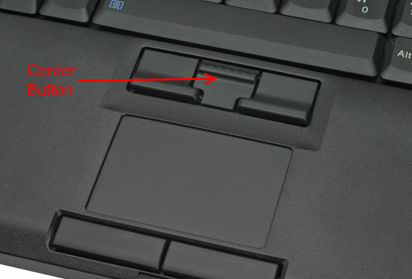
works for me!
btw, you can simulate mb 2 and 3 by holding down keyboard modifiers while clicking mb1.
I setup my physical left button as the middle button, and to left click I just tap the touchpad. Works on most touchpads.
Well, then, I'll just go and get rid of my Macs. And the Magic Trackpads I use on my desktops, too.
Not really, no.
Well that's the problem with locked in proprietary hardware