▲ 122 points
back
102 comments
Why so many negative comments? Japan certainly seems to outshine the US according to multiple metrics, so they are doing something right:
Japan's unemployment rate is 3.6% vs 5.5% for the US: http://www.stat.go.jp/english/data/roudou/results/month/inde... vs http://data.bls.gov/timeseries/LNS14000000
Japan's homelessness rate is 20 per 100,000 population (25,000 homeless people in 2001) vs 220 per 100,000 in the US: http://books.google.com/books?id=q-PgHH8TJi8C&printsec=front... vs https://www.onecpd.info/resources/documents/2012AHAR_PITesti...
Japan's incarceration rate is 50 per 100,000 population vs 710 per 100,000 for the US.
Japan is even on track to stop increasing their public deficit by this year (thanks to the new sales tax) whereas the US is far from being on budget. And Japan even manages to achieve this despite a significantly aging demographics (lots of social benefits paid to non-working people), compare http://www.indexmundi.com/graphs/population-pyramids/japan-p... vs http://static.seekingalpha.com/uploads/2012/3/28/saupload_3-...
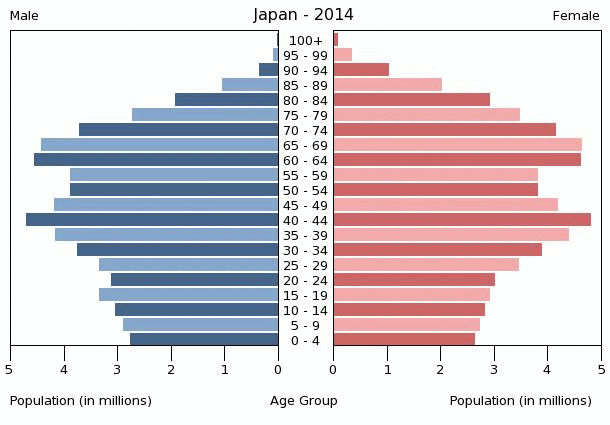
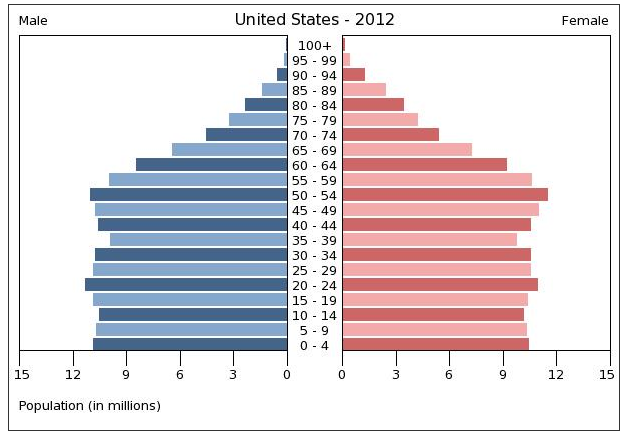
Japan's society seems to be functioning better than the US. I appreciate this article for trying to find out why.
> Why so many negative comments?
Because the English-speaking world has roughly agreed on the neoliberal economic consensus that extreme individualism, devil-take-the-hindmost capitalism is the Only Way. It is an absolute dogma, reinforced constantly through the press and the best-funded political parties.
Rich nations like Japan or Norway who are trundling happily along with more equitable societies, rather than a return to Victorian social models, need to be stigmatized lest one start asking questions like "what's the point having a country of billionaires and ditch-diggers?"
Might as well pitch atheism in Saudi Arabia.
I can understand why some people would like more a more quantitative exploration of the issue than the opinion piece that the article is. I hate to say it, but I think the the article is spot on. I lived most of my life in Canada, moved to Japan for 5 years, moved again to the UK for 2 years and have now moved back to Japan (hopefully for good).
Japanese culture is drilled into people at school. This is something heavily criticised by foreigners who pity the lack of freedom that Japanese school children have. It is a double edged sword, but this strong cultural upbringing (enforced by teachers, not parents) does have a lot of advantages.
I think one of the biggest thing I like about Japan is the lack of societal angst that I perceive here. Many, many people here are "poor" (I live in the countryside where jobs are not plentiful, or high paying), but I never hear anyone complaining about their salary. You just make do with what you have. Especially the "American Dream" is practically absent. Hardly anybody tries to strike it rich. They just try to make a nice life within their means.
When I lived in the UK, the sky rocketing housing market split people into 2 camps -- those speculating in order to make it rich, and those who were wondering if how they were going to be able to live on the pittance of a salary they received (and complaining about the injustice of it all).
I'm sure many people prefer the western approach, but I will happily live in "poverty" in Japan instead.
Even during the deepest point of the post-1980s recession, unemployment never exceeded 6%. In fact, the highest level of unemployment Japan has experienced since 1953 was 5.6%: http://www.tradingeconomics.com/japan/unemployment-rate
It is interesting that they managed to preserve low unemployment and increase the standard of living during about 20 years of flat economic growth, but they've done it. Part of it can be explained by the fact that layoffs are rare (companies almost always assign employees to do unnecessary work rather than lay them off), but that is not sufficient to explain how Japan maintained the world's second-highest GDP during the "lost decade."
>And then there’s the view. Whether it’s the outskirts of Queens on the way from New York’s JFK airport, or the fringes of the Los Angeles highway off-ramps by LAX, everything seems a bit run down and decrepit.
Even on the train from Narita Airport to Tokyo, you'll pass plenty of comparatively run down "commerce areas" adjacent to small train stops. The buildings are old, and made of nondescript concrete that have been stained by the rainfall over decades. It makes me uneasy every time I see these sort of buildings.
Taking the Narita Express or the Limousime Busses will largely insulate you from seeing those things though.
Yeah, that line is ridiculous. Tokyo is the only part of Japan that's still growing in population, and that will stall and reverse by 2020. Even in Tokyo, "new and shiny" is concentrated in a few central spots near major train stations. Population in the rest of the country is shrinking, with many places in outright collapse.
https://spikejapan.wordpress.com/2014/08/16/yubari-withering...
The whole thing mostly boils down to: I've been to the nice parts of Tokyo and its awesome.
You see plenty of industrial areas from the limousine busses, and a few homeless people under bridges.
However, if Africa is third world and the US first world, then Japan is one better, in most respects, perhaps, zero'th world.
The thing that I find most disconcerting when riding the train from Narita are all the gaudy signs that read "本" with the kind of lowest-common-denominator flashing lights and gaudy font that I expect from sex shops or gambling establishments. It's weird to get off a plane, where I previously thought "reading: the activity of the smart and elite" and show up in Narita where it's "reading: the lowest-common-denominator activity that appeals to everyone".
(I get a similar feeling when going to London. I can read all the signs and overhear all the conversations, but everything is ... different. It's weird.)
At least it's concrete. Not some rotten wood.
'"Do rich societies really need to get richer and richer indefinitely?" he asks.'
They do if they are going to pay off their mega-debt. The real fear is when the GDP drops below the yearly interest payments.
I feel the same when I go to nice European countries. "Wow everything is so nice" and then I remind myself that Germany is paying for it all. It's not sustainable. Look at some of the Scandinavian countries for nice mass public transit in a more sustainable setting.
There is an alternative to paying off mega-debt - defaulting. Just as Germany did when they were forced to pay ridiculous war reparations after WWI (after a period of hyperinflation as they tried to print their debts away, much in the spirit of the EU QE efforts).
If Germany is paying for all of this and building an unsustainable debt by not investing in European infrastructure and businesses that will generate it a return, then so be it - this is a problem for Germany. They'll either have to start seizing assets or annulling debt.
Does anyone actually think the USA will ever pay off its debt?
I don't find his reasoning compelling at all. Countries can coast on the efforts of previous generations for a long time. Indeed, you would expect to see all the outward signs of prosperity in a society which has comparatively few children to whom resources must be allocated.
Japan is a cut rose. Cut in a clean way. Kept at an optimal temperature and sitting in an optimized floral solution. It will last quite a while in a very attractive state, but its still cut from that which renews and replaces.they, like much of the world, are in for either a great mutation or an extinguishing.
I think when comparing Japan's growth versus other countries one has to remember the differences between GDP growth and GDP growth per capita (as the article alluded to). I live in Ontario, which basically has been sub 2% GDP growth since the 90s, but has had around 1.1% population growth. So most of the GDP growth has been from population increases rather than people individually becoming richer. Sometimes I thing the Japanese are on to something.
For anyone who is interested in Ontario's GDP numbers, I found some data.
Excel so beware.
>from dreams of the infinite to realities of the finite
It certainly feels like the entire developed world is at this awakening point. Some cultures are just built to handle it worse, or better, than others.
If we make it for long enough we will face a time when growth based economics fail. The funny thing is that if you think quality of life is related to GDP per capita then one way to improve quality of life is to allow GDP to stagnate while you decrease the population.
We desperately need to find alternatives to US style consumer economies because they are simply unsustainable and don't really lead to happiness or fulfilment. It amuses me that this article seems to suggest that it is not technological innovations that may save Japan but their longstanding cultural habits and priorities.
> I travel back and forth between Japan and the United States, mostly Tokyo and New York and a few other American cities, several times a year. The contrast is jarring. Arriving in the US can feel like rolling back a decade or more, returning to a time when information was scarce, infrastructure creaky, and basic services like ground transportation chaotic and unreliable.
When I visited Tokyo in 2008 I felt the same thing upon my return home. The transportation systems are efficient, punctual, and clean. People paid for their meals, bought snacks, and took the subway using their phone to pay for all of it. People were, with few exceptions, polite and helpful despite my boorish attempts to fit in.
Everything... it's so well thought out. You hand the store clerk your yen on a small tray. You can swipe your phone at a vending machine to get a quick bottle of water. You can walk from a bustling interstitial arcade into a quiet shrine. It seems like everything is meticulous and considered.
Even the seediest clubs in Roppongi or the dirtiest punk bars I could find still maintained the propriety and concern for others I found everywhere else. After one show the band passed around a bucket for some yen and we all sat down together and had food and drinks. One of the kids I came with made sure I got on the right train before the subway shut down. Even as a foreigner I could find people who were concerned about me as they were for everyone else.
Arriving back in Canada, where I'm from, was not what I had expected. The streets are haphazard and practical without a consideration for how it looks. People are louder. Traffic is thick. Litter abounds. Turnstiles, ticket booths, and grumpy ticket booth operators. Pushing... always the pushing. I had to wait a while before Street Fighter 4 would come across the Pacific so I could play it again... and 7 years for Apple to announce that you may eventually be able to buy a Coke with your phone in certain regions. Coming back to Canada felt like walking backwards in time.
Not exactly a hard-hitting analysis.
A bibliography would be nice. :)
Just looking at the title of his book "Japanamerica: How Japanese Pop Culture Has Invaded the U.S." gives doubts to his objectivity.
I just noticed that the calligraphy responsively changes from vertical right-to-left to horizontal left-to-right even though it's an image. If you're reading on an iPad, you can check just by changing the orientation. Very cool attention to detail.
Thank you for pointing this out (reading on a desktop, so I'm wouldn't have noticed otherwise). The source does this via:
    <figure
     class="book-fullbleed ipad-portrait-img">
       <img src="ima( … )9.jpg" alt="">
    </figure>
    <figure
     class="book-fullbleed ipad-landscape-img">
      <img src="imag( … )x1039.jpg" alt="">
    </figure>
I wonder if this "bookstrap" think is related to bookstrap.org? The site is blank, and the github-repo linked to from https://www.npmjs.com/package/bookstrap is gone/empty …
Either way it's refreshing to see some people still make sensible design without a ton of minimized CSS (even if this still pulls in two big stylesheets and a js-file … all to display some text … ).
> Japan’s 2014 fertility rate is low – 1.4 births per woman – but David Pilling, former Tokyo bureau chief of the Financial Times, notes that South Korea’s is lower; and that those of other developed countries, from Taiwan and Singapore to Germany and Italy, are similarly low.
The difference with at least Germany, Italy, and Singapore is that they are fighting low birthrates with increased immigration. Japan is not. They are betting on robotics, in order to keep their population homogenous.
Such cultural aspects of Japan are indeed attractive and I hope they will endure. However, the current economic model is not sustainable for a country of 120M, or even 80 - 90% of that (after shrinkage of human assets). Ironically, from the perspective of the country as a whole, sustainable agriculture / craft industries are very far from being so.
I believe, Japan needs to find a way to attract economically stimulating diversity into the midst of its cultural homogeneity, without generating excessive social disapproval. OIST[1] is an interesting experiment and I'd like to keep an eye on its progress.
Otherwise, it'll eventually come down to a drastic upheaval, along the lines of Meiji or Post-WWII. And that can only happen after the other countries have laid down a bright new model for Japan to follow and improve upon. Which could be a long time hence since, as the article says, Japan is in the vanguard right now.
The interesting difference to eg. the Meiji revolution, and what makes this really uncharted territory, is that the extreme aging of Japan makes both democratic and violent upheaval near-impossible. You can't vote out the bastards, because the pensioner vote outweighs the youth, and any violent students/revolutionaries will not be able to get the majority of the population on their side.
As a practical example, my father-in-law was a salaryman with a rock-solid pension and amazing health care (a month in a hospital costs $50, etc). His generation has no incentive to change the system that has worked for them -- even though it imposes an increasingly unsustainable burden on the ever-shrinking working generations paying for it.
They need to bring in immigrants of only a single gender from any given nation. They will assimilate much quicker than those who will have the opposite gender to form relations with and isolated communities with. Early immigrants right after the war in Britain assimilated quite well, even normally conservative ones like Muslim communities when only men were brought over.
There's a new "Cool Japan" venture capital fund.[1] It's run by the government and some big banks. Since their startup late last year, they've bought the world's largest translation/subbing service, a TV channel, and an anime streaming operation, and opened a food court in Singapore. The government of Korea has been spending heavily to promote K-Pop, and Japan is responding.
They take proposals. See their investment criteria.[2]
Someone should propose a robot-run restaurant in San Francisco.
[1] http://www.cj-fund.co.jp/en/ [2] http://www.cj-fund.co.jp/en/investment/flow.html
what's the story behind the food court?
I've had that experience as well but it's arguably a pretty self selected thing. It's only people living abroad who are almost all people who wanted to live abroad. Ask the same questions to an actual slice of Japanese natives living in Japan and the number of people that want those things will likely be a tiny percentage of the total.
Is the author saying recession caused the good aspects of Japan. If that is the hypothesis, then we expect that none of these cultural aspects like low crime rates, politeness, good food, cleanliness, etc existed before the Japanese recession? Why do people take articles like this seriously?
There is one typo in brush style typeface translation.
The word "萎縮" is pronounced as "Ishuku" not "Jishuku".
If writer want to "Jishuku", chinese character should be "自粛".
Nearly everyone was on the same proverbial page: Japan's population is 98.5 per cent Japanese, as defined by citizenry. While ethnic diversity has its strengths (and some academics point out that, when you analyse the population's regional roots, Japan is quite diverse), a set of common cultural values, instilled from birth, may strengthen resilience in the face of crisis and adversity.
Thought-crime in progress, citizens. Look away! Look away!
I think what that means that if some Japanese folk are in a crisis, they (within obvious limitations of individual personalities and capacities) can generally count on each other to "do the Japanese thing". That brings a certain spontaneous efficiency and order into a chaotic situation, compared to having to deal with clashes of different mindsets on top of the crisis.
You're the only person who has mentioned that paragraph. Clearly the thought police are asleep today.
Yes. Being anti-racist is just like being the Thought Police in Nineteen Eighty-Four.
Well even Robert Putnam has admitted that diversity is overrated.
Jesus Christ. Why do we even allow this sort of pseudo-scientific "race realist" (read: racist) rubbish on Hacker News?
Japan is one of the most racist first-world countries in the world. Have you even seen their incessant xenophobia?
This site has this line in bookstrap.css:
  /* Use responsive pixels */
  font-size: 1px;
Using FF 36 on Linux Mint, same issue. Thanks.
Thanks for the heads up. I was mostly happy the thing worked well (except for arrow-key scrolling) with js off... I wasn't aware of this (mis)feature of Firefox (I can see the rationale of using line-height for scrolling a line at a time, so it might be safe to say that the css is at fault here).
Seems OK for me with FF 33 and 36 on Mac.
Herbivore men in Japanese is not "soshoku danshi", it's "soshoku KEI danshi". Just sayin'.
I just looked it up and you're technically right; that's apparently the official dictionary term, but I've never heard anyone actually say that. Everyone calls them "soshoku danshi."
"Soshoku danshi" is literally "grass-eating (herbivore) man". "Soshoku-kei danshi" is "grass-eating-group man". The latter is slightly more correct, but both are in common use.